
Legal Literacy - Development of transformation technology in Indonesia still leaves extra obstacles. Events such as the theft of national data under the supervision of Kominfo, the rise of online gambling, and the national automotive industry such as SMK cars that do not have a viable production scale and are only for display. These few case examples are actually just surface problems in an iceberg phenomenon where cultural and structural problems occur on a national scale. Thus, the focus of this article will be on discussing the government's vision, the state of the national market, and the development of regulations in regulating technology transfer.
Golden Indonesia Vision 2045
Starting from reviewing the government's vision in transforming national technology. It is not unique for every developing country to want to catch up with its competitive production in the international market, which is greatly influenced by technology. If you look at Indonesia's economic ranking at 16th in the world and is experiencing a demographic bonus. Basically, this potential greatly influences the government's optimism in determining achievement targets for Golden Indonesia in 2045. But it all comes back to the word 'potential' which is uncertain.



The technology development plan that covers the investment space in reality has two views, namely optimistic and pessimistic. The optimistic view expects Indonesia to not only become a technology market country in the next 20 years. However, Indonesian production can compete at least competitively enough in the national market and compete in regional markets such as ASEAN. Meanwhile, in the pessimistic view, technological development in Indonesia is basically very slow, or has low PR (public relation/perception). Meanwhile, the author also believes that the national plan is necessary, but can local private companies, especially MSMEs, transform independently without government involvement. Basically, all these problems are centered on grassroots obstacles, namely culture or business behavior at the local level.
State of the National Market and Government Intervention
The state of the national market for carrying out technological transformation is influenced by two things: capital and culture. In terms of business capital in Indonesia, it is still largely dominated by the MSME sector. Private sector players themselves are hampered by capital in their desire to automate and improve production performance. Even though the government has disbursed very high funds starting at the end of the SBY administration until now. However, literacy and other management skills to obtain capital itself are still obstacles in industrial incubation.
Furthermore, in terms of culture, technology itself is basically knowledge and ability, both individual and group. In this case, if we discuss whether most business actors are ready to adopt the latest technology, it can be concluded that they are not. Because technology adoption does not have to go through the most up-to-date stages, but to catch up, however, if we look at national technology spending, which in 2021 was still more than 80 percent dominated by the government. So, as long as private sector contributions do not increase, it will only leave an ecosystem dominated by the government.
Regulation of Technological Transformation in Indonesia
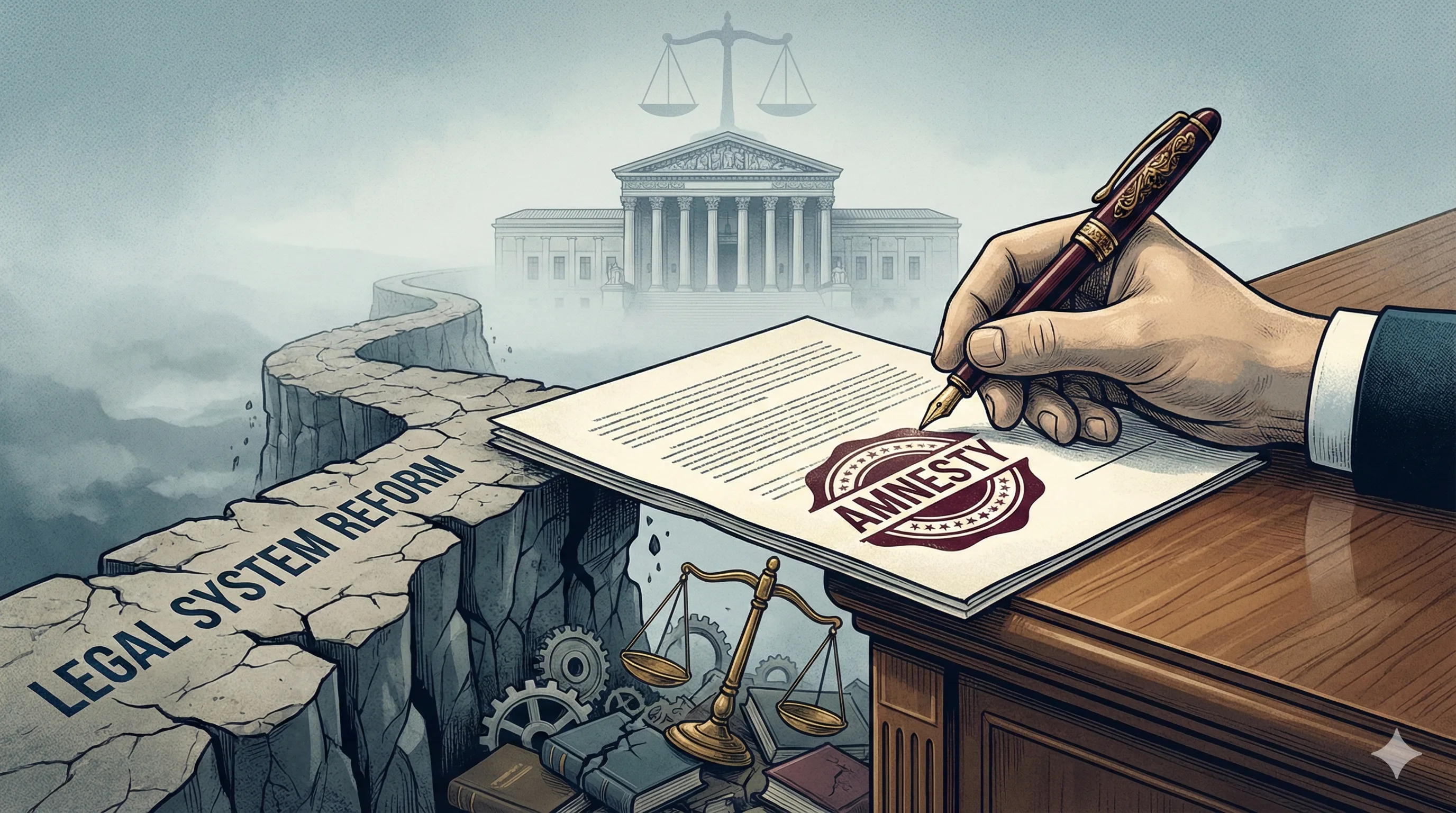
Technically discussing regulations that affect technology transfer or intellectual property can currently focus on the discussion of the National Science and Technology System Law (Sisnas Iptek). Even though the Sisnas Iptek Law has been updated in the Job Creation Law, basically the regulations in the Sisnas Iptek Law only regulate the ecosystem in the government. As we know regarding the centralization of national research to BRIN and also direction to central and regional officials. However, the Sisnas Iptek Law itself has flaws that have not been fixed. The existence of 24 derivative regulations that have not been issued based on the evaluation of the National Legal Development Agency of the Ministry of Law and Human Rights in 2021 raises doubts about government actions.
Is it unstable politics and the approaching elections at that time, Corona, or is it because buying technology is an expensive cost, especially managing it. Based on the 2021 National Legal Development Agency report, the government realized that the renewal of the Sisnas Iptek Law in 2019 after 17 years was due to the unsatisfactory Indonesian research ecosystem. However, 3 years after the report was published, uncertainty remains, as if it was ignored in terms of regulatory renewal.
On the other hand, if we look at the number of applications developed by ministries or other government agencies, the author concludes that it is just a waste of budget. On the one hand, it is not integrated and is only for operational costs, not intended for public service feasibility testing. On the other hand, such as the commotion over higher education subsidy funding yesterday, it turned out that the education budget, which is crucial for technology development, is only held by a small part of the Ministry of Education and Culture. In this case, the author assumes that if budgeting and regulation are still problematic. Then most of the government practices and internal bureaucratic reforms need to be carried out, before we can dream of being glanced at by foreign investors.
Ambitious Programs Not Realized Due to Failure to Understand Technology
Despite the Jokowi administration's fervent efforts to catch up, such as attracting foreign investment for national projects, the reality is that the failure to attract foreign investment and, moreover, the lack of clarity in bureaucratic structuring, gives a pessimistic view to a large part of the public. For example, Indonesia's failure to invite Microsoft and Apple to open their factories in Indonesia is considered by some observers to be due to the unpreparedness of the technology ecosystem, including regulations in Indonesia.
Losing out to Vietnam can be concluded that our workers' wages are higher. However, if we talk about technology in general, special treatment is only given to the scope of defense and security. The outline of b-to-b content or between private entities also does not have a definite benchmark. Comparing it with China, which is able to force foreign private companies to open up their technology, is actually also based on the large number of foreign investors who have already invested in the country.
From all of that, the author actually assumes that technology is like formal education. It cannot be procured once and for all, but it also requires the development of work character, which cannot be done in a hurry and without clear stages. Although the government realizes this, in reality, infrastructure procurement must start from the ground up, which even takes longer when talking about cadre development and work culture. Where cadre development clearly influences work culture, especially in lower-level management. Using a simple analogy, it is like educating one generation from elementary school to higher education, which takes a long time and pays attention to their growth and development clearly.




















Comments (0)
Write a comment