
Legal Literacy - The DPR (House of Representatives) and the Government reject the lawsuit against the TNI Law (Armed Forces Law) on the grounds of 'legal standing.' Examine the legal analysis of why this argument is dangerous and threatens the constitutional rights of all citizens.
Introduction
The follow-up hearing on the formal review of the Indonesian National Army Law (UU TNI) in the Constitutional Court (MK) should have been a space for substantive dialogue. However, the opposite happened. This hearing shows a dangerous tendency: the state, through the arguments of the DPR and the Government, is trying to close the door to citizen participation in overseeing the process of forming laws.


In a hearing held on Monday, June 23, 2025, the DPR and the Government insisted that the petitioners from the civil society coalition did not have legal standing (legal standing). The reason? Because they are not soldiers, prospective members of the TNI, or ASN (State Civil Apparatus) in the defense sector. In other words, they are not considered “parties with a direct interest.”
This argument is not only legally flawed, but also betrays the essence of democracy. It reduces the constitutional rights of citizens to mere administrative matters and affirms that only certain elites are allowed to speak.
Refuting the 'Legal Standing' Argument: The Right to Sue Belongs to All Citizens
Our constitution never limits that only direct victims may file a lawsuit. Especially in the context of formal review, what is questioned is the formation process of a law, not the content of its norms. The Constitutional Court itself has a strong precedent, such as in Decision Number 27/PUU-VII/2009, which does not require direct losses for formal review applicants.
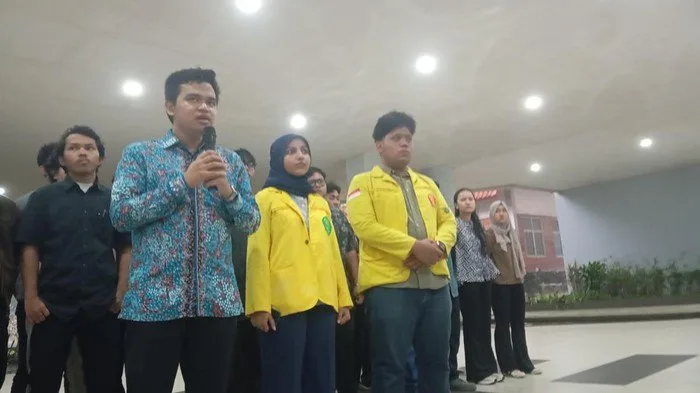
Denying the role of the civil society coalition, which has a long track record in overseeing security sector reform since 1998, is a denial of history. They are part of the public that ensures the military is subject to democratic principles. In fact, Constitutional Justice Arief Hidayat in the hearing admitted that this lawsuit actually shows the legal awareness of the younger generation which deserves to be appreciated, not restricted.
The Illusion of Public Participation: When Openness is Only a Empty Procedure
The Government and DPR's excuse that the process of forming the TNI Law has fulfilled the principle of public participation is refuted in the courtroom. When the Court demanded concrete evidence, not a single document proving meaningful public involvement (meaningful participation) could be shown. There were no minutes of meetings, recordings, or lists of invitations proving serious dialogue with the public.
Public participation is not just a formality of uploading drafts on the official website. It is an obligation to provide space for the public so that their input is heard and considered. If the public is only used as a stamp to legitimize a closed process, then that is a setback for democracy. The MK's action in ordering the submission of all discussion documents is the right step to affirm that the legal process must not proceed in silence.
Maintaining the Rails of Democracy: The Urgency of Formal Review and Provisional Decisions
It is important to emphasize that the formal review of the TNI Law is not a form of hostility towards the military. On the contrary, this is an effort to ensure that the TNI remains within the corridor of professionalism and is subject to civil-democratic control. The TNI is a powerful institution that holds weapons in the name of the state; therefore, its regulation must involve the public as widely as possible.
It is in this context that the applicant's request for a provision (suspension of the law's enactment) becomes very urgent. The Court has granted similar requests in other cases. If a law that is allegedly procedurally flawed is allowed to remain in effect, then every day the Court allows potential constitutional violations to continue. The Court must act proactively as the guardian of the constitution.
Who Owns This Republic? The Stakes of Democracy Behind the Lawsuit Against the TNI Law
Ultimately, this lawsuit touches on the most fundamental question: who really owns this republic?
When the state declares that ordinary citizens have no right to challenge such an important law, they are implying that this republic belongs only to the elite. However, the Constitution has never recognized classes in public participation. The right to speak, criticize, and sue belongs to all citizens, whether in uniform or not.
It is precisely ordinary citizens who are the main foundation of democracy. And when that foundation is threatened by laws that are formed hastily and in secret, then speaking out is an obligation.





















Comments
0Share your perspective politely, stay relevant, and focus on the article. Comments appear after moderation.
Join the discussion
Write a clear, polite response that stays on topic.
No comments yet. Be the first to discuss.
Comments will appear after moderation.