
Regulations on Dynastic Politics
In the regional scope, dynastic politics was once regulated in Law Number 1 of 2015 concerning Regional Elections. The presence of this law had brought a breath of fresh air in limiting hereditary politics using a conflict of interest prohibition approach.
Referring to Article 7 point q


“Indonesian citizens who can become Candidates for Governor and Candidates for Deputy Governor, Candidates for Regent and Candidates for Deputy Regent and Candidates for Mayor and Candidates for Deputy Mayor are those who meet the following requirements (q). Do not have a conflict of interest with the incumbent”.
However, this provision was ultimately canceled through the Constitutional Court decision Number 34/PUU-XIII/2015, on the grounds that statement conflicts of interest with the incumbent, only use considerations that are political and assumptive in nature.
This seems to assess that every candidate who has a blood relationship or marital relationship with the incumbent will definitely build dynastic politics that has the potential to damage the order of the nation, without further considering the competence, integrity, and capability and fulfilling the elements of acceptability of the candidate objectively.
The decision stated that blood or marital relations are the inherent and fundamental nature of God. In any religion universally, this relationship is recognized as a sacred relationship and not as a relationship that prevents someone from working in government.
Therefore, the existence of this Constitutional Court Decision has reopened the way for groups who want to pass on their power to their descendants or families.
Impact of Dynastic Politics
Governor of NTB (2018-2023) Zulkieflimansyah, explained that the practice of dynastic politics can have negative impacts, including:
- The party only acts as a political machine, thus hindering the ideal function of the party. This causes no other achievement targets except power. In conditions like this, party recruitment is only based on the popularity and wealth of legislative candidates in order to win. Furthermore, instant candidates emerge from celebrities, entrepreneurs, "green blood" or dynastic politics who do not go through a cadre process.
- As a logical consequence of the first symptom, the opportunities for people who are reliable and qualified cadres become closed. The circulation of power only revolves around the elite and entrepreneurs. This phenomenon has the potential to lead to negotiations and the preparation of conspiracies of interest in carrying out state duties.
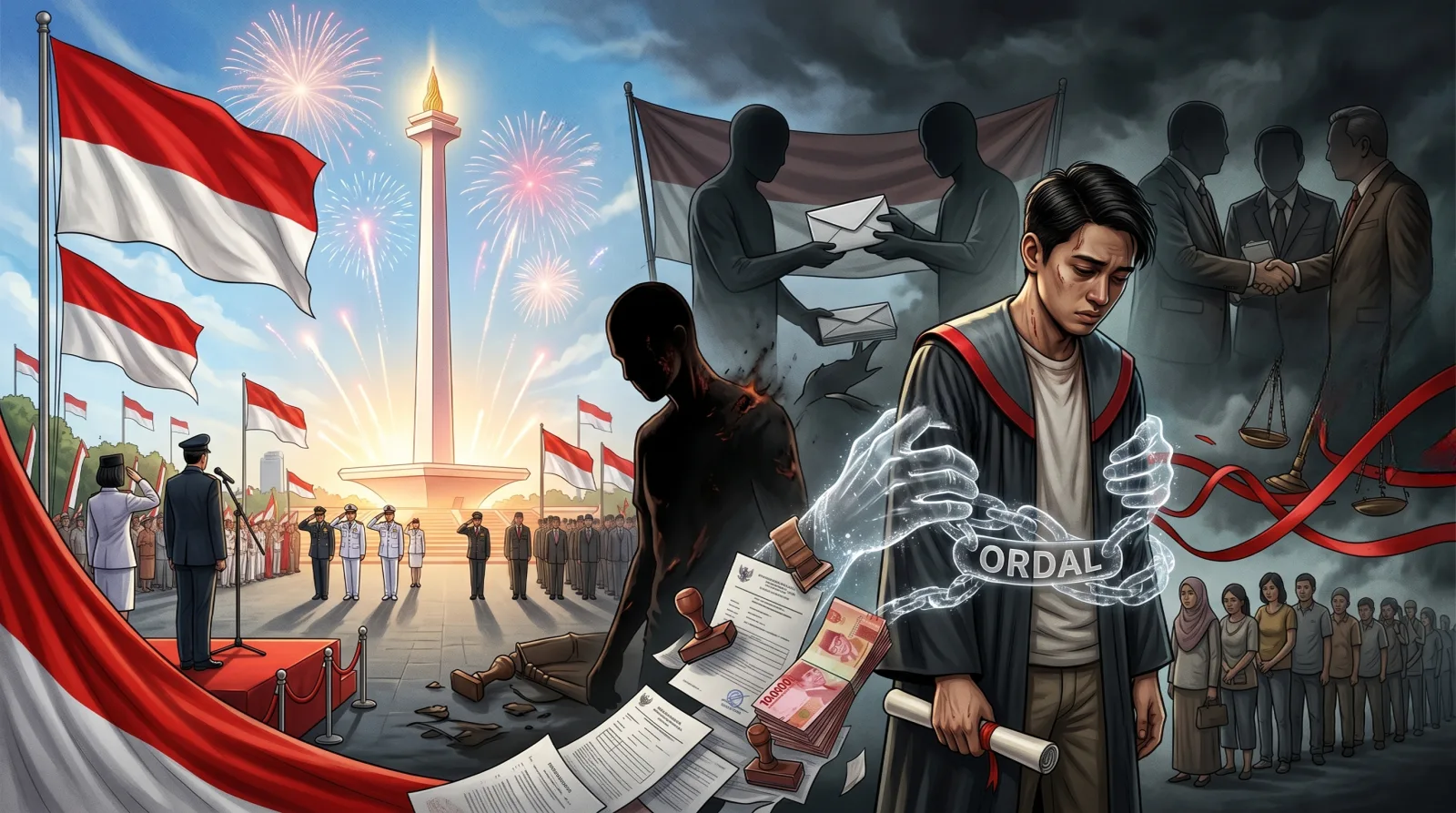
- The ideals of democracy are increasingly difficult to achieve because there is no good and clean government (clean and good governance). The function of power control weakens and does not run effectively, so there is a high possibility of power abuse such as corruption, collusion and nepotism.
Dynastic Politics in a Democratic Perspective
The 1945 Constitution of the Republic of Indonesia explicitly states that Indonesia adheres to a democratic system of government. This signifies that the placement of strategic positions in the government must be carried out through election mechanisms that involve the aspirations of the people.
A renowned political expert, Abraham Lincoln, affirmed that the essence of democracy is a government built from the people, by the people, and for the people.
The organization of elections is fundamentally an effort to elect the best individuals nominated by political parties or through independent channels, with the hope of creating leaders who possess capacity, capability, integrity, morality, and a high level of concern for the interests of society.
Dynastic politics remains a challenge to the implementation of democracy in Indonesia to this day. So far, the nomination of candidates by political parties tends to be based on the desires of party elites, rather than through democratic mechanisms that consider the ability and integrity of the candidates.
In general, the concept of democracy cannot restrict anyone from participating in political contests, including those who have family relationships with officials who hold strategic positions.
However, the facts on the ground show that until 2020, the percentage of dynastic politics in Indonesia increased by 14.78% or 80 regions out of 541 regions. This data was obtained after the regional elections were held and continues to increase from year to year.
Meanwhile, dynastic politics simultaneously continues to build and expand its power network strongly in order to maintain its position within the party, both at the regional and central levels. This phenomenon can certainly dominate and stifle democracy within political parties.
The practice of dynastic politics is considered unhealthy for the implementation of democracy because it can weaken control over the government, for example checks and balances.
The presence of dynastic politics encompassing the struggle for power from the regional to the national level makes the substance of democracy difficult to realize.

















Comments
0Share your perspective politely, stay relevant, and focus on the article. Comments appear after moderation.
Join the discussion
Write a clear, polite response that stays on topic.
No comments yet. Be the first to discuss.
Comments will appear after moderation.