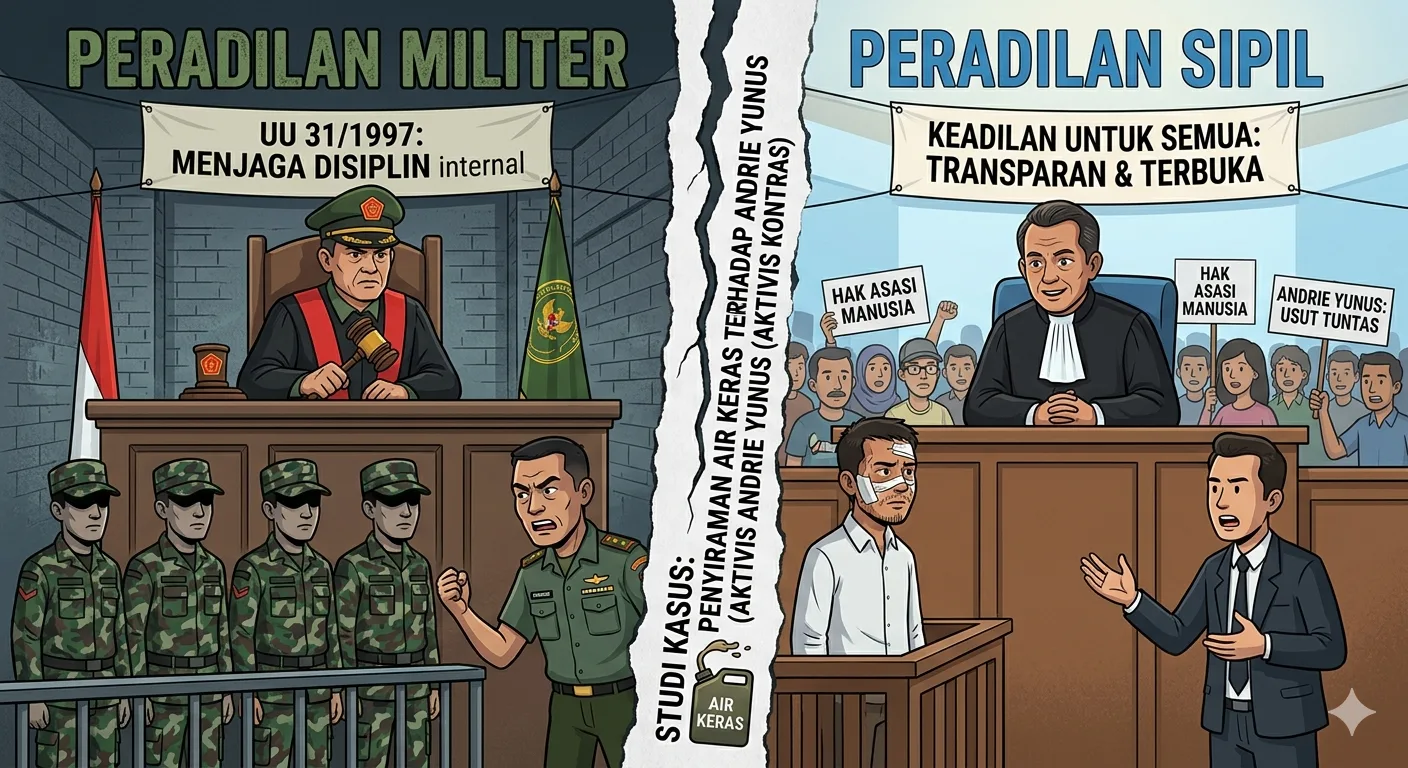
Legal Literacy - The Indonesian legal world is once again shaken by the tragedy that befell human rights activist and Deputy Coordinator of KontraS, Andrie Yunus. The act of throwing hard water in the Salemba area in March 2026 was not just a physical attack on an individual, but an attack on freedom of expression. However, behind the burns suffered by the victim, a legal debate arises that is no less heated, namely, where should the perpetrators be tried?
Jurisdictional Barriers: Civil or Military?
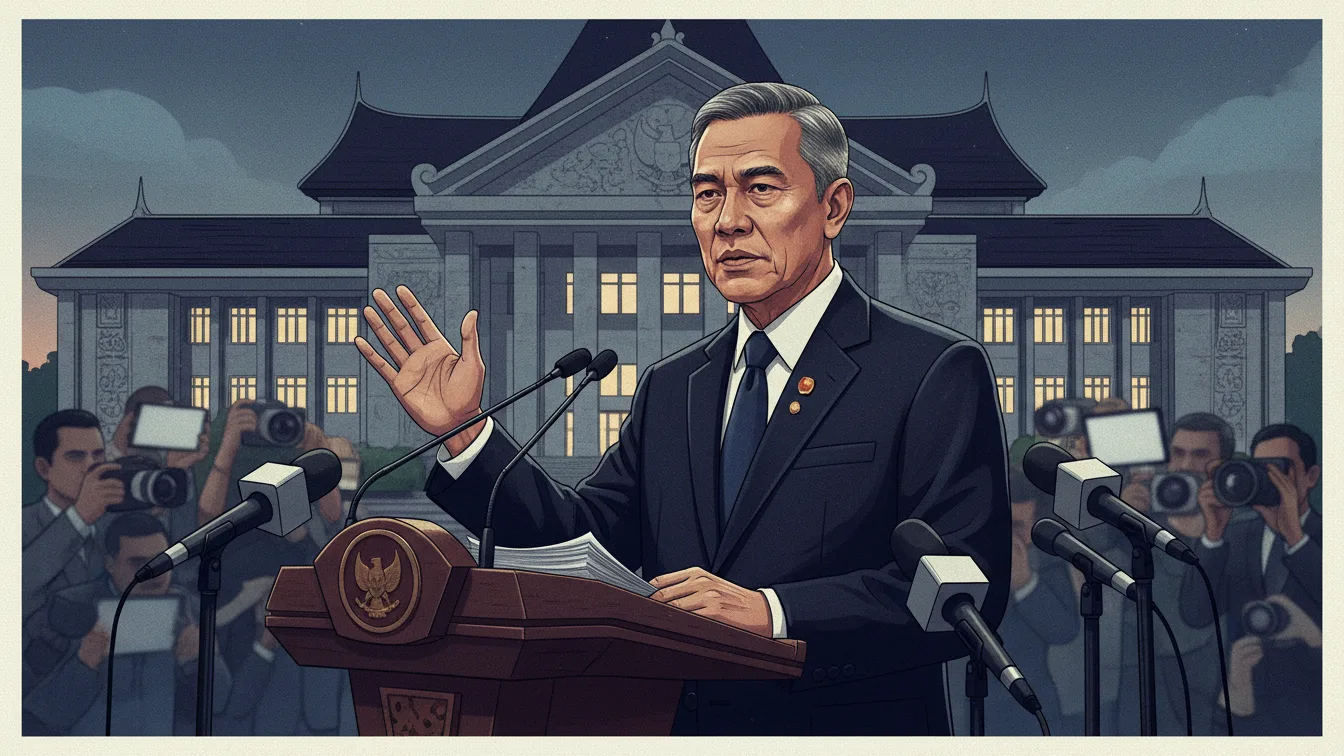
When the investigation led to the involvement of four members of Denma BAIS TNI, the hot potato of law enforcement immediately rolled into the realm of the Military Court. Based on Law Number 31 of 1997 concerning Military Courts, every member of the TNI who commits a crime, whether a military or general crime, must submit to a military court.
However, this is where the problem lies. The Andrie Yunus case is a general crime (planned severe abuse). The victim is a civilian. Therefore, a fundamental question arises: Is it fair if perpetrators who attack civilians are tried in their own "house" which is closed to public access?
Weak Points of the Military Court in General Criminal Cases
Military courts are designed to maintain military discipline (such as cases of desertion or insubordination). However, when used to prosecute violence against civilians, there are several major risks that haunt, namely:
1. Accessibility and Transparency
Military trials are often more difficult for the general public and victims' families to access compared to general courts.
2. Independence of Judges
Military judges are active officers bound by a command hierarchy. In cases involving sensitive issues or alleged orders from superiors (intellectual actors), objectivity can be at stake.
3. Disparity of Sentences
There are concerns that the sentences imposed place more emphasis on administrative sanctions (dismissal) than imprisonment commensurate with the suffering. Ideally, in cases like this, the mechanism of the Joint Court System could be a middle ground. However, the ideal is to implement the mandate of the Reform through Law Number 34 of 2004 concerning the TNI, which states that soldiers who commit general crimes must be subject to the authority of the general court. Unfortunately, this article has not been effective as long as the Military Court Law has not been revised.
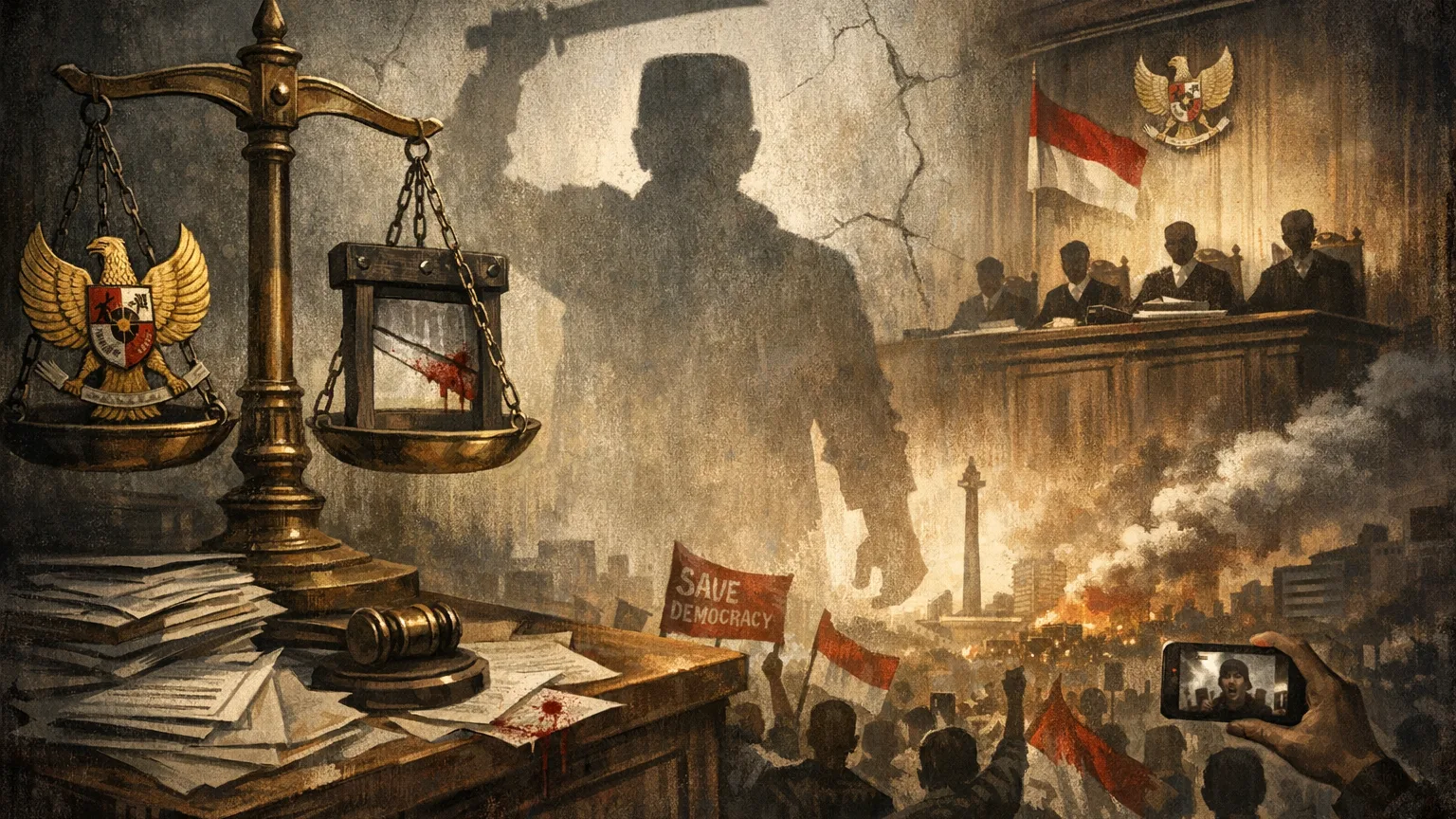
The Andrie Yunus case should be a momentum for the Government and the DPR to immediately complete the revision of the Military Court Law. We must not allow "impunity in uniform" or the perception that there are groups that are immune to the law in the eyes of the civil public.
Justice Must Not Be Fragmented
Justice for Andrie Yunus must not stop behind rigid procedural barricades. If the perpetrators of this attack are still tried in a military court without total transparency, then the face of our law will be blistered like the wounds suffered by the activist.
The State must prove that Equality Before the Law is not merely jargon in law student textbooks, but a reality felt by every citizen, regardless of who the perpetrator is and what uniform they wear.















Write a comment