
Legal Literacy - The discourse on changing the mechanism for electing regional heads from direct to indirect through the Regional People's Representative Council (DPRD) has been going on for a long time. Even in 2014, the House of Representatives of the Republic of Indonesia (DPR RI) succeeded in ratifying Law No. 22 of 2014 concerning the Election of Governors, Regents and Mayors which replaced the process of electing regional heads through the DPRD. However, the law was eventually revoked by President Susilo Bambang Yudhoyono (SBY) through the issuance of Government Regulation in Lieu of Law (Perppu) No. 1 of 2014 concerning the Election of Governors, Regents and Mayors. The factions that supported the holding of indirect regional elections at that time included Golkar, PAN, PKS, Gerindra and PPP. Meanwhile, three other parties, namely PDI-P, Hanura and PKB, refused and the Democrats supported the implementation of direct regional elections by offering ten options for improvement.
Resurfacing
Under the leadership of President Prabowo Subianto, the issue of regional head elections through the DPRD has resurfaced. In fact, the proposal was offered directly by Prabowo on several occasions. At the Golkar party's anniversary, for example, Prabowo explicitly stated that regional head elections through the DPRD were more efficient and cheaper without regard to the constitutional impact of revoking the right to vote from the people as constituents. The statement of the Coordinating Minister for Legal Affairs, Human Rights, Immigration and Corrections, Yusril Ihza Mahendra, also supported the effort to change this by saying that regional head elections through the DPRD were constitutionally valid by referring to the fourth paragraph of the Preamble to the 1945 Constitution of the Republic of Indonesia, which reads, “Sovereignty of the people which is led by the inner wisdom in deliberation/representation”. Thus, according to Yusril, whether regional elections are held directly or indirectly, they still meet the constitutional objects regulated in the state constitution. Seeing the current political conditions in the government coalition, revising the Regional Election Law by replacing regional head elections through the DPRD will be very easy because the coalition in parliament is fully controlled by the government's supporting parties. Therefore, this issue easily evaporates to the public because there are almost no political obstacles in parliament, while the political parties that are in opposition are very weak.


Reading the Attitudes of Political Parties in Parliament
Factions of political parties in the DPR RI have begun to respond to the discourse on regional head elections through the DPRD. Some support, some reject and some follow the government. Tempo reported that ahead of the new year, several political party figures held a closed meeting at the official residence of Bahlil Lahadalia, who is the Minister of Energy and Mineral Resources as well as the chairman of the Golkar party. Also present at the meeting were PKB chairman Muhaimin Iskandar, PAN chairman Zulkifli Hasan and Gerindra DPP daily chairman Sufmi Dasco Ahmad. The meeting of the four political party leaders discussed, among other things, the option of holding regional head elections through the DPRD. The four parties have indeed stated their support for regional head elections through the DPRD on the grounds of efficiency and also saving cost expensive politics. In fact, the high cost politics and the rampant money politics that makes the budget swell is actually maintained by the political parties themselves. It has been clearly stated that one of the tasks of political parties, apart from cadre recruitment, is to provide political education to the public. Thus, problems caused by political parties cannot be fully blamed on the public as constituents by revoking their right to vote directly.
Looking at the composition of the eight political parties that passed the parliamentary threshold (parliamentary threshold) it is important to see how this discourse will continue until it becomes law. There are at least five political parties that support the discourse on regional head elections through the DPRD, namely Gerindra, Golkar, Nasdem, PAN and PKB. Meanwhile, PDI-P rejects and PKS is still studying. Meanwhile, the Democrats do not explicitly say they support or reject, but rather go along with the government. Seeing the existing composition, mathematically, if the revision of the Regional Election Law is implemented, then there will definitely be no obstacles in parliament to carry out ratification at the plenary level. In fact, this consensus can be reached by consensus without having to vote. Thus, if the government intends to hold a revision of the Regional Election Law, then the proposed changes will definitely run smoothly without obstacles.
Pros and Cons of Regional Head Elections Through the DPRD
Referring to the results of surveys conducted by several survey institutions regarding the pros and cons of regional head elections through the DPRD, the conclusion is that many people reject the proposal. Litbang Kompas in its survey stated that 85.1% of respondents rejected regional head elections through the DPRD and only 11.6% supported it. Meanwhile, a survey conducted by LSI Denny JA obtained results in the form of 66.1% of respondents disagreeing, 28.6% agreeing and 5.3% not knowing.
The reasons behind this rejection are influenced by several factors, including that direct elections are the best way to choose the leaders desired by the people and to uphold democracy from the people, for the people and by the people. Meanwhile, the majority of respondents or community groups who reject the proposal for indirect regional elections through the DPRD are dominated by the Millennial Generation and GEN – Z, namely the generation born after the reform era and the implementation of direct elections.
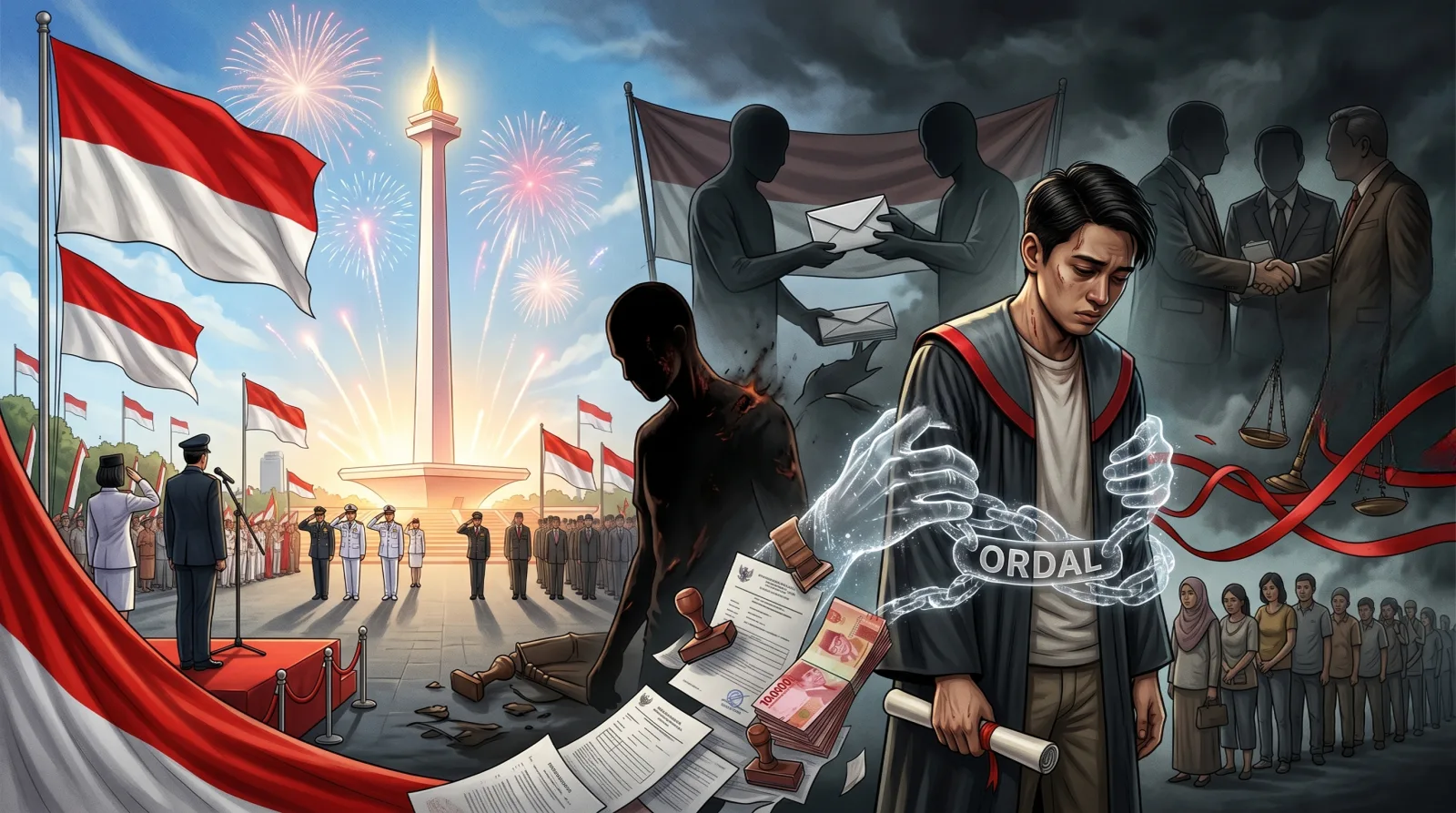
Seeing the large number of rejections to this indirect regional election discourse should be a special concern for the government. Don't let this decision create segregation in society that could lead to division. The product of direct elections is a mandate of reform that must be upheld and cannot be taken by force. The reason for changing the mechanism by saying thatcost expensive politics and high money politics in society is a failure of political parties to provide political education to the public.
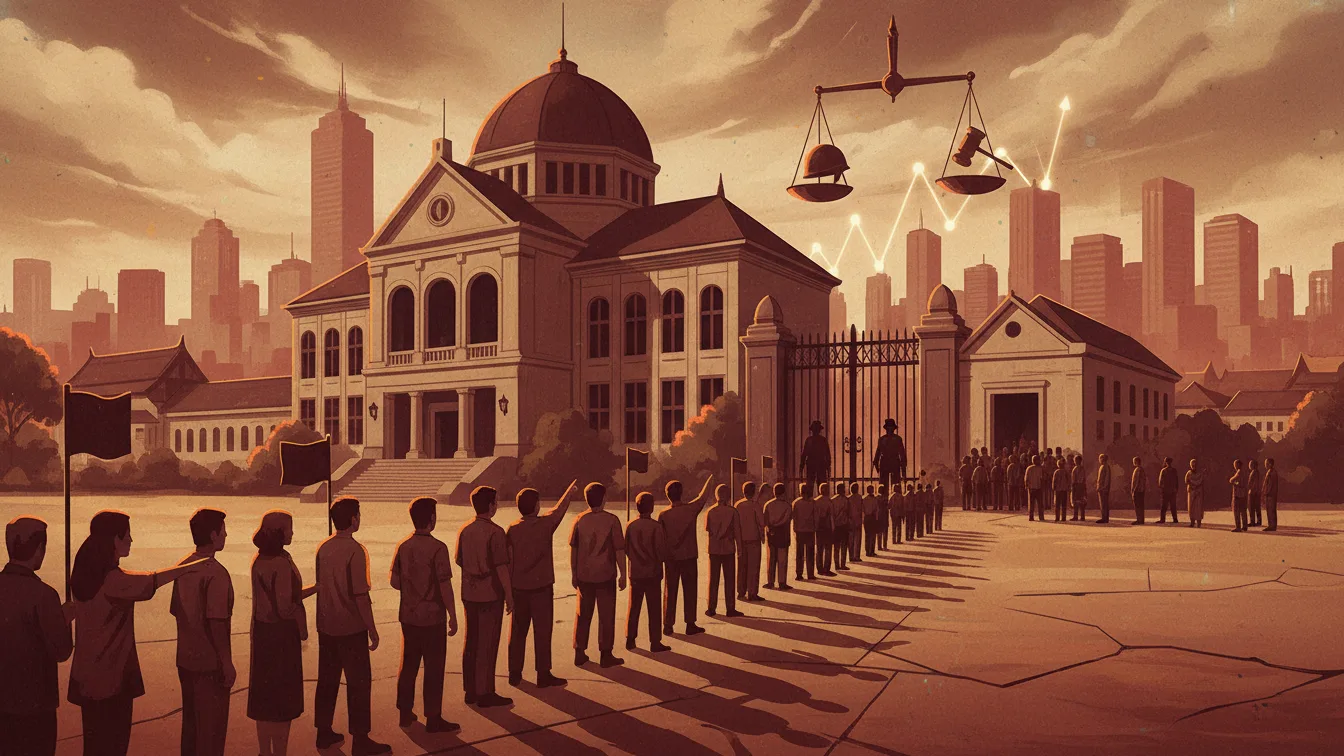
Direct democracy is a manifestation of community involvement in determining the candidacy and also the election of figures who are considered capable of leading them. So that the elected regional head gets direct legitimacy from the community itself. If the indirect regional election process is successfully ratified or approved, then the process ofcheck and balances and public accountability becomes weak.
Then the process of accountability for the position held ultimately does not go to the public anymore, but to the DPRD which elects the regional head. This is clearly a form of amputation of community involvement in the political process and taking away the community's right to choose their leaders. The government in responding to this must be wise and pay attention to every proposal that comes in, especially from civil society groups. Because, this one decision will affect the legitimacy of leadership in the region.















Comments
0Share your perspective politely, stay relevant, and focus on the article. Comments appear after moderation.
Join the discussion
Write a clear, polite response that stays on topic.
No comments yet. Be the first to discuss.
Comments will appear after moderation.