
Legal Literacy - In the classroom, we are force-fed theories about justice, the rule of law, and morality in legal practice. We learn from Hans Kelsen about law as a hierarchical system of norms, from John Rawls about justice as fairness, and from Montesquieu about the trias politica that divides power for the sake of balance. We memorize articles in the 1945 Constitution, understand the principles of criminal and civil law, and analyze court decisions that are considered important precedents.
Everything sounds beautiful and convincing—as if the law really works for the benefit of the people. However, the deeper we study law, the clearer it becomes that all of this is just an illusion. The law in this country is not a tool of justice, but an instrument of those in power to oppress the weak and protect their own interests. When we questioned why the reality outside does not reflect the theory we learned, a lecturer casually said, “You will understand later when you become practitioners. The way the law works is not as ideal as you imagine.”



That sentence sounds like an early warning: prepare to enter a world full of decay, where law is more often a tool for transactions than a tool for justice. If the law is indeed so damaged, if everything we learn is just academic nonsense without relevance in the real world, then what is the point of Faculty of Law still existing? What is the point of learning about justice if legal practice is filled with bribery, manipulation, and under-the-table transactions? If in the end the Faculty of Law only produces graduates who are forced to submit to a corrupt system or are eliminated for refusing to play in this dirty game, then it is better to disband this faculty.
From Beautiful Theory to Rotten Reality: Law in the Hands of the Mafia
We are taught that the law must be objective, that judges must adhere to the truth, and that justice must be upheld regardless of social status. But in the real world, the law is subject to money and power.
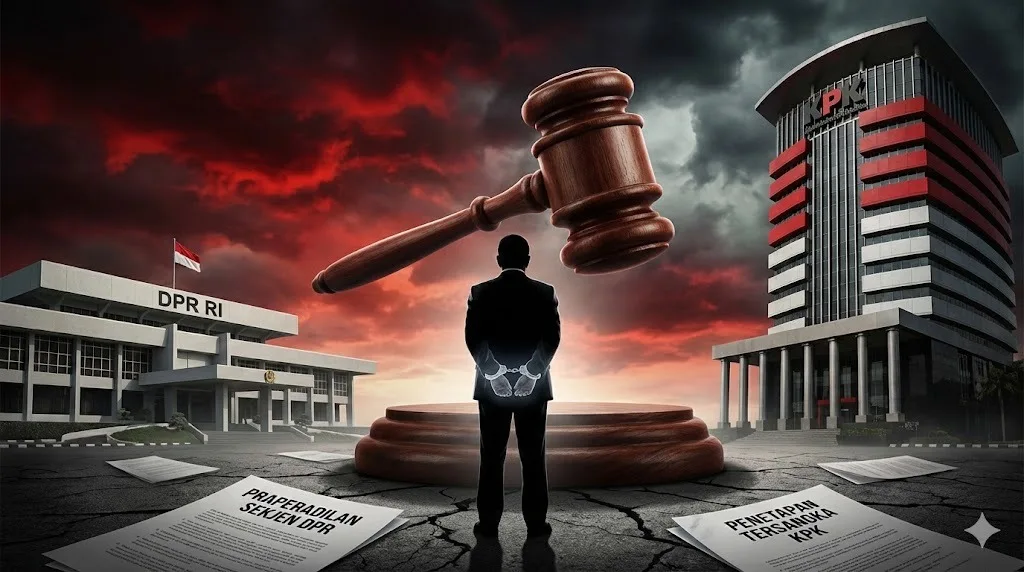
Mahfud MD once revealed how the law in Indonesia has become a transactional industry. The judicial mafia roams in all sectors: from the courts to the police, from the prosecutor's office to anti-corruption institutions. Judges who can be bought, prosecutors who can be "arranged", lawyers who are more like case brokers than justice fighters, and police who make law a commodity.
Every day we hear news about officials involved in corruption, but end up with light sentences or even being acquitted. Big cases involving political elites often disappear just like that, while ordinary people who steal to survive are severely punished.
Then what is the point of us learning legal theory, if in the field what applies is “whoever has the money, wins”What is the purpose of law schools producing graduates if, in the end, they only have two choices: participate in a corrupt system or be marginalized for adhering to idealism?
Lecturers, Practitioners, and the Legitimacy of Legal Decadence
Statement “You will understand later when you become practitioners” is not merely an acknowledgement, but a form of justification for the system's decay. It is as if we must accept that in the legal world, integrity is only for the naive, while the intelligent are those who know how to manipulate the law for their own interests.
This is a form of corruption reproduction from generation to generation. Students who are initially idealistic, after entering the practical world, will find that the law does not work as they learned. They will face a dilemma: participate in the system and gain profits, or go against the grain and risk losing everything. Unfortunately, most choose the former.
If becoming a practitioner means having to participate in fraud, then what is the point of legal education? Law schools should be producing people who improve the system, not merely training grounds for a new generation of legal mafia. However, if from the beginning the legal education system only prepares us to accept this dirty reality, then law schools are nothing more than factories producing legal bureaucrats for corporations and rulers.
Disband the Faculty of Law or Fix the System?
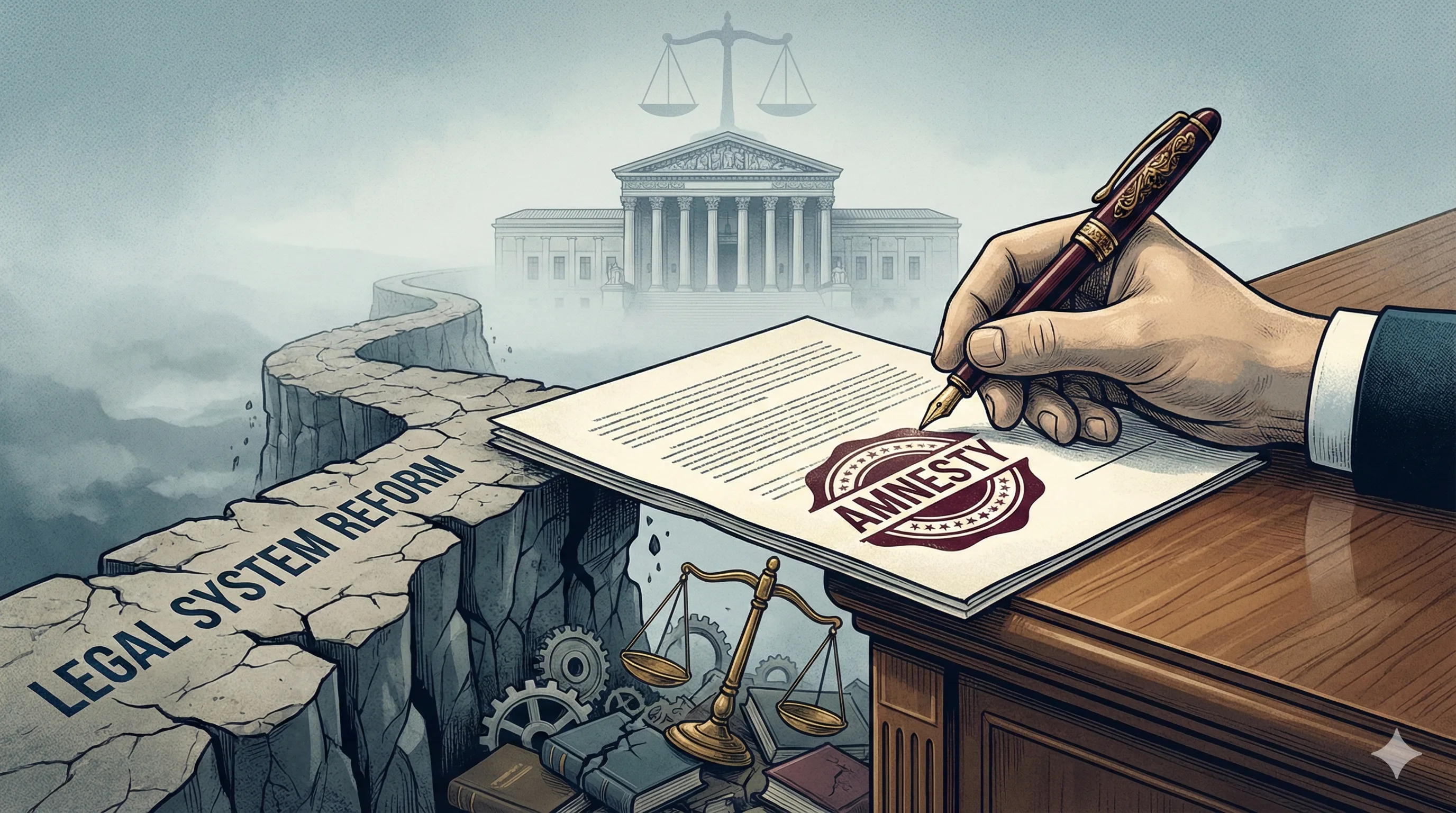
The call to "Dissolve Law Schools" is not just emotional anger, but a harsh criticism of the legal education system that fails to create change. Law schools should not be places for producing professionals who ultimately only become tools of the oligarchy. If the law remains a plaything for the elite and there is no room for change, then the existence of law schools only prolongs the illusion of justice.
However, is the only solution to dissolve law schools? Or is there still hope for improving the system?
If law schools want to remain relevant, then they must undergo total reform. Students should not only be crammed with theory, but must be taught how to face the decay of law in the field. Legal education must become the basis of resistance, not just an entry point for those who want to get rich from the corrupt legal industry.
Law schools must dare to teach reality from the start, not lull students to sleep with empty theories. There must be courses that discuss how to deal with the legal mafia, how to fight bribery and political intervention, and how to build a legal system that truly works.
But if that change is impossible, if law schools remain nests of academics who turn a blind eye to reality, if law graduates continue to be part of a rotten system, then it may be true: it is better to just dissolve law schools.






















Comments (0)
Write a comment