
My parents are currently burdened with a substantial amount of bank credit debt due to a failed business. Lately, debt collector from the bank have been frequently calling and visiting me. They threaten that if my parents cannot pay the debt, or if my parents pass away, then I, as their biological child who is employed and earning an income, am obligated to pay off the entire remaining debt. Is it legally true that a parent's debt automatically becomes the responsibility of and must be paid off by their child?
Are Children Obligated to Pay Off Their Parents' Debts? Here's the Legal Explanation
See the complete explanation of whether children are legally obligated to pay off the debts of parents who are still alive or deceased according to the Civil Code and Islamic Law.

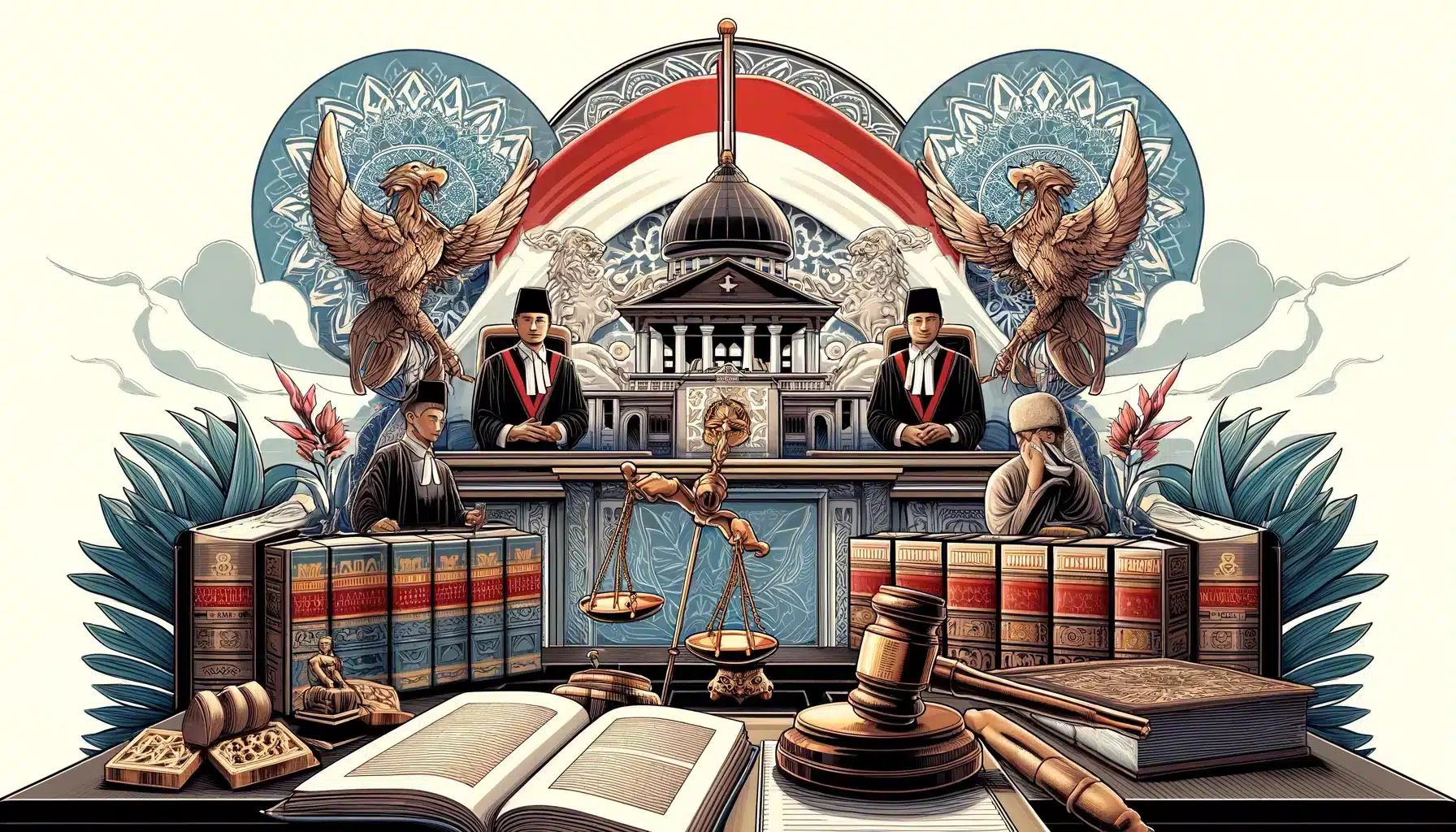
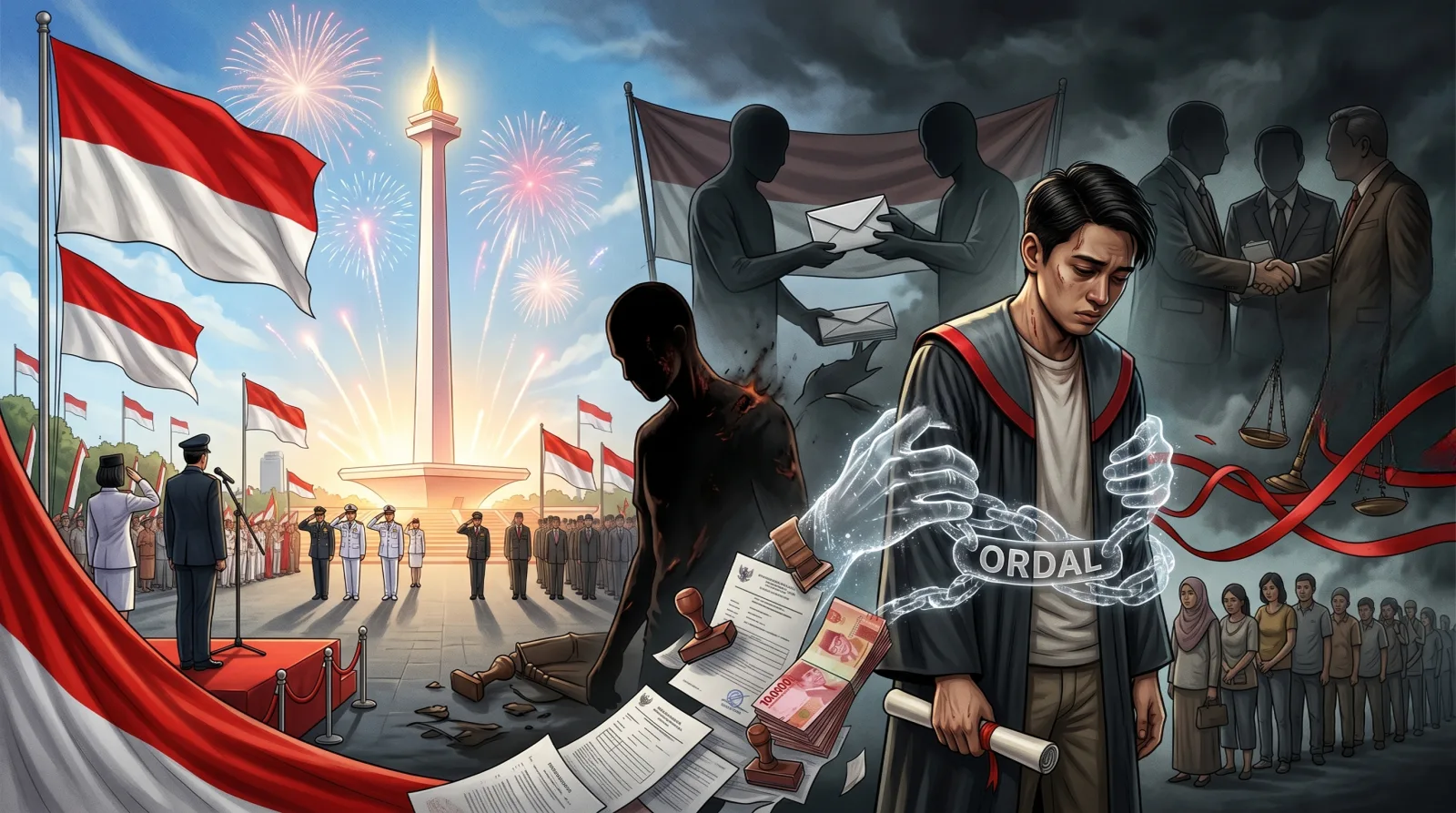
Ilustrasi penjelasan hukum mengenai kewajiban anak melunasi utang orang tua, baik yang masih hidup maupun telah meninggal dunia.
(Source: AI Gemini, Redaksi Literasi Hukum Indonesia)
Question
Legally, a child is not obligated to bear or pay off their parents' debts with their personal assets. Whether the parents are still alive or have passed away, the legal principles in Indonesia strongly protect a child's personal assets from being ensnared by their parents' debts.
While the parents are alive, the debt is purely a contractual agreement between the parents (debtor) and the bank (creditor), so the child is not a party who must be held responsible. When the parents die, the obligation to repay the debt does pass to the child as an heir, but the responsibility is limited to the value of the inheritance left by the parents. Both Western Civil Law and Islamic Law in Indonesia agree that if the inheritance is exhausted or the parents do not leave any assets at all, the child cannot be forced to pay the remaining debt with their personal assets.
The practical conclusion: You have the right to firmly reject the bill debt collector if billed for the parents' debt, as long as you have never signed an agreement as a guarantor (borgtocht). If the parents die and the debt is greater than their assets, you can officially reject the inheritance in court to be free from all debt bills.
Full Review
Thanks for your question. Read the full analysis below.
Table of Contents
- 1. Child's Responsibility While Parents Are Still Alive
- 2. Responsibilities of Heirs According to Civil Law (KUH Perdata)
- 3. Responsibility for the Testator's Debts According to Islamic Law and the Compilation of Islamic Law Views
- 4. Jurisprudence Practice Supreme Court
- 5. What Steps Should Be Taken If You Are Chased for Payment?
- Legal Basis
- Civil Code (KUH Perdata)
- Islamic Law and Jurisprudence
- Conclusion
- FAQ (Frequently Asked Questions)
Section 2/3: 2. Responsibilities of Heirs According to Civil Law (KUH Perdata)
2. Responsibilities of Heirs According to Civil Law (KUH Perdata)
The situation will be slightly different if the parent (debtor) dies. Death does not automatically eliminate debt. In the Civil Law system (Burgerlijk Wetboek), the principle of saisine (Article 833 of the Civil Code) applies, whereby the heirs automatically by law acquire ownership of all goods, all rights, and all receivables of the deceased.
According to J. Satrio, S.H. in his book entitled Inheritance Law (1992), inheritance is wealth in the form of a complex of assets (property) and liabilities (debts) of the testator that is transferred to the heirs. This is reinforced by Article 1100 of the Civil Code which requires the heirs to bear the payment of debts in proportion to what they receive from the inheritance.


So, does this mean your personal assets can be confiscated by the bank if your parents' debts are greater than the inheritance? Not necessarily. The law gives you a choice of protection. You are not automatically forced to accept the debt. According to Prof. Dr. Sudikno Mertokusumo and other experts, heirs are given the following rights:
- Right of Deliberation (Recht van Beraad): Based on Article 1023 of the Civil Code, you have the right to request 4 months to investigate the estate and ensure whether the debts are greater than the assets.
- Acceptance with Special Privilege (Beneficiaire Aanvaarding): Based on Article 1032 of the Civil Code, if you choose this, the obligation to pay the parents' debts is ONLY limited to the value of the inherited assets. Your personal assets will not be mixed at all and cannot be confiscated by the bank.
- Rejecting Inheritance (Rejection): According to Articles 1045 and 1057 of the Civil Code, no one is obliged to accept an inheritance. If you officially reject the inheritance in court, you are considered to have never been an heir (Article 1058 of the Civil Code) and are 100% free from all the testator's debts.
Support
• Indonesian Legal Literacy
Read more comfortably, while supporting literacy.
Join Membership or submit your article for publication.
Membership
Read without ads, focus more, and access premium features.
Submit Article
Submit your writing—we curate and help publish it. If it is published, you have the opportunity to earn points/payouts according to the terms.

















Comments
0Share your perspective politely, stay relevant, and focus on the article. Comments appear after moderation.
Join the discussion
Write a clear, polite response that stays on topic.
No comments yet. Be the first to discuss.
Comments will appear after moderation.