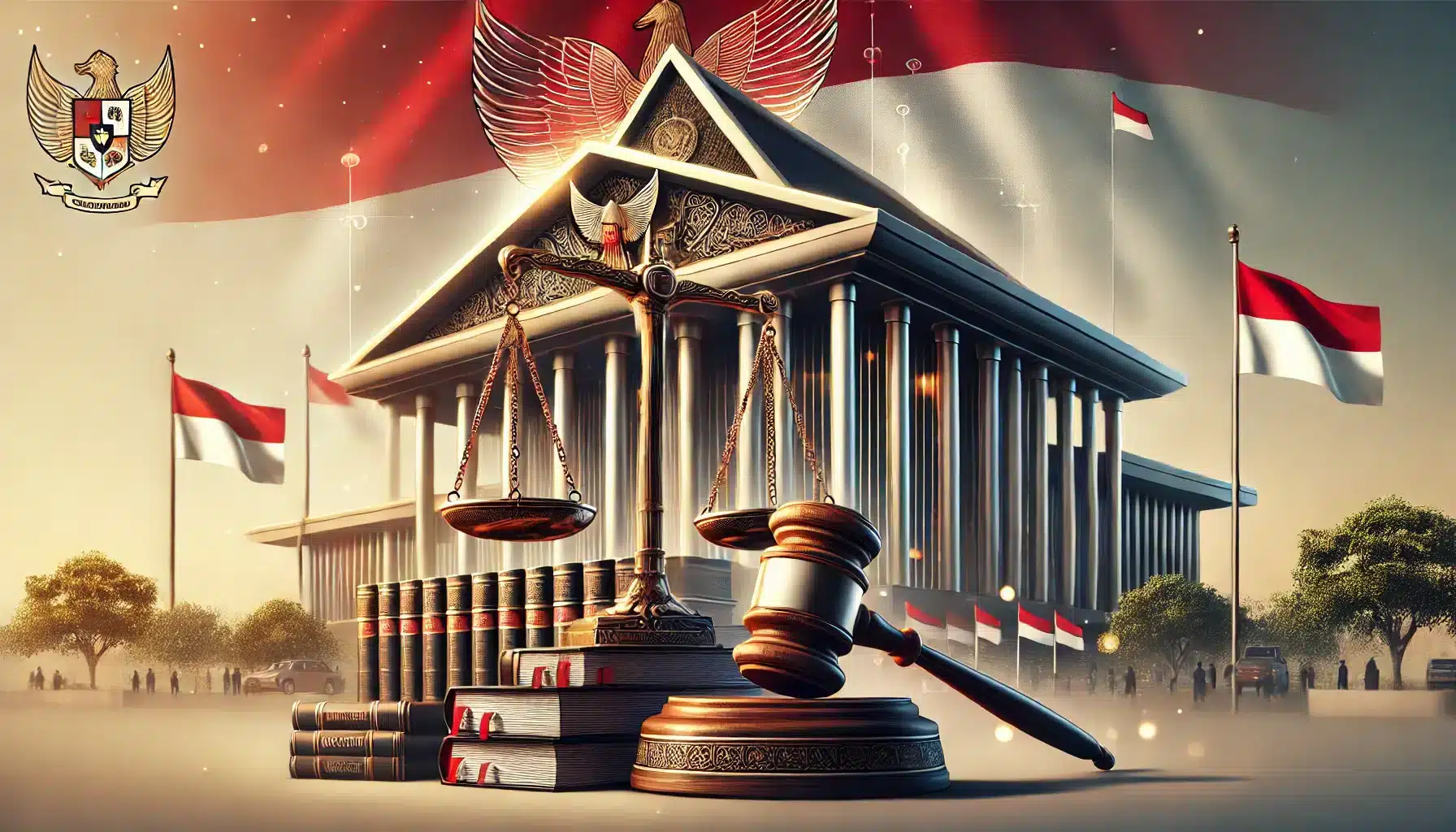
Legal Literacy - This article discusses the dynamics of the Constitutional Court (MK) in the Indonesian constitutional system, focusing on the application of judicial review involving the MK and the Supreme Court. This article also examines the authority of the MK as a constitutional judicial institution, including its role in regional head election disputes (pilkada) and the implications of important decisions that affect the constitutionality of the election regime in Indonesia, such as the 2024 Pilkada.
Constitutionality of the Constitutional Court
The dynamics of the Constitutional Court in the Indonesian constitutional installation have their own characteristics; there are several distinctive angles with the initiating country, Austria. The application of the model decentralized system or abstract bifurcation requires a rigid separation of judicial jurisdiction in terms of judicial review. In practice, judicial review in the Indonesian constitutional system is divided into two institutions, the Supreme Court and the Constitutional Court.[1] The Supreme Court is assigned the authority to examine the legality of regulations under the law, and on the other hand, the Constitutional Court is given the authority to examine the constitutionality of laws.[2]


The main authority held by the Constitutional Court is complemented by other authorities as regulated in the constitution, in casu 1945 Constitution. The mention of constitutional review as the main authority cannot be separated from Hans Kelsen's initial idea in forming the Constitutional Court as a special judicial institution that annuls laws with the constitutional touchstone – acting as a negative legislature.[3] These additional authorities include the authority to dissolve political parties, disputes over general election results (pemilu), disputes over the constitutional authority of state institutions, and the impeachment of the President and/or Vice President. All of these normative authorities are clearly stated in Article 24C paragraphs (1) and (2) of the 1945 Constitution and have not undergone any substantive changes when they were enacted into law; vide Law Number 24 of 2003 juncto Law Number 7 of 2020.




















Comments
0Share your perspective politely, stay relevant, and focus on the article. Comments appear after moderation.
Join the discussion
Write a clear, polite response that stays on topic.
No comments yet. Be the first to discuss.
Comments will appear after moderation.