Legal Literacy - Term judex factie and judex jurist are frequently encountered in first-level and appeal court proceedings, as well as cassation processes in the Supreme Court.
This article discusses in depth what judex factie and judex jurist is in the judiciary in Indonesia.
Definition Judex Factie and Judex Jurist
As the judiciary in Indonesia develops, the examination of cassation is not limited to examining the application of law, but also adjudicating the facts that have been examined by the first instance and appeal courts.
This makes the judicial system in Indonesia divided into three levels of courts, namely the court of first instance, the court of appeal, and the court of cassation. The mention of these three levels of the judicial process is known by two terms judex factie and judex facti and judex juris.
Etymologically, both concepts come from Latin, namely judex factie meaning "judges (who examine) the facts" and judex jurist meaning "judges (who examine) the law."
As for the term, judex factie refers to a judge who is assigned to examine the facts of the trial, whether the facts prove the case or not. Meanwhile judex jurist refers to a judge who plays a role in examining the application of the law, whether there is an error in the application of the law in court. judex factie.
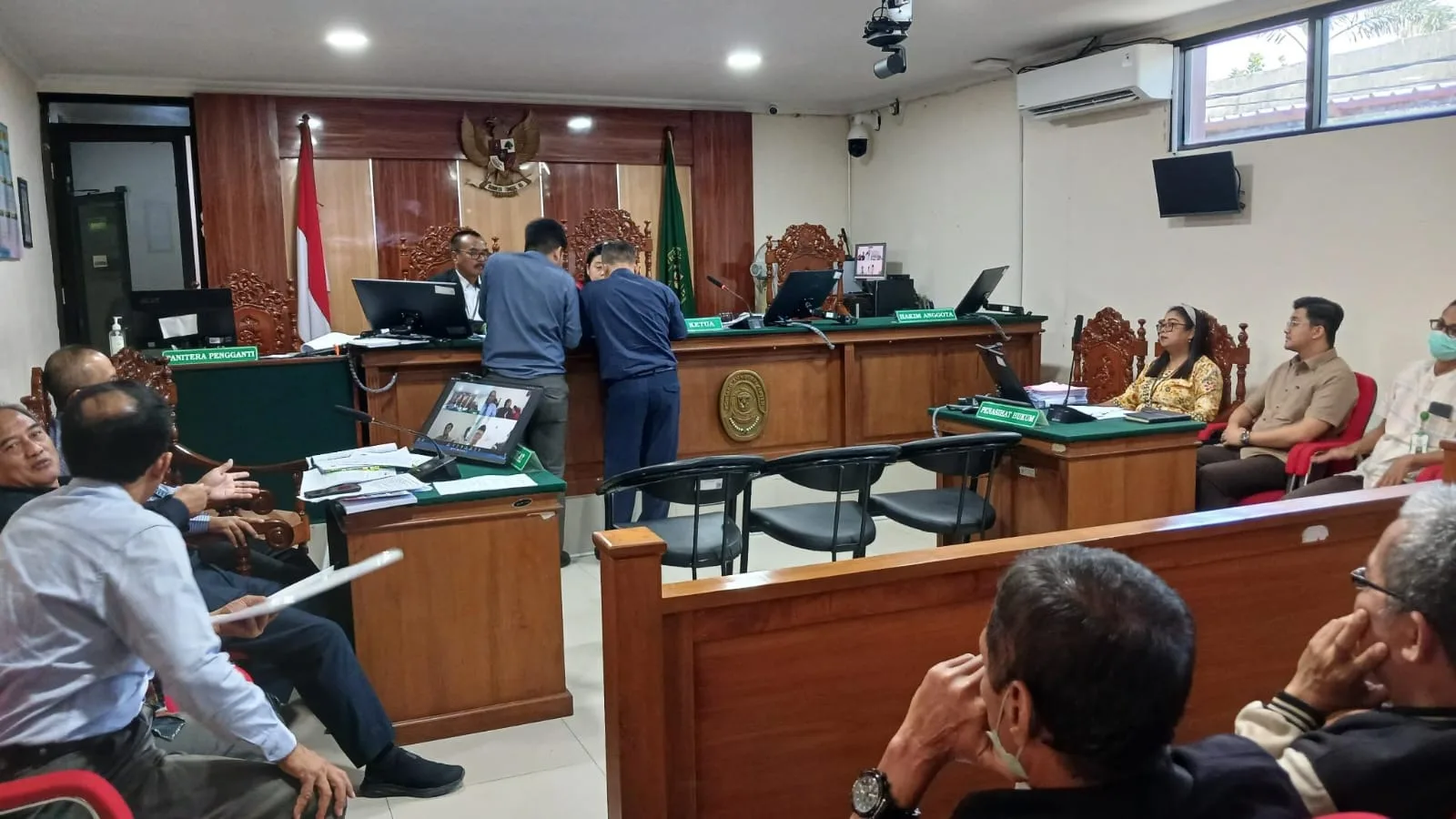
In this case, the institutions that act as judex factie include District Court as the court of first instance and High Court as the court of appeal. They are the first courts tasked with examining, deciding, and resolving cases.
Meanwhile, the institution that acts as judex jurist is the Supreme Court as the court of cassation. At the cassation level, the Supreme Court no longer examines the facts and evidence of the case. The Supreme Court only examines the interpretation, construction, and application of the law to the facts that have been determined by judex factie. Therefore, the Supreme Court is called judex jurist.
The concept of Judex Factie
Judex facti is a panel of judges at the first level who have the obligation to examine evidence from a case. Not only that, but they must also apply other legal rules and provisions to the facts of the case.
In other words, judex factie is a judicial system in which the panel of judges plays a role as the discoverer of which facts are true. The decision taken from this judicial system is called a decision judex factie. Meanwhile, the judicial institutions judex factie are the District Court and the High Court.
Function judex factie is carried out through several stages, namely
- Formulating facts.
- Finding cause-and-effect relationships.
- Conducting probability calculations.
Furthermore, the District Court as an institution of judex factie has the authority explained in Article 50 of Law Number 2 of 1986, namely:
"The District Court has the duty and authority to examine, adjudicate, and resolve criminal and civil cases at the first level."
The authority of the District Court is explained in more detail in Articles 84, 85, 86 of the Criminal Procedure Code, namely:
Article 84 of the Criminal Procedure Code
(1) The District Court has the authority to try all cases concerning criminal acts committed within its jurisdiction.
(2) The District Court in whose jurisdiction the defendant resides, last resided, was found, or is detained, only has the authority to try the defendant's case if the residence of the majority of the witnesses summoned is closer to the location of that district court than the location of the district court in whose jurisdiction the criminal act was committed.
(3) If a defendant commits several criminal acts within the jurisdiction of various District Courts, each District Court shall have the authority to adjudicate the criminal case.
(4) Several criminal cases that are related to each other and committed by a person within the jurisdiction of various District Courts shall be adjudicated by each District Court, provided that the possibility of merging the cases is open.
Article 85 of the Criminal Procedure Code
If the conditions in an area do not allow a District Court to adjudicate a case, the Supreme Court, upon the proposal of the head of the District Court or the head of the relevant District Attorney's Office, shall propose to the Minister of Justice to stipulate or appoint a District Court other than the one referred to in Article 84 to adjudicate the case in question.
Article 86 of the Criminal Procedure Code
If a person commits a criminal act abroad that can be prosecuted under the laws of the Republic of
Indonesia, the Central Jakarta District Court shall have the authority to adjudicate it.
The High Court, as an institution judex factie at the appellate court level, has the authority stipulated in Article 51 of Law Number 2 of 1986 concerning General Courts, namely:
Paragraph (1) The High Court has the duty and authority to adjudicate criminal and civil cases at the appellate level.
Paragraph (2) The High Court also has the duty and authority to adjudicate at the first and last instance disputes over jurisdiction between District Courts within its jurisdiction.
The concept of Judex Jurist
Judex juris are supreme court justices whose job is to correct or rectify errors that occur in the application of law by judex factie.
The Supreme Court as judex jurist has the authority stipulated in Article 24A paragraph (1) of the 1945 Constitution of the Republic of Indonesia, namely:
The Supreme Court has the authority to adjudicate at the cassation level, to review regulations under the law against the law, and has other authorities granted by law.
The Supreme Court as the Highest State Court is a cassation court that has the task of fostering uniformity in the application of law through cassation and review decisions. This aims to ensure that laws and regulations are applied fairly and appropriately.
Law Number 14 of 1985 concerning the Supreme Court, as amended by Law Number 5 of 2004 and Law Number 3 of 2009, stipulates the role judex jurist in Article 30, namely:
“The Supreme Court at the level of cassation annuls the decisions or stipulations of the courts from all judicial environments because:
- It is unauthorized or exceeds the limits of authority.
- It incorrectly applies or violates applicable law.
- It fails to fulfill the conditions required by the statutory regulations that threaten the negligence with the nullification of the decision in question.
A similar matter is also found in Article 253 Paragraph (1) of the Criminal Procedure Code (KUHAP), namely
“The examination at the level of cassation is carried out by the Supreme Court at the request of the parties as referred to in Article 244 and Article 248 in order to determine:
- Whether it is true that a legal regulation has not been applied or has been applied improperly.
- Whether it is true that the method of adjudication has not been carried out according to the provisions of the Law.
- Whether it is true that the court has exceeded the limits of its authority.
That is the description of judex factie and judex jurist is in the judiciary in Indonesia.
References
Zahriyah, Yuhanidz. "Analysis of Decisions in the Religious Court Environment (Between Judex Facti and Judex Juris)." Jurnal Pro Hukum 11, no. 2 (2022): 267-281.
Comments (0)
Write a comment