Legal Literacy- Amidst statistics showing a decline in Indonesia's democracy index each year, regencies like Pati are often associated with negative images. Labeled "primitive" after a series of negative news reports, the public seems to view Pati as a marginalized area in the discourse of modernity and democratization.
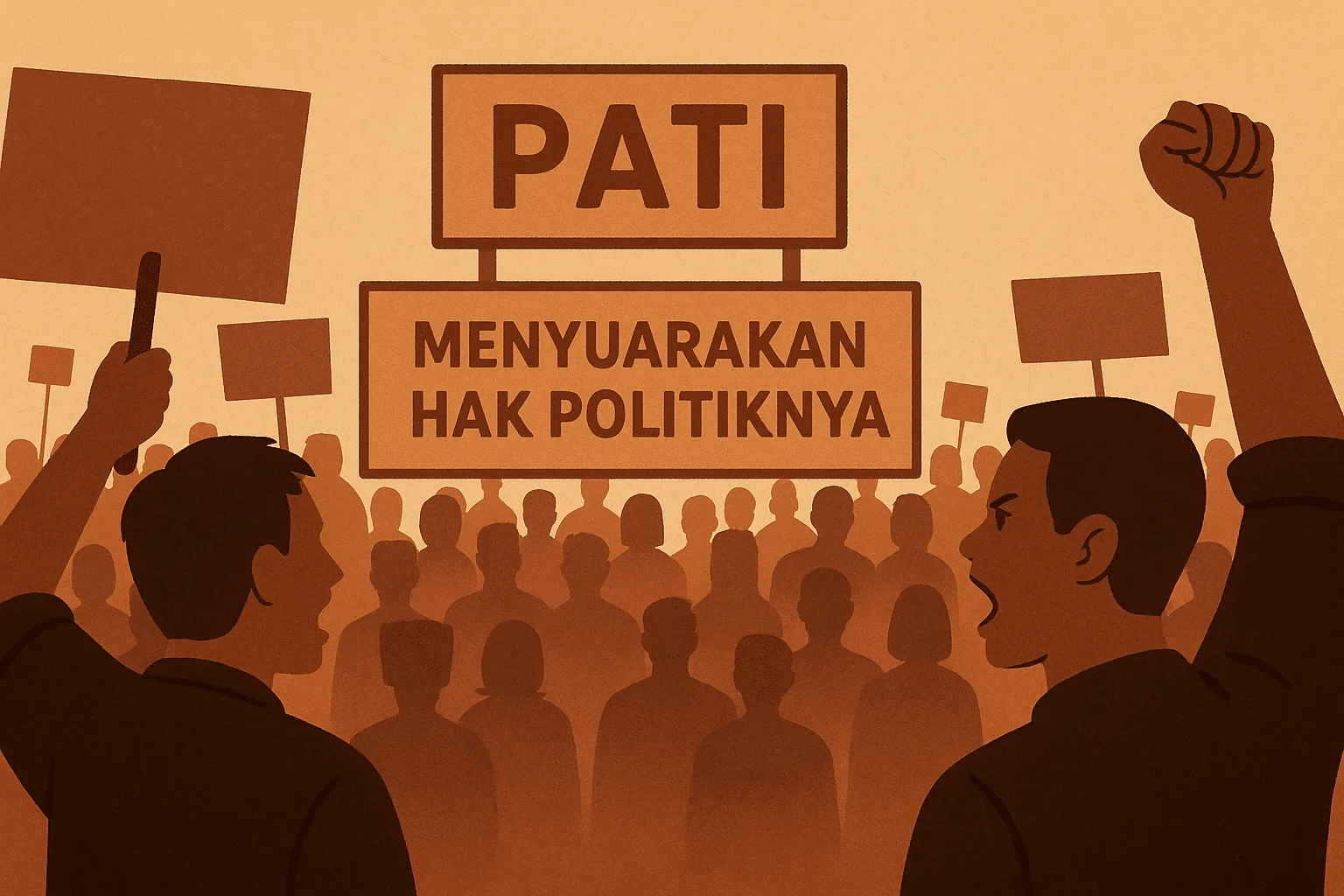
However, in August 2025, Pati became the center of national attention: the largest mass demonstration in its history took place, not in the name of mere viral controversy, but as a manifestation of the people's aspirations demanding rights and justice.
According to The Economist Intelligence Unit (EIU), Indonesia's Democracy Index score continues to decline—from around 7 (2015) to just 6.44 in 2024. Its position also fell to 59th out of 167 countries, falling into the category
flawed democracy("flawed democracy").
This decline indicates structural weaknesses: low civil liberties, a dwindling healthy political culture, and the strengthening of identity politics and intolerance. This condition is exacerbated by increasingly sluggish public participation and obstacles to expression. Democracy, which should grow from popular participation, is increasingly confined by formal procedures and veiled authoritarianism.
Public Perception of Pati
Before the demonstration, Pati was often in the spotlight due to bad incidents ranging from armed youth brawls to mass poisoning cases that triggered negative stereotypes. A netizen wrote:
“A brawl between two youth groups armed with sickles… killed a teenager.”
“Poisoning… it seems like news from Pati is constantly trending.”
This narrative forms a shallow perception: that Pati is an unethical, violent, and backward area. But that label does not give its citizens room to show another face of Pati—a face that is brave, critical, and politically civilized.

Image Illustration by Editors























Write a comment