
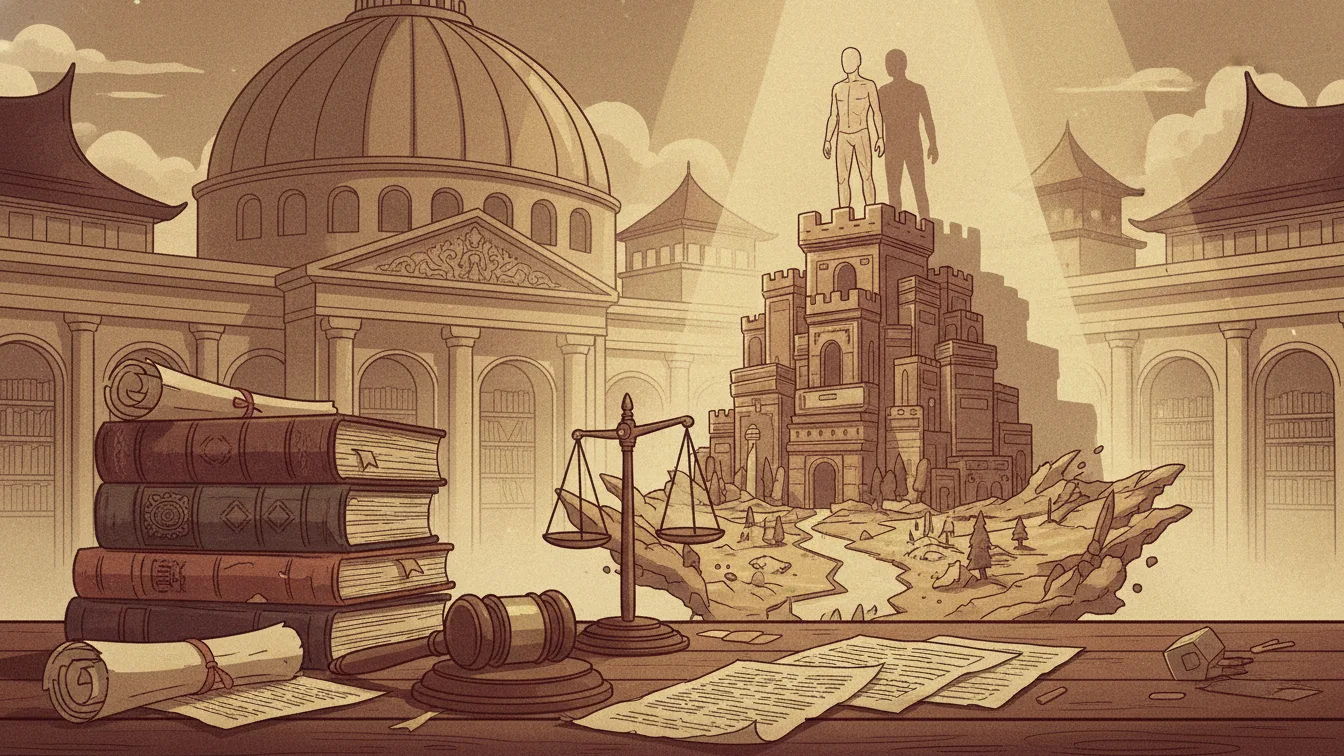
Legal Literacy - Why has the law failed to save the earth despite the existence of seemingly progressive environmental regulations and policies? The fact is that forests continue to shrink, rivers remain polluted, and the relationship between humans and nature is increasingly fragile. The problem lies in the fundamental way of thinking that underlies the creation of the law itself. This writing begins with the view that law is not built to protect nature autonomously, but to regulate relations between humans.
In its normative structure, only humans or their representations such as corporations (legal entities) are recognized as subjects with rights and obligations. Nature does not receive equal recognition, so its interests are only considered insofar as they relate to human needs or risks. This point of view that places humans as the center of value, moral measure, and the sole bearer of legal legitimacy is called anthropocentrism.


Anthropocentrism comes from the Greek words anthropos (human) and kentron (center), which refers to a paradigm of thought that places humans as the axis of value, meaning, and morality. Literally, anthropocentrism means “human-centered,” especially in terms of ethics and value judgments. In the Oxford English Dictionary, anthropocentrism is defined as “Regarding humankind as the central or most important element of existence”.
























Comments
0Share your perspective politely, stay relevant, and focus on the article. Comments appear after moderation.
Join the discussion
Write a clear, polite response that stays on topic.
No comments yet. Be the first to discuss.
Comments will appear after moderation.