[4] K Hashemi Joo, M., Nishikawa, Y, & Dandapani, “Cryptocurrency A Successful Application of Blockchain Technology,” Managerial Finance, 4.6 (2020), 715 <https://doi.org/https://doi.org/10.1108/MF-09-20180451>.
[5] Webinar BLK, “Consumer Protection of Crypto Assets,” 2023.


[6] BAPPEBTI, Badan pengawas Perdagangan Berjangka Komoditi, dan Commodity Futures Trading Regulatory Agency CoFTRA, Crypto Assets (Crypto Asset) (Kementrian Perdagangan Republik Indonesia, 2020) <https://bappebti.go.id/resources/docs/brosur_leaflet_2001_01_09_o26ulbsq.pdf>.
[7] Muhammad Adisurya Pratama, “Crypto Investment: Between Profit, Loss and Depression,” Bank Indonesia, 2022 <Https://Bi.Prosa.Ai/Id/Bi-Institute/BI-Epsilon/Pages/Investasi-Kripto-Antara-Untung,-Buntung-Dan-Depresi.Aspx> [Accessed October 3, 2024].
[8] Anak Agung Ngurah & Ni Ketut Supasti Dharmawan, “Legality of Crypto Asset Investment in Indonesia as a Digital Commodity and Means of Payment,” Jurnal Kertha Wicara, 11.1 (2021), 65 <https://doi.org/KW.2021.v11.i01.p07>.
Legality of Crypto Asset Investment
In the business world, we often see or hear the term investment. Simply put, investment is the activity of investing capital to be included in productive assets for a certain period of time.[1] Authentically, the definition of investment can be seen in Law Number 25 of 2007 concerning Investment. Article 1 number (1) explains that investment is any form of capital investment activity, whether by domestic investors or foreign investors to conduct business in the territory of the Republic of Indonesia.
Thus, we can understand investment as the process of distributing existing sources of funds with the hope of obtaining additional or certain profits on the funds invested in the world of trade. [2] The grouping of investment categories is basically into 2 categories, namely, first direct investment and second indirect investment. Meanwhile, the grouping of investments based on their type includes investment groups according to their assets.
In this study topic, one of the assets that is currently widely discussed is crypto asset investment, which is traded on the commodity futures exchange. Article 1 number (1) of Law Number 10 of 2011 concerning Commodity Futures Trading. Defines commodity futures trading as everything related to the buying and selling of commodities with margin withdrawals and with settlement later based on futures contracts, sharia derivative contracts, and/or other derivative contracts. Furthermore, it is regulated in Minister of Trade Regulation Number 99 of 2018. Article 1 number (1) Crypto Assets are designated as Commodities that can be used as the subject of futures contracts traded on futures exchanges.
Then it was reinforced through BAPPEBTI regulation Number 5 of 2019. Article 1 number (7) which reads crypto assets are intangible commodities in the form of digital assets, using cryptography, peer-to-peer networks, and distributed ledgers, to regulate the creation of new units, verify transactions, and secure transactions without the intervention of other parties. We can see the definition of a futures exchange itself through BAPEBBTI regulation Number 2 of 2019 Article 1 number (3) a futures exchange is a business entity that organizes and provides a system and/or facilities for buying and selling commodities based on futures contracts, sharia derivative contracts, and/or other derivative contracts.
Thus, referring to these legal provisions, it can be concluded that crypto assets can be used as a commodity investment tool traded on futures exchanges in Indonesia because they have a clear legal basis or legal framework.
[1] Nurul Huda & Risman Hambali, “Risks and Profit Rates of Cryptocurrency Investment,” Journal of Management and Business (Performance), 17.1 (2020), 80 <https://doi.org/10.29313/performa.v17i1.7236>.
[2] Made Adnyana, Investment and Portfolio Management (Jakarta: Universitas Nasional Publishing Institute (LPU-UNAS), 2020).
Crypto Assets That Can Be Traded In Indonesia
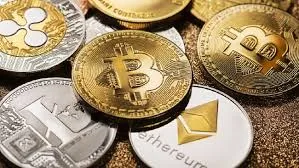
Crypto Assets as a finding have provided new ideas in the world of payments that are used easily with the same value as money and are digital. Because of its sophistication, the use of crypto assets is not only a means of exchanging value but also as an investment medium. There are currently many and varied crypto assets, each crypto asset has different characteristics, how it works, goals and uses.[1]
The large number of crypto asset types in the world. BAPEBTI carries out sorting and selection so that not all crypto assets can be traded on the Indonesian futures exchange. According to BAPPEBTI Regulation Number 13 of 2022 concerning Amendments to Bappebti Regulation Number 8 of 2021 concerning Guidelines for Organizing Physical Market Trading of Crypto Assets on Futures Exchanges.
Crypto assets can be traded if they meet at least the following requirements:
- Based on distributed ledger technology;
- In the form of utility Crypto Assets (utilty crypto) or Asset-Backed Crypto Assets (Crypto Backed Asset);
- Have had an assessment using the method Analytical Hierarchy Process (AHP) stipulated by Bappebti
Assessment results with Analytical Hierarchy Process (AHP) must consider the following provisions:
- Market capitalization value (market cap) of Crypto Assets (coin market cap);
- included in transactions on major Crypto Asset exchanges in the world;
- has economic benefits, such as taxation, growing the digital economy, informatics industry and the competence of experts in the field of informatics (digital talent); and
- a risk assessment has been carried out, including the risk of money laundering and terrorist financing as well as the proliferation of weapons of mass destruction
The results of the above requirements and selection criteria can be seen in BAPPEBTI Regulation Number 4 of 2023 concerning the Determination of the List of Crypto Assets Traded in the Physical Market for Crypto Assets. From these results, BAPPEBTI has determined that 501 crypto assets are allowed to be on the Indonesian trading exchange today.
Crypto Assets in futures trading are still in the developing stage, so they are rarely known by the general public compared to other investment instruments such as stocks or the capital market which existed first. Crypto is volatile, meaning it has the potential to generate high profits in a short time and conversely can present the risk of losing capital in a short time as well.[2]
In order to reduce the risk of losses due to price fluctuations, it can be done with management facilities contained in futures trading or futures trading.[3] Protection against this risk is carried out by transferring the risk and warning investors from the start so that they can profit from fluctuating price movements in the crypto market.
This is the reason why the Commodity Futures Trading Supervisory Agency and the Ministry of Trade place the category of crypto asset transactions as a futures exchange, in order to avoid price fluctuations that can change instantly. Referring to these data, it can be seen that there are currently 501 Crypto assets in Indonesia that can be traded through electronic technology intermediaries and the digital world.
[1] Indodax, “Introduction to Crypto Assets” <https://indodax.com/academy/perkenalan-aset-kripto/#:~:text=Aset kripto adalah suatu bentuk,berbagai exchange crypto seperti INDODAX.> [accessed March 10, 2024].
[2] Fransiskus Liotama, “Legal Certainty of Commodity Futures Trading Investments Based on Law Number 10 of 2011 concerning Commodity Futures Trading,” Jurnal Surya Kencana Satu : Dynamics of Legal Issues and Justice, 9.1 (2018), 55 <https://doi.org/10.32493/jdmhkdmhk.v9i1.1176>.
[3] Jamaludin Nurasyikin, “Religion and Individual Investment Choice Decision: The Case of Malaysia,” International Journal of Business and Social Science, 4.1 (2013), 108 <https://doi.org/10.30845/ijbss>.
Conclusion
Based on Indonesian laws and regulations, the status of crypto assets is determined as a commodity category that can be the subject of investment, the further provisions of which will be regulated by the authorized institution, namely the Commodity Futures Trading Regulatory Agency. Regulation of the Commodity Futures Trading Regulatory Agency Number 4 of 2023 concerning the Determination of the List of Crypto Assets Traded in the Physical Market of Crypto Assets. Referring to these rules, it can be seen that there are currently 501 types of Crypto assets in Indonesia that can be traded through electronic technology intermediaries and the digital world.


















Comments
0Share your perspective politely, stay relevant, and focus on the article. Comments appear after moderation.
Join the discussion
Write a clear, polite response that stays on topic.
No comments yet. Be the first to discuss.
Comments will appear after moderation.