
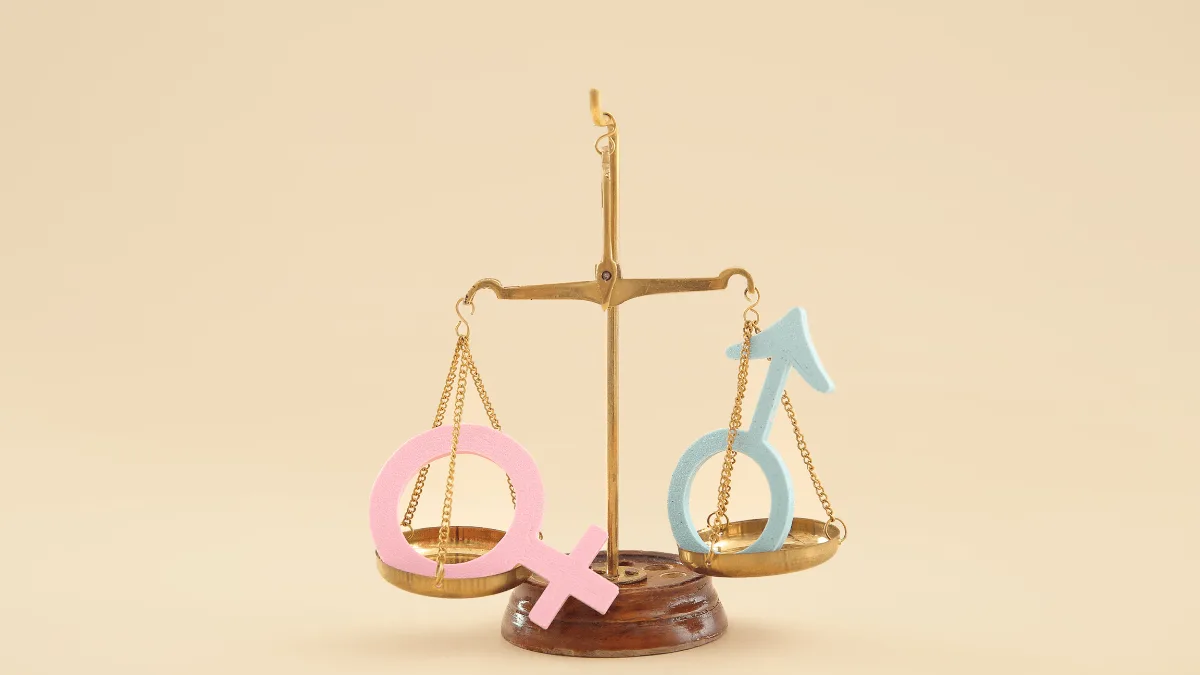
Legal Literacy - Understanding the position of inheritance rights in inheritance law, including when facing rare cases such as people with dual genders. This article explains the Islamic perspective regarding khuntsa, dual genders, as well as the distribution of inheritance rights and the rights of heirs in that context. Learn about religious views, signs of gender determination, and the opinions of scholars regarding this matter. Discover relevant legal solutions and resolutions for this situation. Read more in article ini to understand the position of inheritance rights of people with dual genders.
Position of Inheritance Rights
The position of inheritance rights between the testator and the heirsin inheritance law becomes an obligation that must be carried out after the testator has died. Based on Article 171 letter b Compilation of Islamic Law states that the testator is a person who has died or is declared dead by the Religious Court and has heirs and assets left behind. Meanwhile, an heir is a person left behind by the testator due to death and has a good relationship either by blood or marriage, is a Muslim, and is not obstructed by law (not prevented from becoming an heir).


Such discourse determines how the implementation of inheritance law can be achieved. However, there is a problem that becomes a polemic in society and it can be said that this is a rare case or problem, namely people who have abnormalities (dual genders).
Basically, the distribution of inheritance rights for both men and women has been well regulated in the nash of the Al-Qur'an and the Compilation of Islamic Law. However, looking at the case, of course, as legal experts, we must provide and analyze to resolve if there is a case of a person with dual genders, because a person with dual genders cannot be determined whether they are male or female.
People with dual genders in the Islamic perspective
In Islam, people with dual genders are referred to as khunsta, which are people who have 2 genitals, either like those of men, women, or even do not have both. According to its type, khuntsa is divided into 2 types:
1. Khuntsa ghairu musykil
Khuntsa ghairu musykil is a person with dual genders who looks like a man or a woman, but it is easy to determine their gender. The point is that it can be seen from the signs in determining it. For example, physical appearance, urine output, behavior, and others.
If we look at, for example, the urine output is more inclined to one of the genders, then it can be ascertained its gender.
2. Khuntsa musykil
Khuntsa musykil is a person with dual genders but it is very difficult to determine whether they are really a man or a woman. For example, when they urinate, it comes out of both genitals simultaneously or actively alternately, then it is difficult to determine.
Therefore, in determining the gender for people with dual genders, there are 2 ways:
1. Reviewing which genitals are used when urinating.
This method is the first step taken to review the gender. When the person urinates through the male genitals, then it is certain that they are male. Likewise, if they urinate through the female genitals, then they are female.
2. Seeing the signs of adulthood.
Seeing the signs of adulthood is the step if the first method cannot be done. Then it can be seen when they are adults with the signs or characteristics they have. If they have male signs such as growing an Adam's apple, voice deepening, growing a mustache and beard, ejaculation, and others. While the signs possessed by women are menstruation, having breasts, and others. Then the gender they have can be determined when they have the above signs, both male and female signs or characteristics.
What is the position of their inheritance rights as heirs?
For khuntsa ghairu musykil, their inheritance rights can be determined because the signs are clear. Meanwhile, for khuntsa musykil, it is postponed until their gender is clear, meaning until they are adults. In this case, there are several opinions regarding the distribution of inheritance by people with dual genders, including:
1. According to Imam Hanafi.
Khuntsa is given the smallest part of the two estimates of men and women, while other heirs are given the largest part of the two estimates of men and women.
2. According to Imam Maliki
All heirs, including khuntsa, are given half of the two estimates of men and women (the midpoint of the two estimates).
3. According to Imam Shafi'i
All heirs, including hermaphrodites, are given the smallest and most certain share of the two estimates, and the remainder is withheld until the hermaphrodite issue becomes clear, or until there is a reconciliation to mutually donate among the heirs.
4. According to Imam Hambali
Imam Hambali agreed with 2 statements from Imam Maliki and Imam Shafi'i. For khuntsa ghairu musykil, follow Imam Shafi'i's statement, while khuntsa musykil follows Imam Maliki.
There is a case in this matter that occurred by Siti Maemunah alias Muhammad Prawirodijoyo and Sri Wahyuni alias Muhammad Yusril Wahyudi who submitted a request for gender reassignment to the District Court. Because when they were little, their parents did not know that their child was a male. However, this became apparent when the child grew up and was not a female but a male. It is this factor that caused Siti Maemunah alias Muhammad Prawirodijoyo and Sri Wahyuni alias Muhammad Yusril Wahyudi to submit a request for gender reassignment to the District Court. Therefore, when they have been decided to be one gender, namely male, then the Sharia law for men applies to them in all matters, such as aurat, prayer, marriage, inheritance, association and so on.
The conclusion is that when someone has dual genders, then their gender position or type must be clear first before deciding. If they are indeed included in khuntsa ghairu musykil, then their position must be clear to receive inheritance rights. Meanwhile, if they are khuntsa musykil, then their position as an heir is postponed until their signs of adulthood are clear. When it is clear, then they can be categorized as one gender so that they can use their inheritance rights.
References
- Drafting Team of the Bureau of Law and Public Relations of the Administrative Affairs Agency of the Supreme Court of the Republic of Indonesia, Collection of Laws and Regulations Related to the Compilation of Islamic Law with Understanding in its Discussion, Jakarta: Supreme Court of the Republic of Indonesia, 2011.
- I.P. Zeta Fadiah, The Position of Heirs with Dual Gender in Islamic Law, Repertorium: Jurnal Ilmiah Hukum Kenotariatan, Vol. 8 No.1 (2019), 66-80.
- F. Asmaul, Z. Muhammad, Y. Fitriani, Analysis of the Position of Heirs Who Perform Dual Gender Adjustment Surgery According to Islamic Law And Civil law, Jurnal Muqaranah, Vol. 4, No. 2 (2020), 47-69.
*This article is the personal opinion of the author and does not represent the views of the Literasi Hukum Indonesia editorial team.























Comments
0Share your perspective politely, stay relevant, and focus on the article. Comments appear after moderation.
Join the discussion
Write a clear, polite response that stays on topic.
No comments yet. Be the first to discuss.
Comments will appear after moderation.