

Legal Literacy - This article discusses the changes in the Indonesian government system after the New Order era and the massive reform agenda carried out to eliminate the characteristics of centralization in leadership. However, currently, the presence of oligarchy in taking roles and consensus for the country is becoming rampant and worrying. This article also discusses the Special Autonomy in the National Capital City (IKN) and concerns about its constitutionality, considering the IKN Authority institution which is equivalent to a ministry that has never existed in the constitutional practice in the Republic of Indonesia.
By: Ch Idzan Falaqi Harmer, Postgraduate Student (Master of Law) Faculty of Law, Gadjah Mada University.


After ending the era of government New Order which had been in power for 32 years, the very strong centralization in the narrative of the New Order era leadership faded thanks to a massive reform agenda throughout Indonesia. Criticism from several regions that wanted to separate from the Unitary State of the Republic of Indonesia, such as: Aceh, Riau, Papua were considered serious problems that had emasculated the regions in the principle of recognizing 'original rights' in a government that tended to be autocratic at that time, so it was not in line with the initial ideals of the founding of this republic.
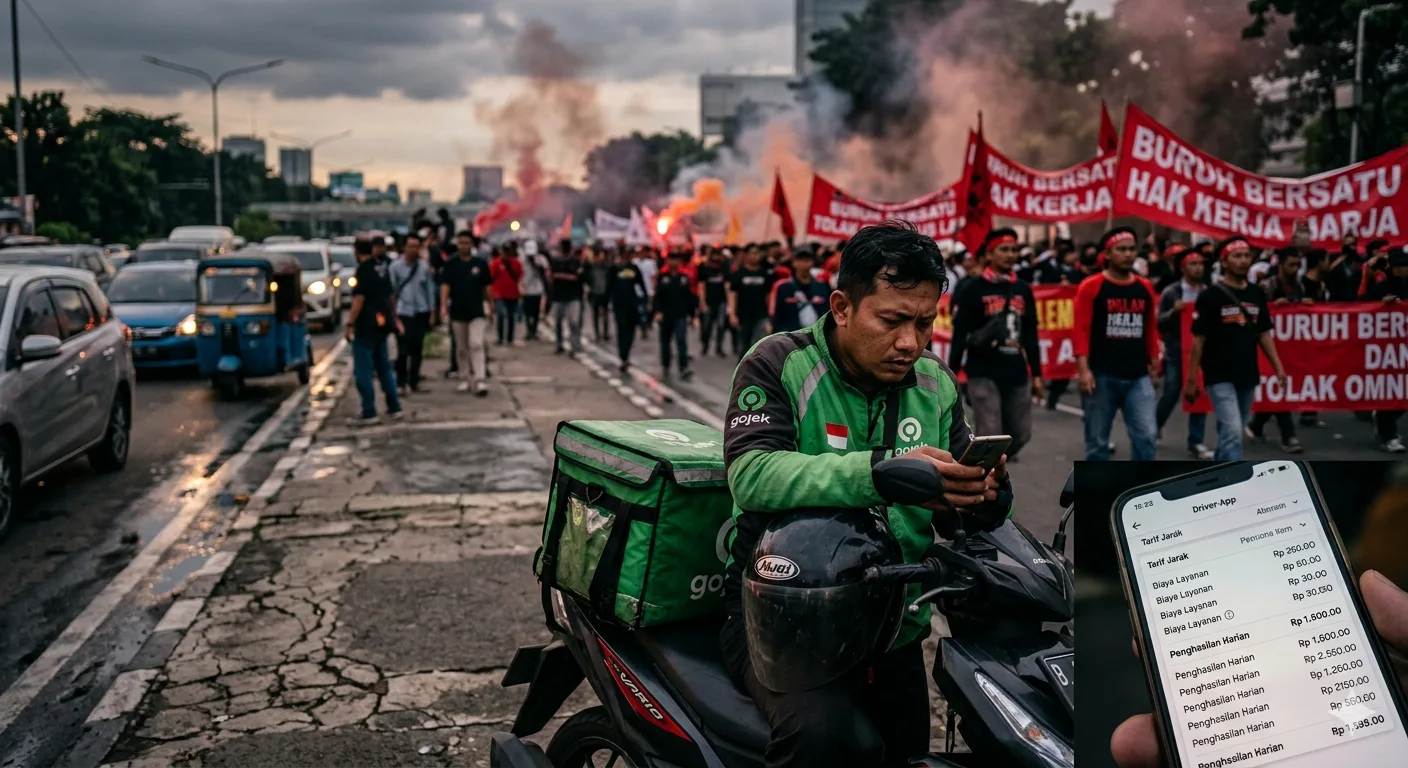
A new chapter, the neo-colonialism shown by the practice of government implementation today is a portrait of the rampant presence of oligarchy in taking roles and consensus for this country. As the ultimate goal, is to increase the power of capital and politics for their group—which in reality should have been rejected and buried as deeply as possible in order to achieve social justice for all Indonesian people. Ironically, this practice seems to be supported by the power held by a group of people in the government. In fact, this is considered more dangerous than the practice of authoritarianism in the New Order era.




















Comments
0Share your perspective politely, stay relevant, and focus on the article. Comments appear after moderation.
Join the discussion
Write a clear, polite response that stays on topic.
No comments yet. Be the first to discuss.
Comments will appear after moderation.