
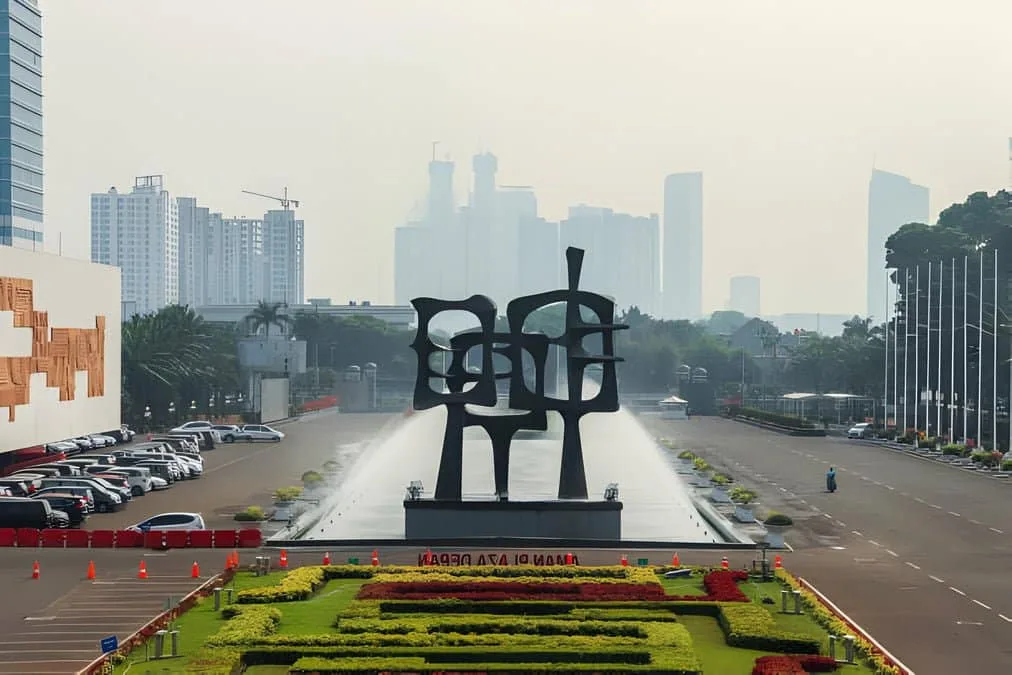
Theories of the Division of State Power
In the separation of powers of a country, there are several underlying theories, namely:
Duo Politicia Theory
This theory was put forward by Frank Goodnow in the 16th century in France. According to this theory, state power can be distinguished into two, namely the policy making function and the policy executing function.


The Theory of Trias Politica
This theory was proposed by John Locke and Montesquieu. Locke divided state power into three functions: legislative, executive, and federative. Meanwhile, Montesquieu divided it into three branches: legislative, executive, and judicial. These two theories are known as the theory of trias politica.
The Theory of Catur Praja
This theory was proposed by Van Vollenhoven and Wongsonegoro. This theory divides state power into four areas: bestuur (government in the narrow sense or the administration of government), politie (police), rechtsprack (justice), and regeling (regulation).
The Purpose of the Separation of State Power
The application of the separation of state power in the government system has several objectives, namely:
- Maintaining the implementation of the principles of democracy and the protection of people's rights by not giving or accumulating authority in one hand. Thus, the possibility of tyranny in a government can be avoided.
- Improving the efficiency of the implementation of the wheels of government, with each branch of government carrying out its duties according to its functions and expertise.
- Granting state authority to different parties so that there is healthy competition between one branch of government and another. Thus, each branch of government will provide the best possible performance.
- Enabling an effective system of checks and balances between branches of government. In a democratic system, each branch of government has a clear role and authority, but must also be supervised and balanced by other branches of government. This can be done with clear and independent rules of law and an effective mechanism of checks and balances.
- Developing and strengthening civil society institutions, such as non-governmental organizations (NGOs), independent media, and community self-help groups (LSM). These institutions can become a counterweight to government power and give a voice to under-represented people.
- Improving government transparency and accountability. The government must be open to public scrutiny and ensure that the use of budgets and other important decisions are based on fair and transparent principles. This will help prevent abuse of power and corruption in government.


















Comments
0Share your perspective politely, stay relevant, and focus on the article. Comments appear after moderation.
Join the discussion
Write a clear, polite response that stays on topic.
No comments yet. Be the first to discuss.
Comments will appear after moderation.