
Revitalization in Disruption
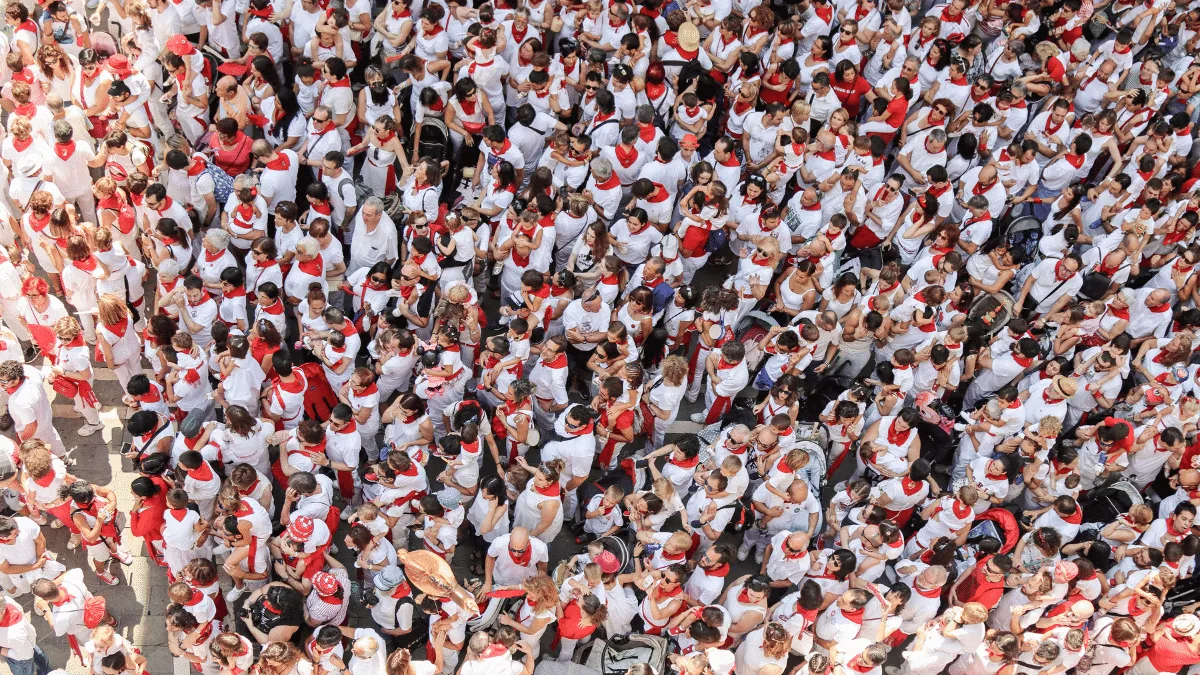
In the landscape of a democratic country, the existence of interest groups plays a significant role in accommodating and mobilizing channels of individual aspirations with diverse interests in strategic spaces. Democracy provides maximum immunity to individuals and interest groups from potential acts of abuse of power by rulers who tend to be despotic and absolute in every policy decision. So it is undeniable that interest groups are key actors in a political configuration that, within certain stages and limits, can dominate a pluralistic political system.
One thing that is no less important in the era of technological disruption like today, is the spirit and demands of civil society to realize a governance government based on the concept of good government, such as the demand for comprehensive transparency regarding all matters concerning the public interest, maximizing democratization efforts towards access to public information, and involving the active role of individuals and civil society groups affected in every policy-making process.


Lately, the term "disruption" has taken root in every writing and post in the realm of social media. Cyberspace, which was once a new means of human communication, is now used more massively and intensively. From the beginning, the Internet has brought with it the principle of adaptation to human behavior. This includes the use of technological devices and their influence on our habits and behavior. Indeed, various recent advances have significantly changed human perceptions of life, but these advances also bring consequences. There is no avoiding it, a double-edged sword. Individual and social behavior experiences shocks as a result of the rapid transition process.
All utterances that used to take place in open public spaces are now increasingly becoming noise in the digital space, which has itself become a new public space. Especially in the field of politics and democratic life, which used to rely on voting efforts, there are obstacles in the form of noise. Even the concept of democracy has turned into clickocracy. If we observe the process of public interaction in the realm of social media 5 (five) years back after the 2019 General Election, there is a very visible process of shifting roles and taking over supervisory authority by the public.
Therefore, in a fully digital society, where most of the time is spent navigating social media, interest groups offer opportunities for their individual members and communities to participate in a more flexible political process. Its members can influence government officials on at least one issue. They can assess the shortcomings of government programs and provide their contributions in the form of content, both in the form of videos and writings.



















Comments
0Share your perspective politely, stay relevant, and focus on the article. Comments appear after moderation.
Join the discussion
Write a clear, polite response that stays on topic.
No comments yet. Be the first to discuss.
Comments will appear after moderation.