
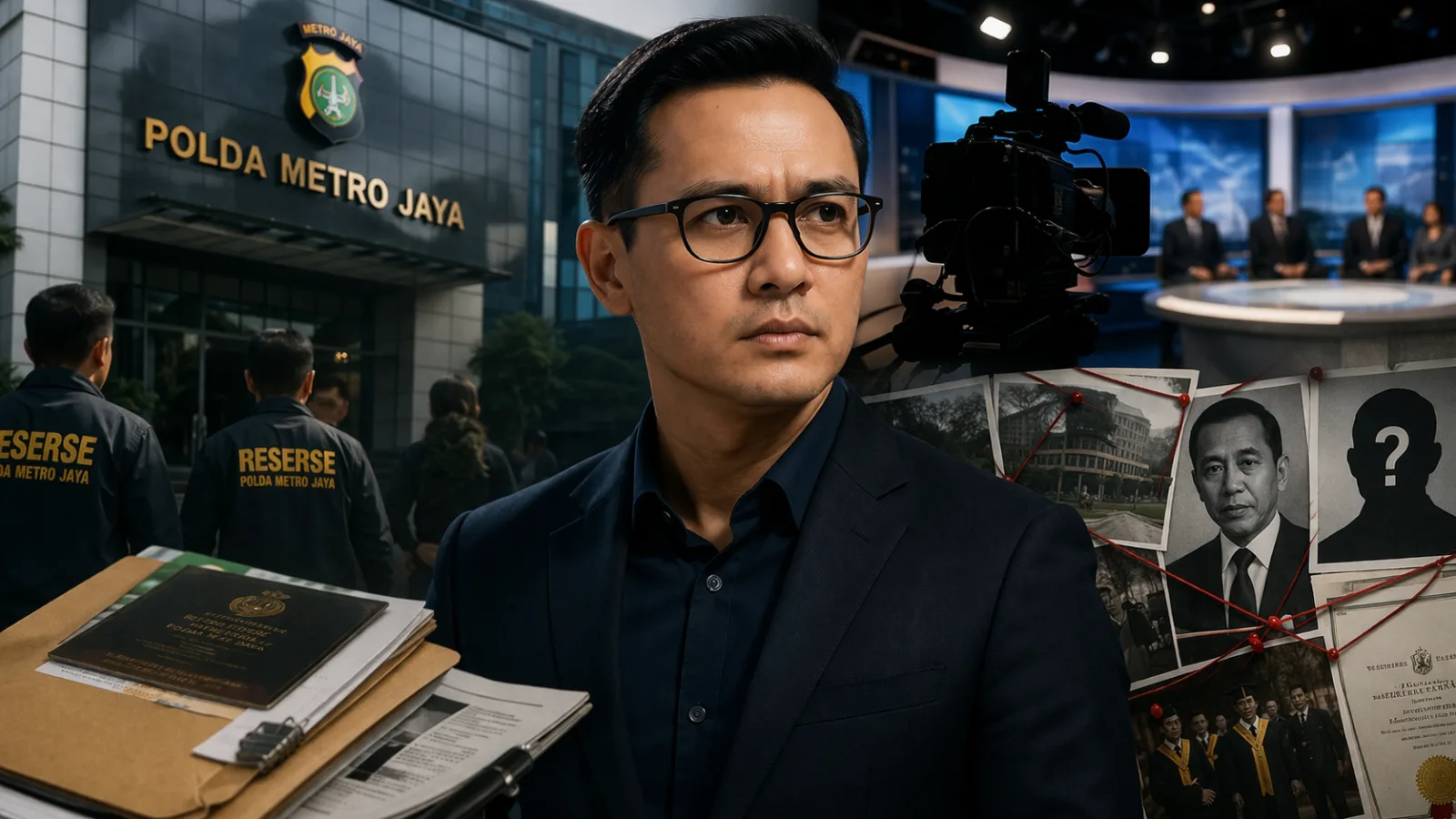
Legal Literacy - Issuance of Police Regulation (Perpol) Number 10 of 2025 regardingMembers of the Indonesian National Police who Carry Out Duties Outside the Police Organizational Structure Sparked widespread debate in the public sphere. This regulation is considered problematic because it opens up space for the placement of active Police members in various ministries and state institutions. This issue is not merely administrative, but touches the heart of the principles of constitutional law, especially regarding the supremacy of the constitution, the hierarchy of legislation, and the neutrality of state apparatus in a democratic system. A fundamental question that arises is whether Perpol 10 of 2025 is legally valid under constitutional law, or whether it contradicts the constitutional principles that have been affirmed by the Constitutional Court (MK) through decision number 114/PUU-XXIII/2025?
Perpol in the Hierarchy of Legislation
In the Indonesian legal system, the hierarchy of laws and regulations has been clearly regulated. The 1945 Constitution occupies the highest position, followed by laws and regulations below it. Perpol is an internal regulation of a state institution which is hierarchically far below the law. In principle, Perpol should only be of a technical administrative nature, namely regulating the implementation of internal Police duties. It should not create new norms that deviate from, let alone contradict, laws or decisions of the Constitutional Court. In constitutional law, the principle applies lex superior derogat legi inferiori, namely that lower regulations must not conflict with higher regulations. Thus, the validity of Perpol 10 of 2025 is not only tested from a formal point of view, but also from the point of view of the content of its norms.


Constitutional Court Decisions and Restrictions on Civil Positions
The Constitutional Court through its various decisions has affirmed strict limits regarding the filling of civil positions by active TNI and Police members. The essence of the decision is to maintain professionalism, neutrality, and the principle of civilian supremacy in a democratic state. In the context of the Police, the Constitutional Court emphasized that Police members who wish to hold civil positions outside of police duties must first resign or retire. This affirmation is a constitutional interpretation of the law, so it is final and binding on all state institutions. The problem arises when Perpol 10 of 2025 is considered to open up a looser interpretation, as if allowing active Police members to hold positions outside the Police organizational structure under the guise of assignment.
Critical Views on Potential Constitutional Violations
From the perspective of constitutional law, Perpol 10 of 2025 is constitutionally problematic. In the view of constitutional law, the Constitutional Court's decision should not be negotiated through internal regulations. If Perpol opens up space for the assignment of active Police members to civil positions that are administrative, planning, or public policy in nature, then this right potentially violates the Constitutional Court's decision. From this perspective, Perpol is considered a form of constitutional bypass, namely an attempt to avoid constitutional restrictions through lower regulations. This kind of practice is dangerous because it weakens the principle of constitutional supremacy and opens up bad precedents in state governance. In addition, the placement of active security forces in civil positions also has the potential to blur the lines between the civil and security spheres, which is an important foundation in a democratic state.
Constitutional Law Analysis in the View of Prof. Mahfud MD
In podcast forums, Prof. Mahfud MD has consistently asserted that the Constitutional Court's decision is final and binding on all state institutions, and therefore should not be circumvented through lower regulations. According to him, administrative regulations such as Perpol (Police Regulation) do not have the authority to reinterpret or reduce the binding power of the Constitutional Court's decision. Prof. Mahfud emphasized that the restriction of civil positions for active security forces is not merely a technical matter of employment, but a constitutional principle to maintain civilian supremacy and state neutrality. When active security forces are placed in civil positions through internal regulations, it potentially violates the principle of the hierarchy of laws and substantively weakens the constitution. In Prof. Mahfud's framework, if Perpol 10 of 2025 is interpreted only as a technical arrangement that remains subject to the Constitutional Court's decision, then it can still be justified. However, if Perpol is used to legitimize the placement of active police officers in non-security civil positions without resignation or retirement, then in terms of constitutional law, the regulation is materially flawed. This view affirms that the constitutional path is not through administrative adjustments, but through changes in legislation or re-examination of norms in the Constitutional Court.
Closing
Formally, Perpol 10 of 2025 is a legitimate legal product because it was issued by an authorized official. However, materially, its validity depends heavily on its conformity with the law and the decision of the Constitutional Court. In a state of law, no internal regulations should reinterpret or weaken carefully so as not to exceed constitutional limits. If there is ambiguity or potential deviation, regulatory revision or legal testing becomes a constitutional and democratic step. Ultimately, the polemic of Perpol 10 of 2025 serves as an important reminder that administrative order should not sacrifice constitutional principles, and the rule of law must remain paramount in the administration of the state.






















Comments
0Share your perspective politely, stay relevant, and focus on the article. Comments appear after moderation.
Join the discussion
Write a clear, polite response that stays on topic.
No comments yet. Be the first to discuss.
Comments will appear after moderation.