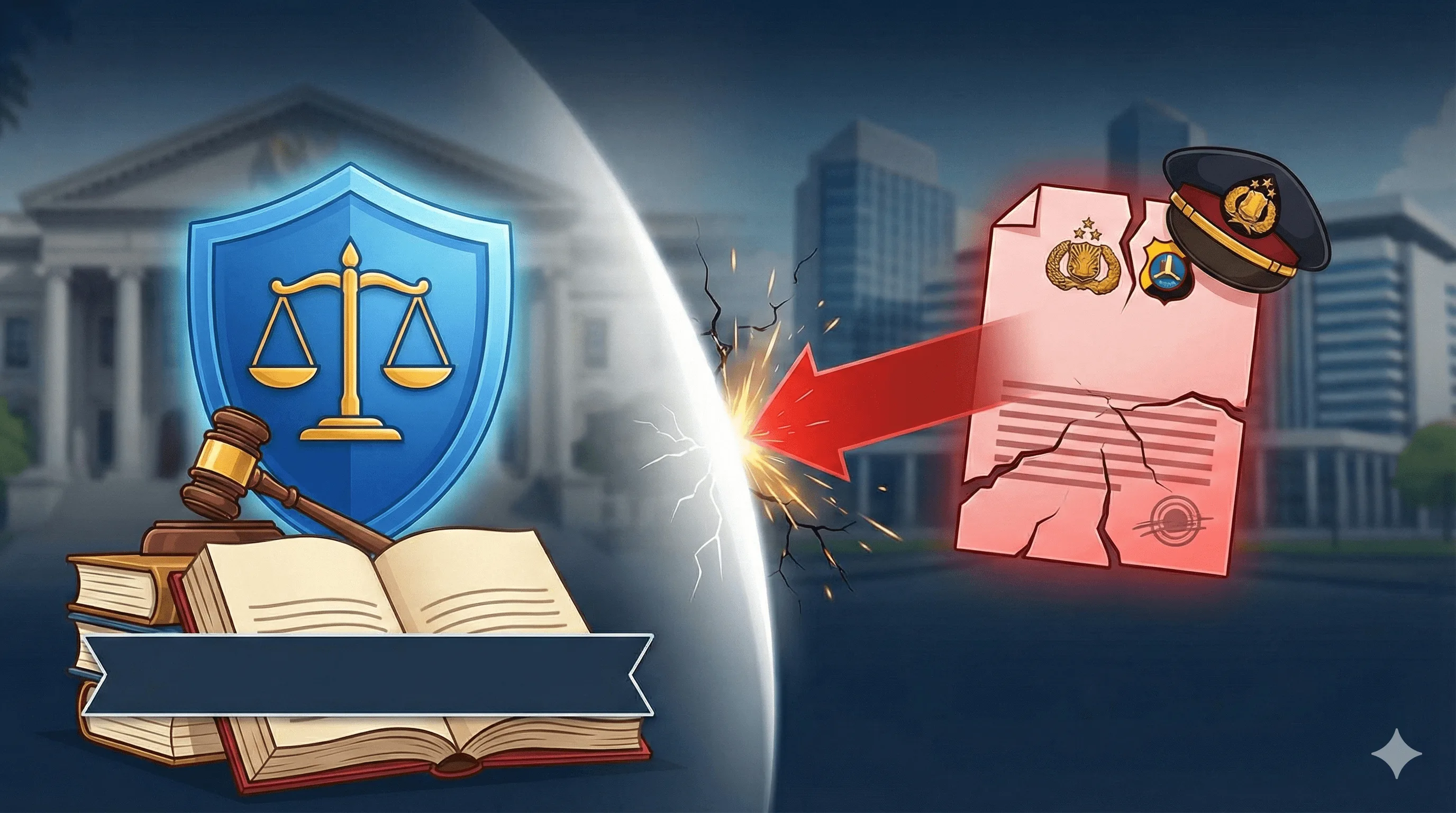
Constitutional Court Decisions and Restrictions on Civil Positions
The Constitutional Court through its various decisions has affirmed strict limits regarding the filling of civil positions by active TNI and Police members. The essence of the decision is to maintain professionalism, neutrality, and the principle of civilian supremacy in a democratic state. In the context of the Police, the Constitutional Court emphasized that Police members who wish to hold civil positions outside of police duties must first resign or retire. This affirmation is a constitutional interpretation of the law, so it is final and binding on all state institutions. The problem arises when Perpol 10 of 2025 is considered to open up a looser interpretation, as if allowing active Police members to hold positions outside the Police organizational structure under the guise of assignment.
Critical Views on Potential Constitutional Violations
From the perspective of constitutional law, Perpol 10 of 2025 is constitutionally problematic. In the view of constitutional law, the Constitutional Court's decision should not be negotiated through internal regulations. If Perpol opens up space for the assignment of active Police members to civil positions that are administrative, planning, or public policy in nature, then this right potentially violates the Constitutional Court's decision. From this perspective, Perpol is considered a form of constitutional bypass, namely an attempt to avoid constitutional restrictions through lower regulations. This kind of practice is dangerous because it weakens the principle of constitutional supremacy and opens up bad precedents in state governance. In addition, the placement of active security forces in civil positions also has the potential to blur the lines between the civil and security spheres, which is an important foundation in a democratic state.























Comments
0Share your perspective politely, stay relevant, and focus on the article. Comments appear after moderation.
Join the discussion
Write a clear, polite response that stays on topic.
No comments yet. Be the first to discuss.
Comments will appear after moderation.