
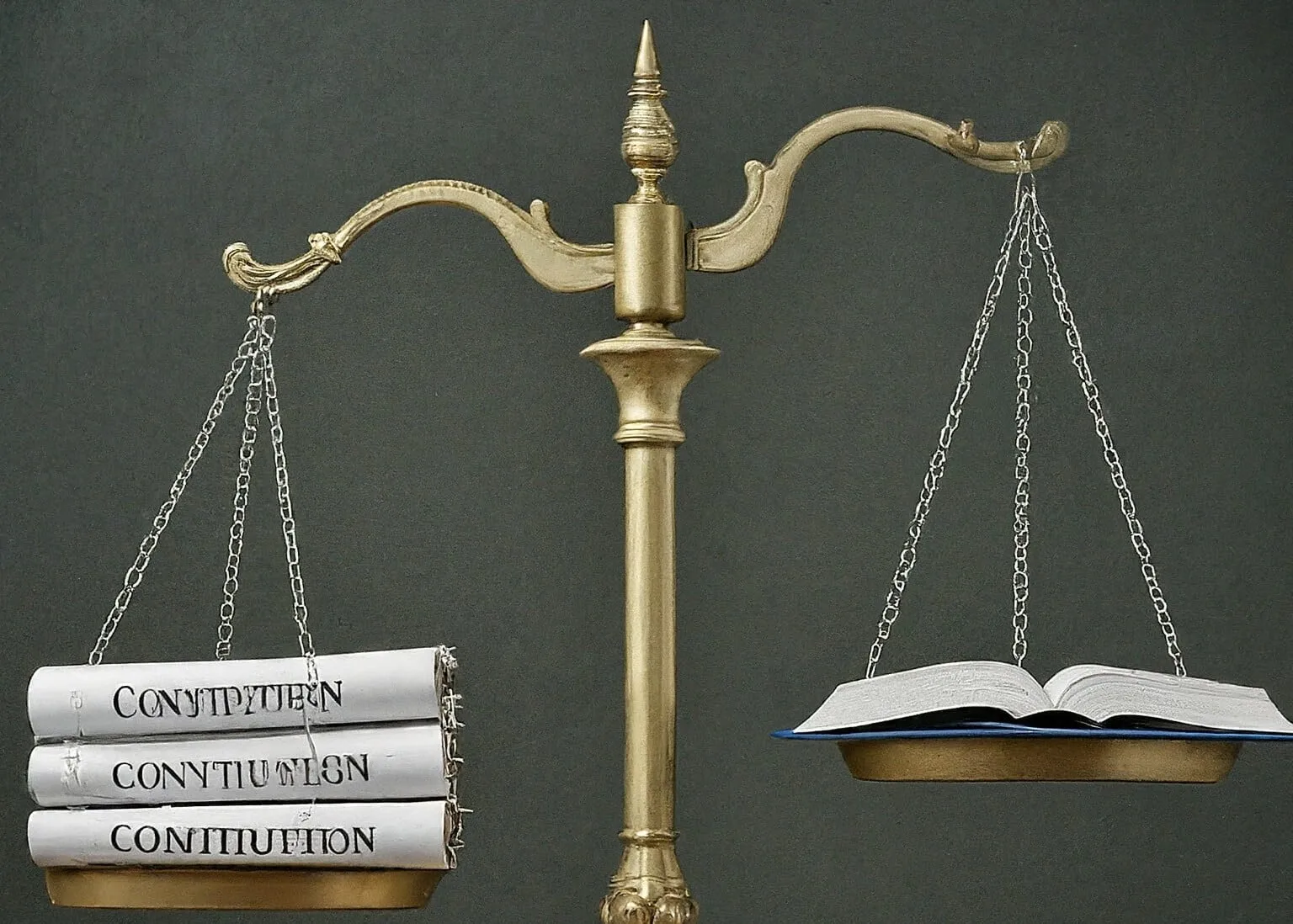
1. Exceeding Constitutional Authority
- The Constitutional Court (MK) should not create new rules or amend the constitution.
- The Constitutional Court is only authorized to interpret the constitution and annul laws and regulations that conflict with the constitution.
- Example: The Constitutional Court should not change the electoral system fundamentally, because this is the authority of the legislature.
2. Violating Fundamental Principles of the Constitution
- The Constitutional Court should not annul laws and regulations that are in line with the fundamental principles of the constitution, such as democracy, justice, and human rights.
- Example: The Constitutional Court should not annul a law that regulates the right to education, even if the law has shortcomings.
3. Committing Abuse of Authority
- The Constitutional Court must use its authority objectively and impartially, not based on political or personal interests.
- Example: The Constitutional Court should not annul a law simply because it was proposed by a particular political party.
4. Ignoring Precedent and Jurisprudence
- The Constitutional Court must consider previous precedents and jurisprudence in deciding cases.
- This is to maintain consistency and legal certainty.
- Example: The Constitutional Court should not annul laws that have similar precedents that have been decided by the Constitutional Court before.
5. Ignoring the Arguments of the Lawmakers
- The Constitutional Court must consider the arguments of the lawmakers in making laws.
- This is to understand the intent and purpose of the law.
- Example: The Constitutional Court should not annul a law without first understanding the arguments of the lawmakers regarding the law.
It is important to remember that these limitations are not always clear and can be debatable. The role of civil society and academics is important in monitoring the performance of the Constitutional Court and ensuring that the Constitutional Court does not violate these limitations.





















Comments
0Share your perspective politely, stay relevant, and focus on the article. Comments appear after moderation.
Join the discussion
Write a clear, polite response that stays on topic.
No comments yet. Be the first to discuss.
Comments will appear after moderation.