

Prohibition of Standard Clauses (Exoneration Clauses) in the Consumer Protection Act
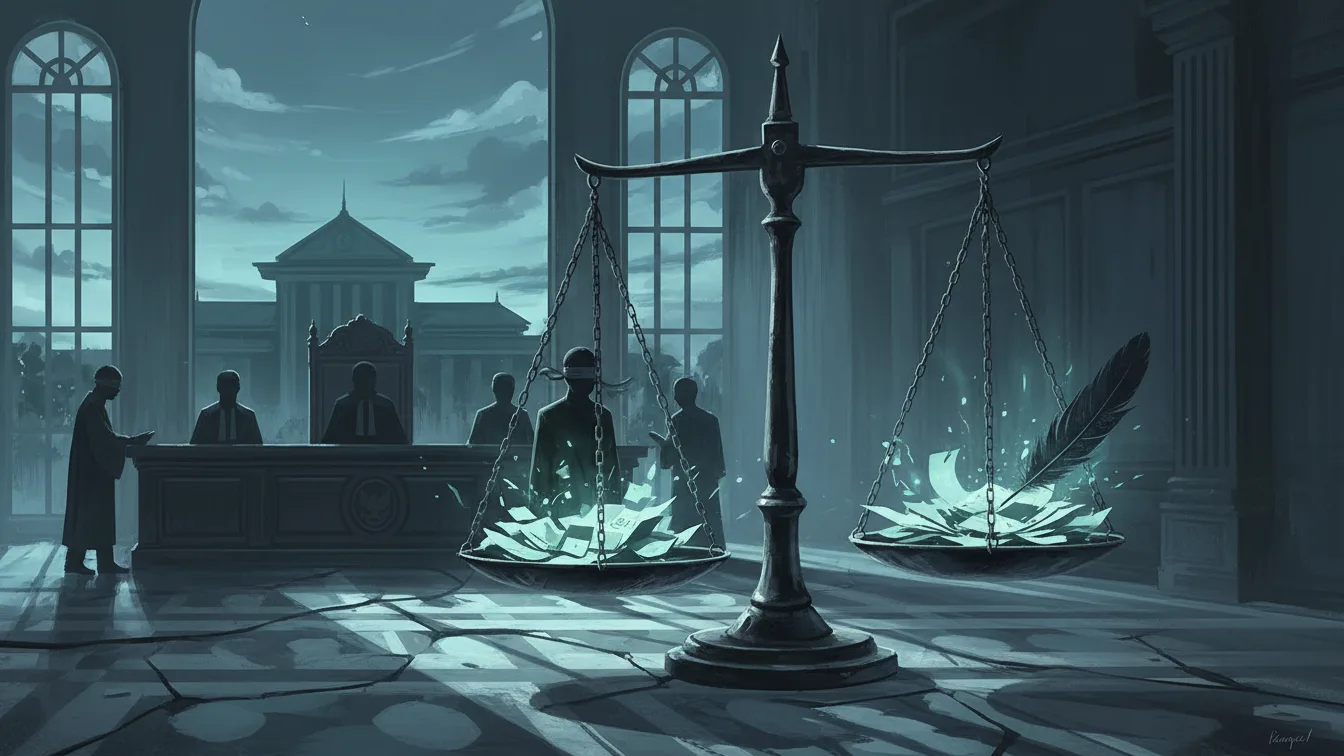
The strongest legal argument that invalidates the parking manager's excuse lies in Law No. 8 of 1999 concerning Consumer Protection (UUPK). Announcements or writings on parking tickets stating the release of responsibility are a form of standard clause—that is, rules or conditions unilaterally set by business actors and stated in documents or agreements that are binding and must be fulfilled by consumers.
Article 18 paragraph (1) of the UUPK explicitly prohibits business actors from including standard clauses whose contents, among other things, state transfer of responsibility of business actors. This means that the clause "loss is not our responsibility" is illegal.


As a legal consequence, Article 18 paragraph (3) of the UUPK states that any standard clause that contradicts these provisions is null and void. This means that the clause is considered to have never existed and has no binding force whatsoever, regardless of whether the consumer has read or agreed to it when receiving the parking ticket.
Alternative Legal Basis: Tort (PMH)
In addition to default, the parking manager's responsibility can also be sued on the basis of tort (Article 1365 of the Civil Code). The elements of an Unlawful Act can be fulfilled if the parking manager is proven to:
-
Committing an unlawful act, namely negligence in providing an adequate security system (e.g., no CCTV, minimal lighting, no patrol officers).
-
The existence of an error (negligence or intentional).
-
The existence of losses suffered by consumers (material losses worth the price of the helmet).
-
The existence of a causal relationship between the manager's error and the losses suffered by the consumer.
By not providing adequate security even though they have charged for the service, the parking manager can be considered to have committed negligence that directly caused losses to consumers.
















Comments
0Share your perspective politely, stay relevant, and focus on the article. Comments appear after moderation.
Join the discussion
Write a clear, polite response that stays on topic.
No comments yet. Be the first to discuss.
Comments will appear after moderation.