
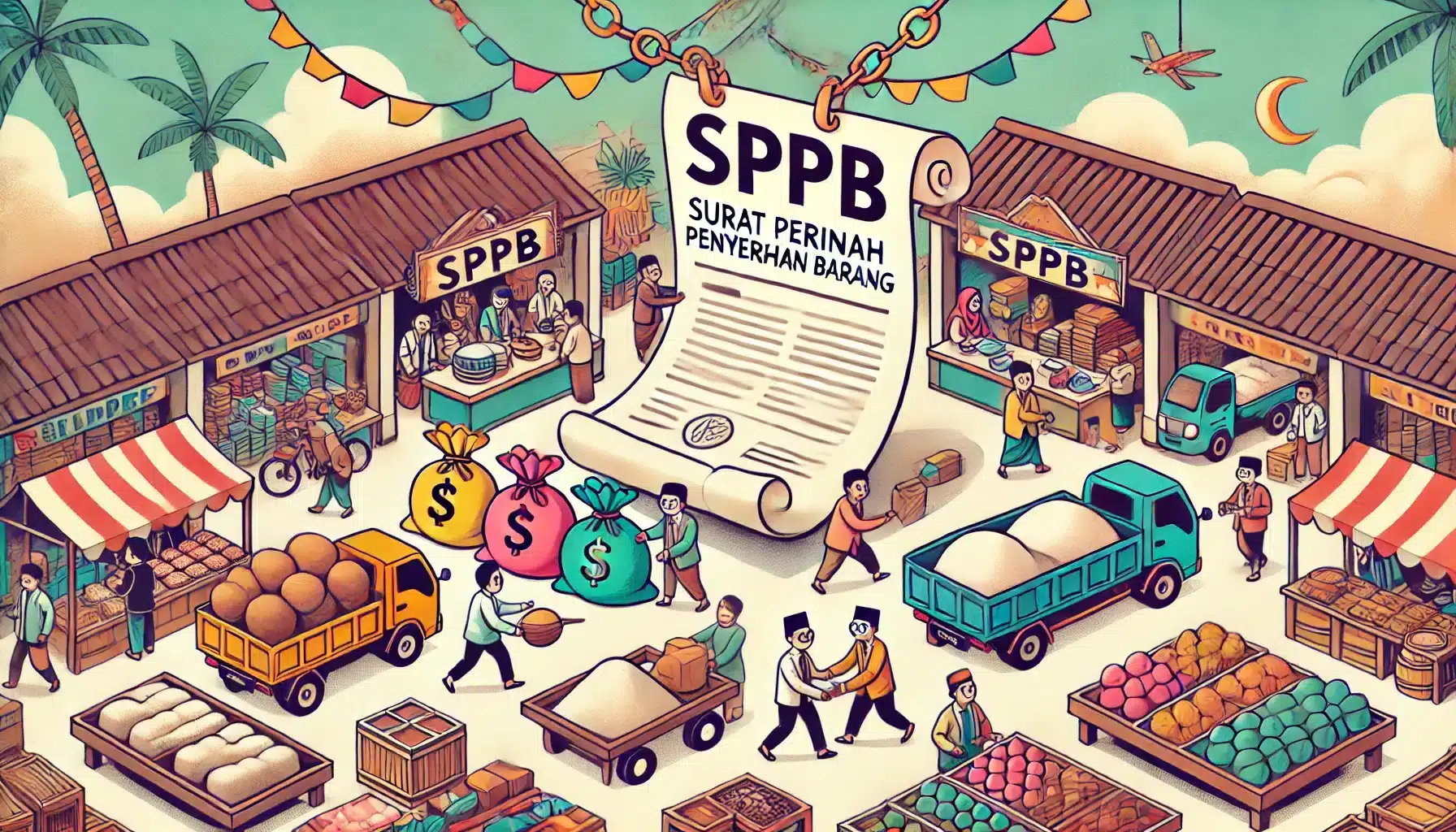
Legal Literacy - This article discusses trade in civil law, specifically the sale and purchase of movable goods through a Goods Delivery Order (SPPB). SPPB is used as a tool for the symbolic transfer of property rights in large-scale trade, such as sugar. Discover the role and importance of SPPB in the modern trading system.
Trade in civil law is defined as a sale and purchase relationship, where one party sells goods and the other party pays the agreed price. As a distribution system, trade involves various parties, from producers, wholesalers, retailers, to end consumers. The main difference between trade levels lies in the quantity of goods traded and the price obtained. Producers, as sellers at the highest level, usually sell goods in large quantities at special prices to wholesalers. This buying and selling process continues until the goods reach the end consumer. The price difference at each level of trade is what provides an opportunity for business actors to profit from the difference between the purchase and sale price.


A sale and purchase can only occur if there are goods being traded. In property law, goods are divided into movable and immovable goods. In the trading system, the sale and purchase process usually occurs on goods that fall into the category of movable goods such as rice, sugar, oil, eggs, cloth, and milk. Based on Article 1457 of the Civil Code, a sale and purchase is an agreement where one party commits to handing over goods, and the other party pays the agreed price. The transfer of ownership of movable goods is usually done physically, from hand to hand, which is still relevant for goods in small quantities. However, for large quantities of goods such as 1,000,000 tons of granulated sugar, direct physical delivery is not possible.
In trading goods in large quantities, traders often use securities to facilitate the process. These securities are a manifestation of the goods being traded. One example is the Goods Delivery Order (SPPB), which is used as proof of the symbolic transfer of ownership rights of goods. Even though the physical goods have not been handed over, the property rights have been transferred. SPPB is often used in large-scale trade because it is considered more efficient and effective, especially for goods like sugar, where direct delivery is not possible.
SPPB as a manifestation of goods stored in a warehouse serves as proof of purchase between the seller and the buyer, especially in transactions with large quantities. In today's trading world, SPPB is often used by sugar factories to transfer property rights to buyers, especially at the wholesale level. The use of SPPB as a tool for transferring property rights simplifies transactions on a large scale.
The legal basis for securities can be found in the Commercial Code and banking regulations in Indonesia. The banking world plays an important role in supporting the trading system through financing. In trade, securities such as checks, current accounts, and deposits are also used as transaction tools. According to the Banking Dictionary published by Bank Indonesia, SPPB is defined as "Delivery Order," which is a written message to deliver goods to the party listed in the letter. Although there are no specific regulations governing SPPB, its use is common in large-scale trade, especially for commodities such as sugar.
Overall, SPPB is written proof of the event of delivering goods in large quantities. SPPB is considered an effective and efficient instrument in large-scale trade, especially for movable objects such as granulated sugar. Although the law in Indonesia does not specifically regulate SPPB, this letter has been recognized as an important tool in the process of buying and selling commodities in large quantities.




















Comments
0Share your perspective politely, stay relevant, and focus on the article. Comments appear after moderation.
Join the discussion
Write a clear, polite response that stays on topic.
No comments yet. Be the first to discuss.
Comments will appear after moderation.