Legal Literacy - How do we measure the independence of a judicial institution? This question becomes increasingly crucial when the institution is
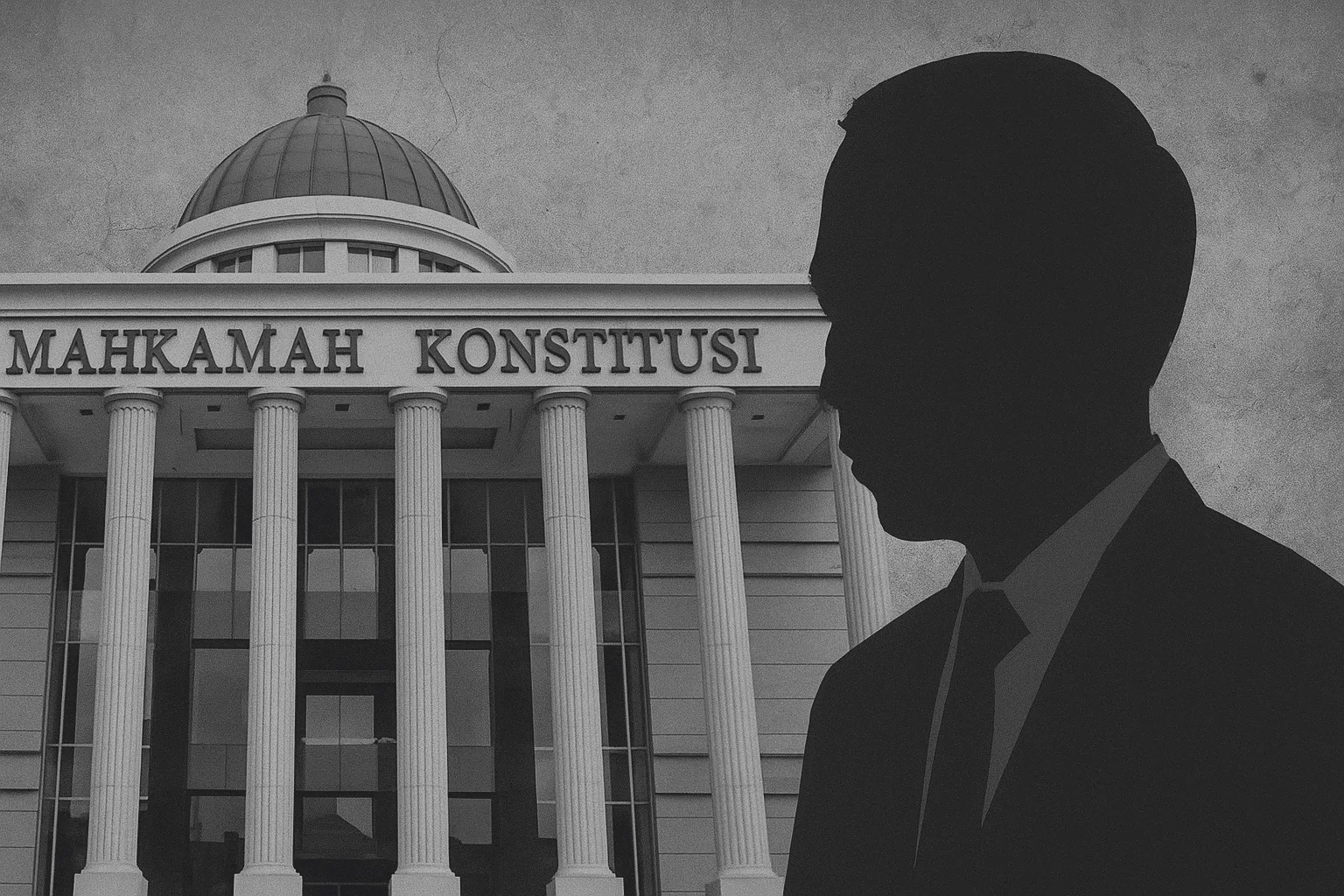
Constitutional Court (MK), an institution born from the womb of reform to be the last bastion guarding democracy and the constitution. Its role as an adjudicator in high-level political disputes places it in a position vulnerable to intervention from the executive and legislative branches of power.
In the last decade, especially under the administration of President Joko Widodo (
Jokowi), questions regarding the independence of the Constitutional Court (MK) have resurfaced sharply. This era is marked by a legislative political style that many consider to increasingly disregard the principles of the rule of law. So, amidst the rapid flow of problematic legislation, how does the Constitutional Court carry out its role as a supervisor? Does the Court still stand tall as a pillar supporting democracy, or has its independence been eroded by political pressure?
This article, referring to in-depth quantitative and qualitative analysis by Yance Arizona, will critically dissect the political character of legislation in the Jokowi era, highlighting the internal and external conditions surrounding the Constitutional Court, and sharply evaluating the characteristics of the Constitutional Court's decisions in testing legal products from this era. The result is a worrying portrait of the effectiveness of the Constitutional Court in carrying out its function
judicial review-s.
The Face of Legislation in the Jokowi Era: Fast, Closed, and Abusive
To understand the performance of the Constitutional Court, we must first understand the political context of legislation in which it operates. Yance Arizona identifies the character of legislation in the Jokowi era as
"abusive legislation", a process of forming laws that ignores procedures and public participation, with repressive and manipulative substance to weaken the principles of democracy.
Quantitatively, legislative productivity in the Jokowi era (an average of 8.9 laws per year) was recorded as far lower than the era of President Susilo Bambang Yudhoyono (an average of 19.3 laws per year). Of the 78 non-stipulation laws analyzed until August 2022, the largest focus was on the field of
economy (47.44%). This indicates a strong government priority on neoliberal economic policies, deregulation, and infrastructure development to attract investment.
Deteriorating Quality: Characteristics of "Abusive Legislation"
The "abusive" character of this legislation is evident from several main features:
- Ignoring Procedures: The clearest example is the Job Creation Law (Law No. 11 of 2020) which uses the omnibus law method, which was not known at the time in the Law on the Establishment of Laws and Regulations (UU PPP). The process was also marked by changes to the text after joint approval, a serious procedural violation.
- Fast-track LegislationBanyak UU kontroversial yang dibahas dalam waktu sangat singkat, yang secara efektif mematikan ruang partisipasi publik yang bermakna. Contohnya, Perubahan UU MK (7 hari), Perubahan UU KPK (13 hari), dan UU Ibukota Negara (43 hari).): Many controversial laws were discussed in a very short time, which effectively shut down meaningful public participation space. For example, the Amendment to the Constitutional Court Law (7 days), the Amendment to the KPK Law (13 days), and the State Capital Law (43 days).
- Supported by a Supermajority Coalition: This smooth legislative process was made possible by the overwhelmingly dominant political support in the House of Representatives. In the second period of his administration, President Jokowi's supporting coalition controlled 81.91% of the seats in the House of Representatives, leaving a very minimal opposition.
Substance that Weakens Democracy
Substantively, many legal products in this era are actually regressive in character. The Election Law maintains
presidential threshold high thresholds that limit competition. The Government Regulation in Lieu of Law (Perppu) on Mass Organizations expands the government's authority to dissolve organizations without adequate due process. And most fatally, the amendments to the KPK Law and the Constitutional Court Law are actually directed at weakening supervisory institutions that should be pillars of the rule of law.
The Constitutional Court: Between Internal Decline and External Pressure
Amidst the swift current of abusive legislation, the condition of the
Constitutional Court itself is not in good shape. This institution faces a combination of internal problems and external pressures that erode its independence.
A Legacy of Scandal and Credibility Crisis
The Constitutional Court has not fully recovered from the wounds of corruption scandals that ensnared two of its judges, Akil Mochtar (2013) and Patrialis Akbar (2017). These cases shattered the image of the Constitutional Court as a clean institution and undermined public trust. Efforts at external improvement, such as the proposed involvement of the Judicial Commission in supervision through a Perppu during the SBY era, were rejected by the Constitutional Court itself through its decision, demonstrating the institution's resistance to external oversight.
Political Grip: Revision of the Constitutional Court Law and Judge Recruitment
The most apparent external pressure comes from the President and the House of Representatives through revisions to the Law on the Constitutional Court. The amendment through Law No. 7 of 2020, which eliminated the term system and extended the term of office of judges to the age of 70, was considered by many observers as a "constitutional gratification." This policy is considered a way to "tame" the incumbent judges, as it provides the benefit of extending their term of office.
In addition, the non-transparent and ever-changing recruitment process for judges in the three branches of power (President, House of Representatives, Supreme Court) makes the objectivity and quality of the selected judges often questionable. The culmination was the incident of the dismissal of Constitutional Justice Aswanto by the House of Representatives in 2022, an action that many considered a blatant intervention in judicial independence.
Decisions Under Pressure: Analysis of the Constitutional Court's Judicial Performance
With a fragile institutional condition and under pressure, how does the Constitutional Court perform in reviewing abusive legislative products? An analysis of key decisions reveals a worrying pattern.
Perpetuating the Status Quo: Presidential Threshold Decisions
Of the 82 decisions related to the Election Law, the issue of
presidential threshold 20% is the most frequently tested. Consistently, the Constitutional Court rejects all petitions on the grounds that this is a
open legal policy (open legal policy) and is necessary for
strengthening the presidential system. This argument, according to Arizona, effectively perpetuates the dominance of large political parties and makes the presidential election contest uncompetitive, trapping Indonesia in an oligarchic system.
Half-Hearted Decisions: Conditionally Unconstitutional Job Creation Law
Constitutional Court Decision No. 91/PUU-XVIII/2020 regarding the Job Creation Law is the clearest example of the Constitutional Court's indecisiveness. Although the Court acknowledged that the formation of this Law was formally flawed and contrary to the 1945 Constitution, the verdict was considered very weak. The Constitutional Court declared the Law "conditionally unconstitutional" and gave two years for improvement, but strangely,
declares the law remains in effect during the period of improvement. This decision fails to provide a firm correction and instead creates prolonged legal uncertainty.
Failure to Protect: Weakening the KPK and 'Taming' Corruption Eradication
When Law No. 19 of 2019, which systematically weakened the Corruption Eradication Commission (KPK), was challenged, the Constitutional Court again demonstrated an ineffective stance. The Court rejected the formal review and only granted a small portion of the material review. Furthermore, when senior KPK employees were removed through the controversial National Insight Test (TWK), the Constitutional Court rejected the petition to review the KPK Law that formed the basis of the test. The Court considered the actions of the KPK leadership not to be a matter of constitutionality and failed to see it as a systematic effort to remove employees of integrity.
A Court That Is No Longer Effective?
Yance Arizona's analysis presents a bleak conclusion. Amidst the strengthening of abusive legislative politics in the era of President Joko Widodo—supported by the consolidation of political elites and entrepreneurs—the Constitutional Court no longer plays its historical role as an effective guardian of democracy.
The Court tends to allow or even justify problematic legislation. This judicial behavior falls into the category of
"weak abusive judicial review", where the court no longer functions as a check but instead becomes a rubber stamp that justifies the actions of the government and the DPR (House of Representatives) in undermining the foundations of democracy and the rule of law.
This finding serves as a warning that the independence of the Constitutional Court is hanging by a thread. A deep reflection and serious effort are needed to understand the internal and external factors that have caused the decline in the role of the Constitutional Court, in order to safeguard the future of the Indonesian rule of law.
Legal Policy of President Joko Widodo and the Independence of Constitutional Courtby Yance Arizona, published in
Editor's Note: This article is an in-depth review and analysis based on a scientific journal article entitled "Jurnal Konstitusi, Volume 21, Number 1, March 2024 Edition" Yance Arizona. "Legal Policy of President Joko Widodo and the Independence of Constitutional Court." , Vol. 21, No. 1 (March 2024)..
Source
President Jokowi
Jurnal KonstitusiIndependence of the Constitutional Court
Comments (0)
Write a comment