
Hasto's Verdict and Legal Loopholes: A New Chapter in the Hunt for Harun Masiku
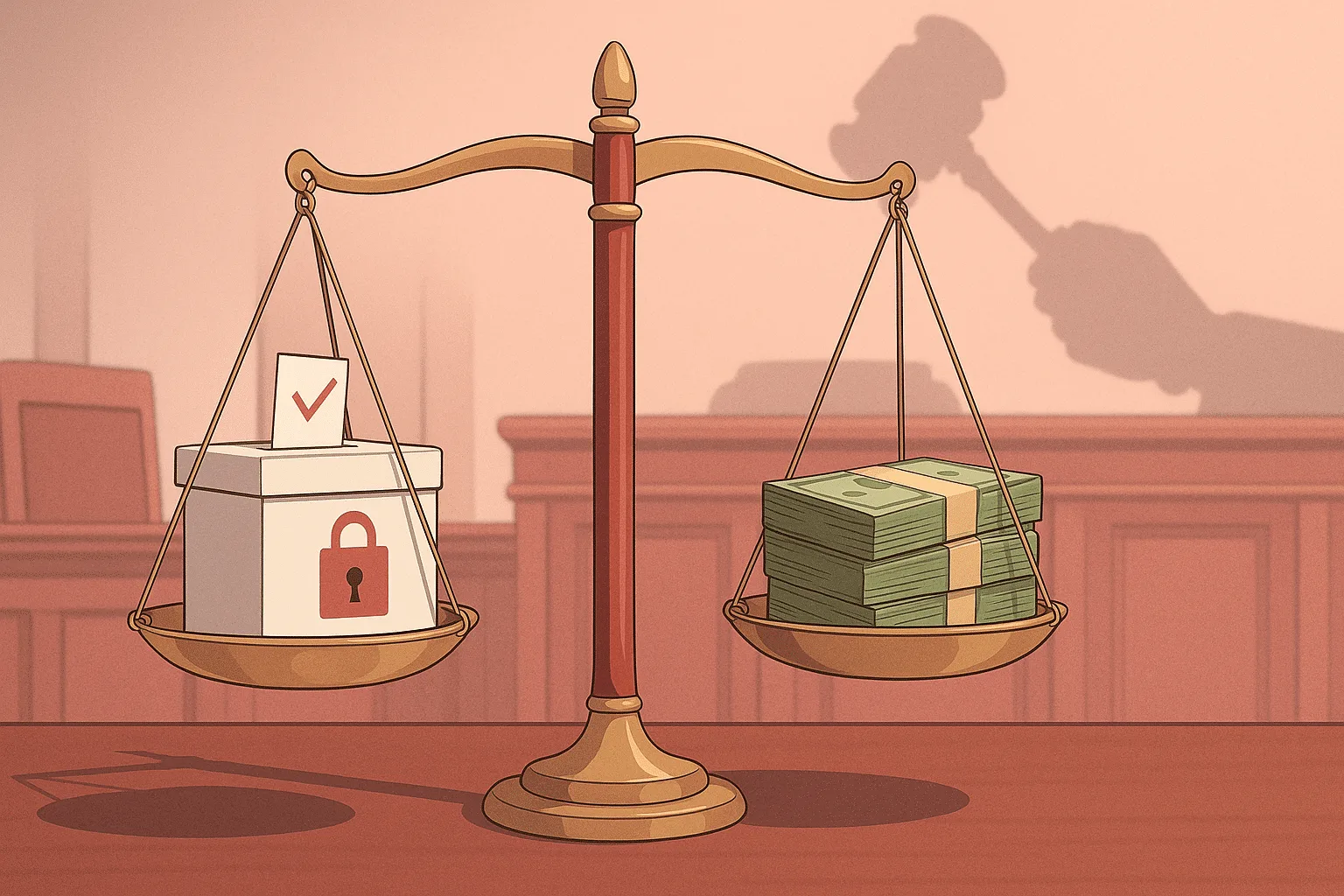
The Hasto Kristiyanto case highlights the importance of judicial activism by judges to uncover material truth and not be fixated on formalities. Punishment must be proportional to the impact of the crime, especially c...
Opinion Note
This opinion article was written by a contributor/columnist. The views expressed are entirely the responsibility of the author and do not necessarily represent the views of the editors.
CONTRIBUTOR PROGRAM
You can become a columnist at Legal Literacy.
Submit your legal opinion/analysis writing. If it is published, you have the opportunity to obtain a payout/honorarium in accordance with the provisions.
Table of Contents
Section 2/3: An Anticlimactic Verdict and Neglect of Election Integrity
judicial activismis needed.Judicial activismis not a form of deviation from the law, but rather an effort to fill legal loopholes or overcome weaknesses in the formulation of articles in order to achieve higher justice. If Article 21 of the Corruption Law does have weaknesses in the scope of prosecution before formal investigation, then the judge should use his discretion to interpret more broadly actions that are substantially obstruction. The inability or unwillingness to do this means ignoring the reality on the ground and giving an advantage to criminals.
The causal relationship (causality) between the "Father's" order and Harun Masiku's fugitive status must also be a crucial consideration. If the prosecutor can prove the existence of the order, then Hasto should be held accountable for the causal impact it caused, namely Harun Masiku's fugitive who has not been arrested to date. This situation significantly hinders the disclosure of the case thoroughly and injures the public's sense of justice. Substantive justice demands that every party who directly or indirectly contributes to hindering the legal process be held accountable, and not only those who formally meet the elements of the article.
Support
• Indonesian Legal Literacy
Read more comfortably, while supporting literacy.
Join Membership or submit your article for publication.
Membership
Read without ads, focus more, and access premium features.
Submit Article
Submit your writing—we curate and help publish it. If it is published, you have the opportunity to earn points/payouts according to the terms.






















Write a comment