Legal Literacy - This article explains the difference between human rights violations and gross human rights violations, along with concrete examples of human rights violation cases. Let's take a look!
State Obligations
Before further discussing the difference between human rights violations (HAM) and gross human rights violations, it would be better for us to first understand the state's obligation in realizing the fulfillment of human rights for its citizens. In the concept of human rights, the state (government) has the status as a duty bearer and every individual (society) within the territory of that state has the status as a rights holder.[1]


The obligations that the state has are the obligation to respect, the obligation to fulfill, and the obligation to protect human rights for its citizens.[2]
Understanding Human Rights Violations and Gross Human Rights Violations
To find out the meaning of human rights violations, we can refer to Article 1 number 6 of Law Number 39 of 1999 concerning Human Rights which states that:
“A human rights violation is any act by a person or group of people, including state apparatus, whether intentional or unintentional, or negligence, that restricts, and or revokes the human rights of a person or group of people guaranteed by this Law, and does not obtain, or is feared will not obtain a fair and correct legal settlement, based on applicable legal mechanisms”
Meanwhile, the definition of gross human rights violations can be seen in Article 1 number 2 of Law Number 26 of 2000 concerning the Human Rights Court, which states that:
“Gross Human Rights Violations are human rights violations as referred to in this Law.”
Gross Human Rights Violations
From the understanding of human rights violations and gross human rights violations, we can actually know what the difference is between the two. According to Article 1 number 2 of Law No. 26 of 2000 that gross human rights violations are human rights violations referred to in the law. Furthermore, Article 7 states that gross human rights violations include:
- Genocide
- Crimes against humanity
Article 8 explains that what is meant by the crime of genocide is any act committed with the intent to destroy or exterminate all or part of a national, racial, ethnic, or religious group, by:
- killing members of the group;
- causing serious physical or mental suffering to members of the group;
- creating conditions of life for the group that will result in physical destruction in whole or in part;
- imposing measures intended to prevent births within the group; or
- forcibly transferring children from one group to another.
Meanwhile, Article 9 explains that one of the acts committed as part of a widespread or systematic attack, knowing that the attack is directed specifically against the civilian population, is in the form of:
- murder;
- extermination;
- enslavement;
- forced eviction or transfer of population;
- deprivation of liberty or other arbitrary deprivation of physical freedom that violates the basic principles of international law;
- torture;
- rape, sexual slavery, forced prostitution, forced pregnancy, forced sterilization or other forms of sexual violence of comparable gravity;
- persecution against any identifiable group or collectivity on political, racial, national, ethnic, cultural, religious, gender or other grounds that are universally recognized as impermissible under international law;
- enforced disappearance of persons; or
- the crime of apartheid.
Thus, it can be interpreted that gross violations of human rights are violations of human rights as referred to in Article 7, namely the crime of genocide and crimes against humanity, and the forms of these two types of crimes are explained in Articles 8 and 9 of Law No. 26 of 2000 concerning the Human Rights Court.
Examples of Cases of Gross Human Rights Violations
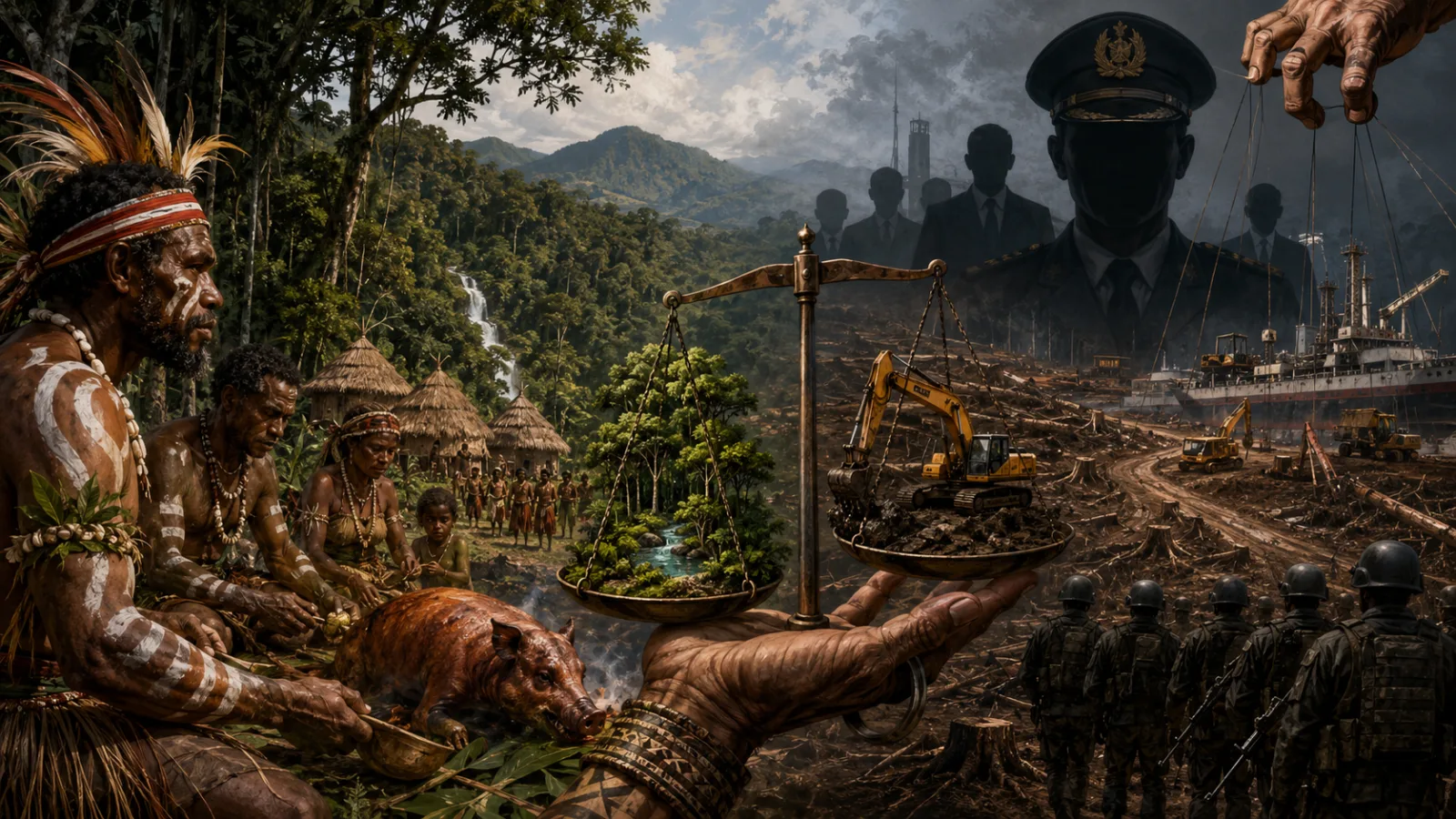
One of the humanitarian events that the National Human Rights Commission has declared as a case of gross human rights violations is the Jambo Keupok incident in Aceh. The incident occurred in 2003 when Aceh was in an armed conflict, dozens of residents of Jambo Keupok Village, South Aceh, became victims of the incident. The victims were tortured, shot dead, and burned alive by members of the TNI because they were suspected of being sympathizers of the separatist group Free Aceh Movement (GAM).[3]
Based on the investigation and findings of the National Human Rights Commission, it is strongly suspected that gross human rights violations have occurred and the incident is strongly suspected of fulfilling the elements of gross human rights violations.[4]
Human Rights Violation
In contrast to gross human rights violations, human rights violations do not have limitations as mentioned in Articles 7, 8, and 9 of Law No. 26 of 2000. This means that when the intended act has fulfilled the formulation of elements contained in Article 1 number 6 of Law No. 39 of 1999 or other articles that regulate human rights in the Law. In addition, in general, human rights violations occur when the state (government) does not carry out its obligations, be it to respect, to fulfill, or to protect.
Examples of Human Rights Violation Events
As mentioned previously, if the state does not fulfill its obligations, namely to respect, to fulfill, or to protect, then a human rights violation has occurred. Let's take the example of the state's obligation to fulfill the human rights of its citizens, in this case, fulfilling the right to freely embrace religion and worship. Article 29 paragraph (2) of the 1945 Constitution of the Republic of Indonesia states that:
The state guarantees the freedom of every resident to embrace their respective religions and to worship according to their religions and beliefs.
Article 29 paragraph (2) of the 1945 Constitution of the Republic of Indonesia
In addition to the 1945 Constitution of the Republic of Indonesia, the right to embrace religion and worship is also regulated in Article 22 paragraph (1) of Law No. 39 of 1999 that:
Everyone is free to embrace their respective religions and to worship according to their religions and beliefs.
Article 22 paragraph (1) of Law No. 39 of 1999
If there is an event that results in someone not being able to worship according to the religion they believe in, then it can be said that a human rights violation has occurred. For example, in 2022, a video went viral of the Mayor of Cilegon and several people who rejected the construction of a church in Cilegon.[5] We have all known that the construction of a place of worship (church) certainly requires permission from either the regional government or the ministry, and if the residents cannot carry out worship according to the religion they believe in because of the rejection from the mayor or regional government without justifiable reasons, then a human rights violation has occurred.
[1] Rahayu, Human Rights Law (Semarang: Diponegoro University Publishing Agency, 2015), 59.
[2] Ibid.
[3] Rino Abonita, “Gross Human Rights Violations in Jambo Keupok, Aceh: Heartbreaking Howls as Soldiers Burned a Dozen People Alive” BBC Indonesia, June 27, 2023, https://www.bbc.com/indonesia/indonesia-64871688
[4] Executive Summary of the Investigation Report on Gross Human Rights Violations in the Jambo Keupok Incident
[5] BBC, “Church Establishment Rejected: 15 Years of Congregation Waiting, Netizens Question the Mayor's Actions, Is This What Tolerance Is Called?”, BBC Indonesia, September 8, 2022, https://www.bbc.com/indonesia/indonesia-62836957
Reference Sources:
- Rahayu. 2015. Human Rights Law. Semarang: Diponegoro University Publishing Agency.
- Law Number 39 of 1999 concerning Human Rights
- Law Number 26 of 2000 concerning the Human Rights Court
- BBC Indonesia, “Church Establishment Rejected: 15 Years of Congregation Waiting, Netizens Question the Mayor's Actions, Is This What Tolerance Is Called?” September 8, 2022, https://www.bbc.com/indonesia/indonesia-62836957
- Rino Abonita, “Gross Human Rights Violations in Jambo Keupok, Aceh: Heartbreaking Howls as Soldiers Burn a Dozen People Alive”, June 27, 2023, https://www.bbc.com/indonesia/indonesia-64871688
- Komnas HAM, Executive Summary of the Investigation Report on Gross Human Rights Violations in the Jambo Keupok Incident


















Comments
0Share your perspective politely, stay relevant, and focus on the article. Comments appear after moderation.
Join the discussion
Write a clear, polite response that stays on topic.
No comments yet. Be the first to discuss.
Comments will appear after moderation.