

Legal Literacy - This writing aims to demonstrate the interconnectedness of democracy and the environment in supporting policymaking in Indonesia within the framework of sustainable development, and how an ideal system should be built in Indonesia's condition of experiencing democratic regression.
By: Murti Ayu Hapsari (Lecturer of HTN FH Universitas Janabadra Yogyakarta)


Democratic Regression
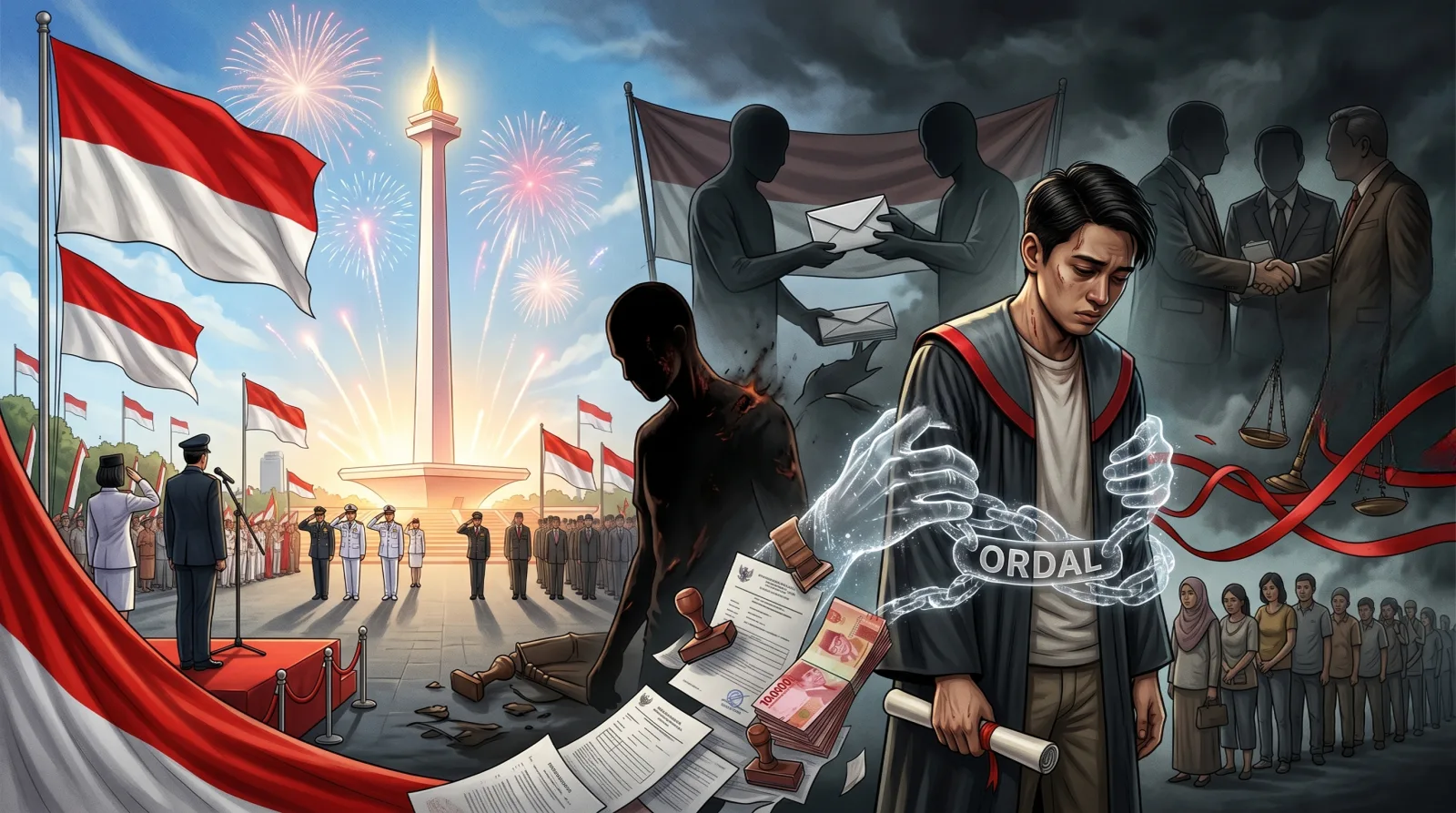
Issues related to the democratic regression plaguing Indonesia have become the concern of many academics. Democratic regression can be simply explained as the weakening of democratic institutions, in this context democracy is not narrowly defined as only related to general elections or electoral democracy, but also includes the implementation of healthy separation of powers, the upholding of human rights guarantees, especially civil rights, and the functioning of law enforcement officials and the rule of law.
Indonesia after the 1998 Reformasi gained international recognition as one of the powerhouse democratic countries in Asia. This country gained attention because it could function well as a democratic country despite having a multi-ethnic and multi-religious population (Thomas & Warburton, 2021).
However, several studies show symptoms of democratic regression occurring in Indonesia since 2009. The latest data compiled by Freedom House in 2023, Indonesia is still classified as a partly free country with a score of 58/100, several things related to civil rights still have low scores (House, 2023). The trajectory of democratic development studied shows many challenges that should be noted by those in power, especially in relation to policymaking.

















Comments
0Share your perspective politely, stay relevant, and focus on the article. Comments appear after moderation.
Join the discussion
Write a clear, polite response that stays on topic.
No comments yet. Be the first to discuss.
Comments will appear after moderation.