

Comparison with Non-human Legal Entities
Non-human Entities in Law
In law, non-human entities such as corporations and organizations have long been recognized as having rights and obligations. This comparison is relevant because it shows how the legal system has evolved to accommodate legal subjects that do not have human consciousness or intelligence. Corporations, for example, can own property, file lawsuits, and be sued. This understanding opens opportunities for AI to be recognized in a similar legal framework, with consideration given to its ability to act autonomously.
Implications of Legal Recognition
Recognizing AI as a legal subject would have broad implications, not only on how AI is integrated into society, but also on the principles of law itself. This includes questions about who is responsible for AI's actions, how intellectual property rights over AI creations should be handled, and whether AI can have certain rights. Historical examples of non-human entities provide insights into potential solutions and complications that may arise from similar recognition for AI.


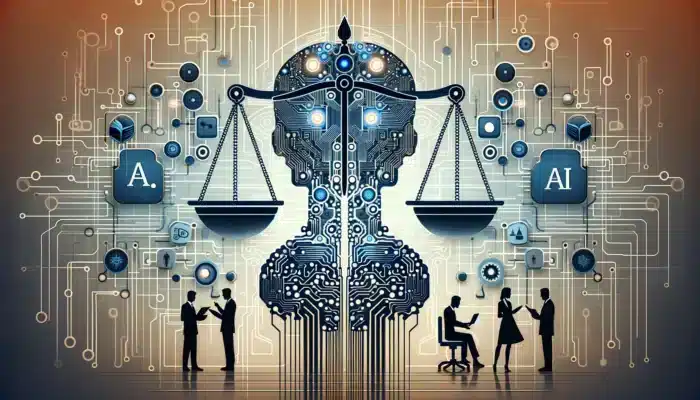
Approaches of Various Jurisdictions
International Comparison
Approaches to AI as a legal subject vary significantly across countries. Some jurisdictions are more open to recognizing legal rights and responsibilities for AI, while others are still in the early stages of discussion. This comparative study highlights the diversity in legal and technological understanding and the urgency for global dialogue on internationally acceptable standards.
Specific Case Studies
Some countries have taken concrete steps towards legal recognition of AI. For example, the European Union has published ethical guidelines for the development and application of responsible AI, while in some Asian countries, AI has begun to be used in legal and administrative decision-making processes. These case studies provide insights into best practices and challenges faced in implementing effective regulations for AI.
Key Issues and Challenges
Intellectual Property and AI Creations
One of the biggest challenges in recognizing AI as a legal subject is determining intellectual property ownership of works generated by AI. Questions arise as to whether works created by AI can be considered original works, and if so, who should own the rights to those works: the AI creator, the AI owner, or the AI itself?
Legal Responsibility for AI Actions
Another issue is determining who is responsible for actions taken by AI. This becomes particularly important in cases where AI actions cause damage or loss. The question of whether liability should be placed on the AI creator, the AI user, or on the AI itself, if recognized as a legal subject, is a matter that is still debated.
Ethical and Moral Perspectives
Ethical Dilemmas of AI Legal Recognition
Granting legal status to AI brings significant ethical dilemmas. Fundamental questions revolve around whether technology—which inherently lacks consciousness or emotion—can and should have rights and obligations. This challenges traditional concepts of agency, responsibility, and morality, forcing us to reconsider what it means to be a "subject" in a legal context.
Moral Considerations Regarding AI Decisions
Beyond ethical dilemmas, there are profound moral considerations regarding the impact of decisions made by AI. For example, in the context of autonomous vehicles, how do we assess decisions made by AI in "life-or-death" situations? This delves deeper into the issue of how human values and priorities are programmed into AI systems, and whether such programs can reflect human ethics and morality.
Case Studies: AI in Litigation and Contracts
AI in the Courtroom
There have been several cases where AI has been directly involved in legal processes, either as an aid in case analysis or as the subject of litigation. This raises questions about how evidence generated by AI is assessed and how AI testimony should be handled by law. These cases offer valuable insights into how the current legal system is adapting to new technologies.
AI and Contract Creation
AI has also been used in contract creation, with systems capable of automating contract negotiation and drafting based on given parameters. This raises questions about the validity and enforcement of contracts generated by AI, as well as the implications for traditional contract law theory.
The Role of AI in Legal Practice
The Use of AI by Legal Practitioners
AI has transformed the way legal practitioners work, offering tools for more efficient case analysis, legal research, and litigation outcome prediction. This use of AI promises increased accessibility and efficiency in legal practice, but also raises questions about reliance on technology and its implications for legal decision-making.
The Impact of AI on Legal Processes
The impact of AI on legal processes is evident not only in work efficiency but also in its potential to alter fundamental legal principles, such as transparency and fairness. As AI becomes increasingly integrated into the legal system, challenges will arise in ensuring that the use of this technology supports, and does not diminish, fundamental legal values.
Future Regulations and Policies
Latest Proposed AI Regulations
Worldwide, governments and international organizations are formulating regulations to address the challenges posed by AI. These proposals cover everything from algorithm transparency to legal liability, indicating plans to integrate AI into society in an ethical and responsible manner.
Policy Recommendations for AI
To ensure that AI provides maximum benefits while minimizing risks, a comprehensive policy framework is needed. This includes the development of AI ethical standards, mechanisms for reviewing and monitoring AI implementation, and strategies for educating the public and legal professionals about AI and its implications.
Conclusion
Artificial Intelligence (AI) as a subject of law presents a new area filled with complex questions and ethical dilemmas. From comparisons with non-human legal entities to its influence on legal practice and the need for future regulations, AI challenges traditional boundaries of law and forces society to reconsider many basic assumptions. While there is significant potential for AI to improve efficiency and access to justice, issues such as intellectual property, legal liability, and the ethics of AI decision-making demand mature and well-considered legal solutions.
Amid rapid technological advancements, dialogue between technologists, legal practitioners, and policymakers is key to ensuring that AI can be integrated into society in a way that supports justice, transparency, and respect for human rights. Navigating this future will require global collaboration and a multidisciplinary approach, given the broad impact of AI on various aspects of life and law.
FAQ: AI as a Subject of Law
Is AI currently considered a legal subject?
Currently, AI is not widely recognized as a legal subject in many jurisdictions. However, there is active debate and research regarding how the law should adapt to accommodate AI technological advancements, including considerations for granting some form of limited legal status to AI in certain contexts.
How can AI be integrated into the existing legal system?
Integrating AI into the existing legal system may involve creating new categories in law that specifically address AI-based entities. This could include regulations on legal liability, intellectual property, and the recognition of certain rights for AI, while ensuring the protection of human and societal interests.
Who is responsible for actions performed by AI?
Responsibility for actions performed by AI is a complex topic and depends on many factors, including how the AI is designed, operated, and used. Generally, responsibility may be placed on the AI creator, user, or the entity specifically operating the AI, although legal and ethical debates are ongoing about the best approach.
Can AI own property rights?
The question of whether AI can own property rights is the subject of significant legal debate. Some experts argue that AI, as a legal subject, may have limited rights related to the works it produces, while others emphasize the need for an approach that prioritizes human rights and welfare.
What is the future of AI as a legal subject?
The future of AI as a legal subject will likely involve the development of a more nuanced and flexible legal framework, capable of adapting to technological advancements. This will require collaboration between legal experts, technologists, and policymakers to ensure that the law supports innovation while protecting society and democratic values.























Comments
0Share your perspective politely, stay relevant, and focus on the article. Comments appear after moderation.
Join the discussion
Write a clear, polite response that stays on topic.
No comments yet. Be the first to discuss.
Comments will appear after moderation.