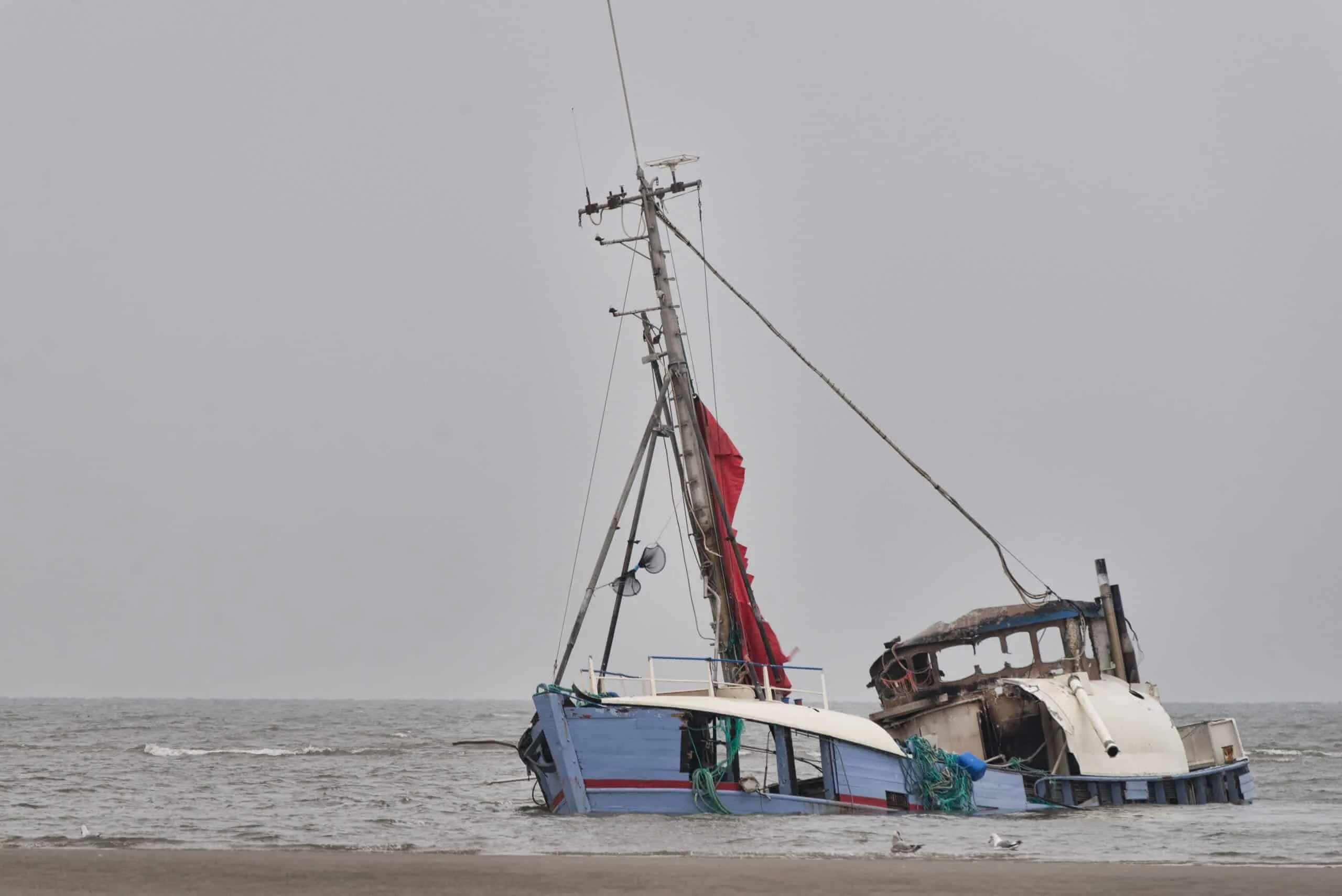
Legal Literacy - Indonesia, the largest archipelago in the world, is blessed with vast waters rich in marine resources. The potential of the marine economy, especially the fisheries sector, promises economic growth and prosperity for the nation. However, behind its great potential, Indonesian waters also face various challenges, one of which is the practice of Illegal, Unreported, and Unregulated Fishing (IUUF). This transnational organized crime threatens the sustainability of marine resources, maritime security, and hinders economic progress.
This article discusses the economic potential and strategic role of Indonesian waters; the threat of IUUF and its impact on maritime security and the economy; efforts to combat IUUF through law enforcement, human resource development, and global cooperation; as well as policy recommendations to realize sustainable and dignified water management.


Economic Potential and Strategic Role of Indonesian Waters
Indonesia's vast waters, rich in marine resources, are of great importance to Indonesia because they contain fishery resources that have great potential as a source of economic growth and are one of the drivers of national development. Indonesia has a territorial sea boundary of 12 miles towards the high seas measured by baselines connecting it to the outermost points of Indonesia's outermost islands according to the Djuanda Declaration, and the area of Indonesian sea that has been accepted in the United Nations Convention on the Law of the Sea (UNCLOS) 1982 is 5.8 million square kilometers. This position of Indonesia makes Indonesia have a central role in sea traffic.
Opportunities and Challenges Related to Territory Sea in Indonesia
Besides being able to generate large profits from marine wealth, especially the fisheries sector, criminal activity against marine resources by certain groups is becoming increasingly prevalent in Indonesia, especially foreign parties who carry out fishing in a prohibited, unreported and unregulated manner. This activity is known as Illegal, Unreported, and Unregulated Fishing (IUUF) which is a category of transnational organized crime. Transnational organized crime is organized crime that occurs across national borders involving groups or networks that work in more than one country to plan and carry out illegal business.
This is a serious threat to the survival of the fisheries sector in Indonesia because it is contrary to applicable international legal provisions, which can disrupt maritime security.
Learning from the Volga case in handling IUUF practices by Russian-flagged vessels in the Australian EEZ in December 2002, law enforcement and sanction arrangements for foreign vessels committing IUUF can be carried out with a policy of detaining the vessel and its crew to sinking and burning the vessel with the intention of creating a deterrent effect.
What Is Illegal, Unreported, and Unregulated Fishing (IUUF)?
IUUF consists of 3 (three) elements of crime, namely illegal fishing, unreported fishing, and unregulated fishing. Each of these crimes includes fishing activities that violate established rules.
Illegal fishing is a fishing activity that violates national and international laws, carried out by foreign vessels in waters under the jurisdiction of a country without official permits or licenses.
Unreported fishing refers to fishing activities where the catch is not reported to the competent national authorities or reported to unreported management organizations.
Unregulated fishing is a fishing activity carried out by ships without identification of nationality, and carried out in areas that do not yet have a national fishing conservation policy.
Factors Causing IUUF Practices in Indonesia
The prevalence of IUUF practices in Indonesian waters is caused by various factors. The main factor is the abundant potential of marine and fishery resources in Indonesia, which makes it easier for perpetrators to carry out these practices, and there is still a widespread assumption among fishermen from other countries that Indonesian waters are part of their fishing area because of a lack of understanding regarding fishing zones that are allowed or prohibited from being caught.
In addition, there is an internal factor, namely the weak enforcement of laws and regulations regarding fisheries. This is due to the inadequacy of laws and regulations regarding fisheries and the number of law enforcement officials that is not proportional to the vastness of Indonesian waters, which affects the lack of supervision and weak coordination between government agencies related to IUUF in Indonesia.
Meanwhile, the external factors include the high potential of the global fisheries product market and fishing grounds (fishing ground) in other countries which are decreasing. This urges fishing operators to practice illegally by catching fish in Indonesian waters without complying with applicable regulations.
These factors have a broad impact in all fields, especially on maritime security.
Maritime Security
Maritime security issues have received considerable attention because of their increasingly widespread nature, including threats of violence, threats to navigation, threats to resources, and threats to sovereignty and law.
One example of a threat to maritime security in Indonesia is transhipment which is a new mode in facilitating the practice of unreported fishing. In terms of fishing operations, transhipment means the process of transferring fish cargo from fishing vessels to collecting ships (collecting ship) which will then bring all the collected fish to land for further processing. This is what makes it easy for foreign vessels to enter Indonesia's EEZ to catch fish illegally.
As one of the countries that ratified UNCLOS, Indonesia is committed to eradicating all maritime crimes that violate international and national laws. Referring to the concept of security by Barry Buzan et al (1998), the existence of the meaning of maritime security exists because of the problems of the characteristics and uses of the sea and the threats that occur within it. The concept of maritime security contains two different interactions of thought, namely between groups that use a traditional framework of security and groups that use a non-traditional framework.
Therefore, to make the security strategy more effective, the non-traditional group is used, which has a tendency to expand it (securitization). That way, maritime security becomes the responsibility of all countries in maintaining the security stability of their territory, especially for Indonesia, which has a very large sea area.
Eradication of IUUF Practicesin Indonesia In maintaining the sustainability of fishery resources in Indonesian waters, eradicating IUUF practices must be the government's top priority in order to realize law enforcement on maritime security. Efforts that can be made are to form global recommendations for handling IUUF practices that occur in the world by continuously reviewing national and international actions to handle IUUF which are supported by increased global transparency.
This can be done by forming a Capture Fisheries Business Management Agency whose role is focused on managing and controlling capture fisheries businesses, starting from stock assessment (
stock assessment), regulation of licensing regimes, and application ofproduction sharing up to reporting as a preventive effort in facing maritime security threats, especially IUUF. One of the main factors that can be used as the effectiveness of eradicating IUUF practices in Indonesia is the availability of competent and professional human resources to maintain security stability in Indonesian waters.
Strengthening law enforcement in the fisheries sector that is able to handle maritime security issues and strengthen supervision of marine areas in handling crime
to provide a deterrent effect, such as sinking foreign vessels, a moratorium on foreign vessels, prohibiting activities illegal fishing untuk memberikan efek jera, seperti penenggelaman kapal moratorium kapal asing, melarang aktivitas transhipment and evaluation analysis of ex-foreign fishing vessels. Therefore, coordination with clear and precise standardization between institutions is needed regarding maritime defense and management, as well as the role of the global community in understanding the importance of the sea, leading to further realized policies.
References
- Hadi Munawar, M., 2018. Policy Analysis of Vessel Sinking as a Strategic Policy for Eradicating Illegal, Unreported, and Unregulated (IUU) Fishing in Indonesia in 2014-2017,
- Isnurhadi, M.R., 2017. Securitization of Illegal, Unreported, Unregulated Fishing (IUUF) in Indonesian Waters during the Joko Widodo Administration. Jurnal Hubungan Internasional, Jurnal Hubungan Internasional 10.
- Keliat, M., 2009. Maritime Security and its Policy Implications for Indonesia. Jurnal Ilmu Sosial dan Ilmu Politik 13, 19.
- Kementerian Kelautan dan Perikanan Republik Indonesia, 2017. The Sea is the Future of the Nation: Sovereignty, Sustainability, Prosperity. Jakarta.
- Sefriani, 2018. International Law: An Introduction. Rajawali Pers, Depok.
- Syahrani, D.A., Musadieq, M.A., Darmawan, A., 2017. Analysis of the Role of Illegal, Unreported, and Unregulated Fishing (IUU) Policies on the Export of Tuna and Shrimp Catches 45.



















Comments
0Share your perspective politely, stay relevant, and focus on the article. Comments appear after moderation.
Join the discussion
Write a clear, polite response that stays on topic.
No comments yet. Be the first to discuss.
Comments will appear after moderation.