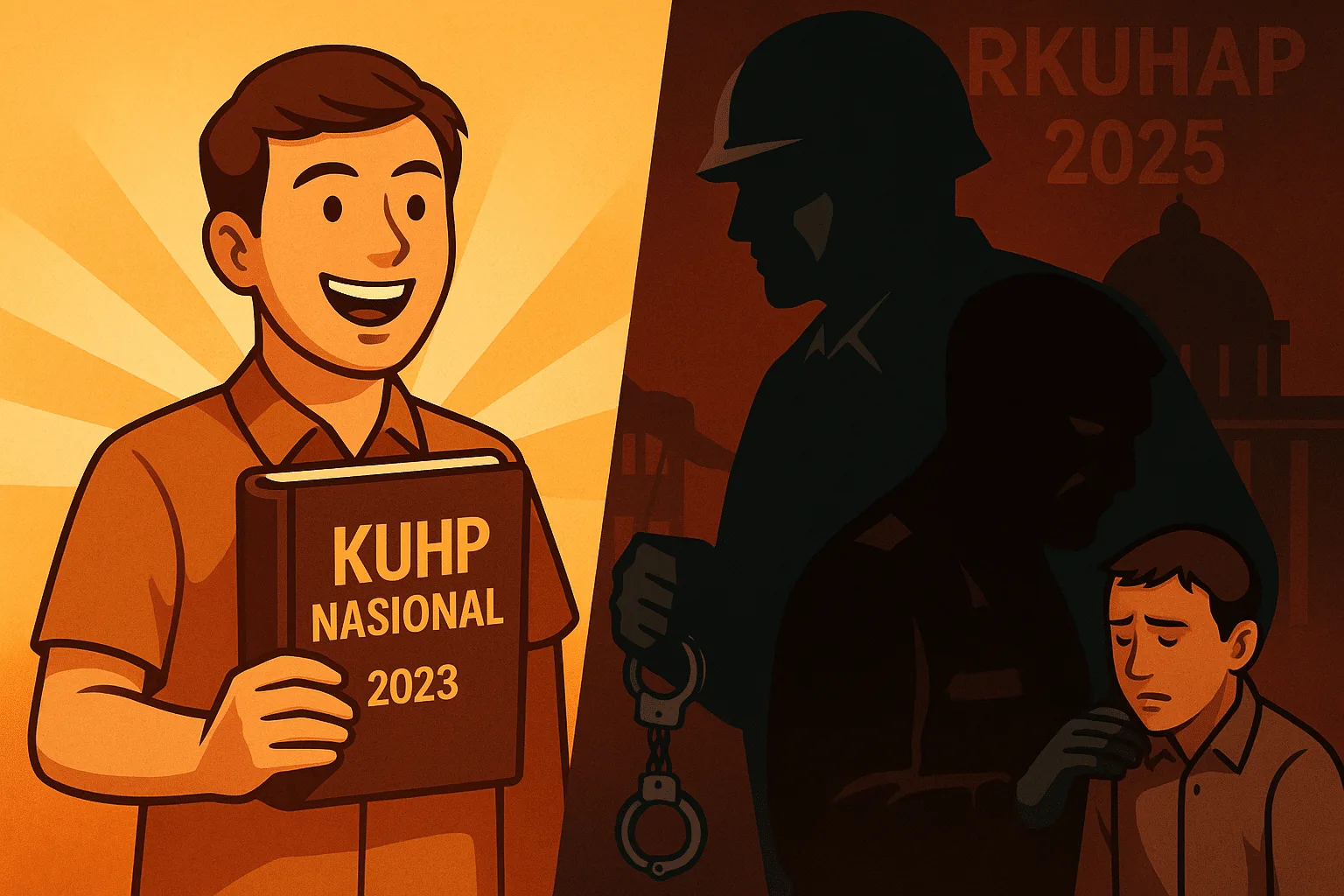
Granting broad authority to the military in criminal procedural law is a setback in the Indonesian legal system. The military should not be mixed with civil law enforcement, because it will increase the risk of human rights violations. Indonesia could lose its identity as a state of law that upholds justice and the welfare of the people, turning into a country that is only filled with ambitions of mastery. In fact, the RKUHAP should be an important milestone in the reform of the criminal justice system, not the other way around. Instead of strengthening the principles of human rights, the RKUHAP draft actually weakens them. If the law is no longer enforced by independent and accountable civil institutions, but is controlled by armed institutions with minimal accountability, then the law will lose its function as a bastion of justice. On the contrary, the law will actually become a real threat to the people.
Therefore, a thorough revision of the controversial articles in the 2025 RKUHAP is an absolute necessity. The military should not be given space in legal proceedings against civilians. Law enforcement must remain under the authority of transparent, accountable civil institutions that uphold human rights. Otherwise, the RKUHAP is not a legal reform, but a silent path towards the legalization of human rights violations and authoritarianism.



















Write a comment