
Legal Literacy - In running a government, every country has a system of government that is implemented in their country. Democracy is currently still considered a system of government that is the best system of government.
Reacquainting Yourself with Democracy
Democracy comes from the word 'demos' which means people and 'kratos' which means power and when combined it will form the word 'demokratia' which means the power of the people, but some literature also mentions that democracy means government by the people. It began when in 507 BC, the leader of Athens at that time, Cleisthenes, first introduced the term democracy which was a system of political reform. The starting point of democracy at that time was when the people gathered to convey their concerns and aspirations directly in front of their leaders.


One of the things that underlies the difference between democracy and other systems of government is prioritizing the involvement of the people in running the government cycle. Not only that, democracy also has several principles that are used as values that are needed to develop a democratic form of government, including:
- Sovereignty of the people;
- Government based on the consent of the governed;
- Majority rule;
- Minority rights;
- Guarantee of Human Rights;
- Free, fair, and honest elections;
- Equality before the law;
- Due process of law;
- Constitutional limits on government;
- Social, economic, and political pluralism;
- Values of tolerance, pragmatism, cooperation, and consensus
Don't Be Lulled by the Advantages, Understand the Disadvantages Too
It is true that every system of government in every country has advantages and disadvantages without exception democracy. The reason why democracy is still considered the best system of government in the world today is because of several advantages possessed by the democratic system, including democracy is considered fairer because it always involves the people, democracy is also considered to always uphold Human Rights (HAM), democracy is also one of the systems that prevents abuse of power which is feared to harm the people.
Although democracy is considered a system of government that protects the interests of the people and offers freedom and participation in every decision-making process, the democratic system also has shortcomings like other systems of government, one of the shortcomings of the democratic system is often referred to as 'Tyranny of the Majority' is when the interests of the majority completely dominate and minority groups are often ignored their rights.
A philosopher whose name is quite famous, Plato, believes that uneducated democracy is feared to lead to a tyranny of the majority without considering the rights of minorities that are not in accordance with justice in democracy. Not only that, democracy also has other shortcomings such as conflicts of interest between politicians, and also the democratic process sometimes only becomes a sweet promise from politicians just to get the people's vote, and what is quite crucial in the shortcomings of the democratic system is the people as voters in democracy.
Allegory of the Ship
Every citizen who lives in a democratic country has the same right to be involved in the political process that takes place in their country. Of course, this equality of rights includes all citizens, both the educated and those with low education.
Plato, who is a famous philosopher who is pessimistic about democracy, invites us to think in an allegory, namely when there is a ship filled with foolish people who have no knowledge of the direction of the destination and how to control the ship, all they know is how to have fun on the ship with the existing supplies without considering the future conditions. However, on the ship there is also one person who understands ship navigation very well, of course that person will be ignored and opposed by the foolish people who are with him.
This allegory was used by Plato as a criticism of the social and political conditions that occurred in his time. At that time Plato assessed that the people in power only relied on rhetoric that was able to manipulate the people to gain or maintain their power without seeing the shortcomings they had such as wisdom and justice.
At that time he also considered that it would be very dangerous to give too much power to people who did not have enough knowledge and wisdom in state affairs.
Closing
Nothing is perfect in this world, even a system of government that is considered the best system has shortcomings so that it is hated by a famous philosopher. In a democratic system, political decisions are largely determined by the people who have equal rights in political decision-making. Plato argued that people who are less or even uneducated or do not understand politics cannot make wise decisions. This makes Plato reaffirm the importance of adequate political education.
If we reflect on our beloved country, where the level of education and interest in literacy is still relatively low, then it will make us agree with Plato's view.
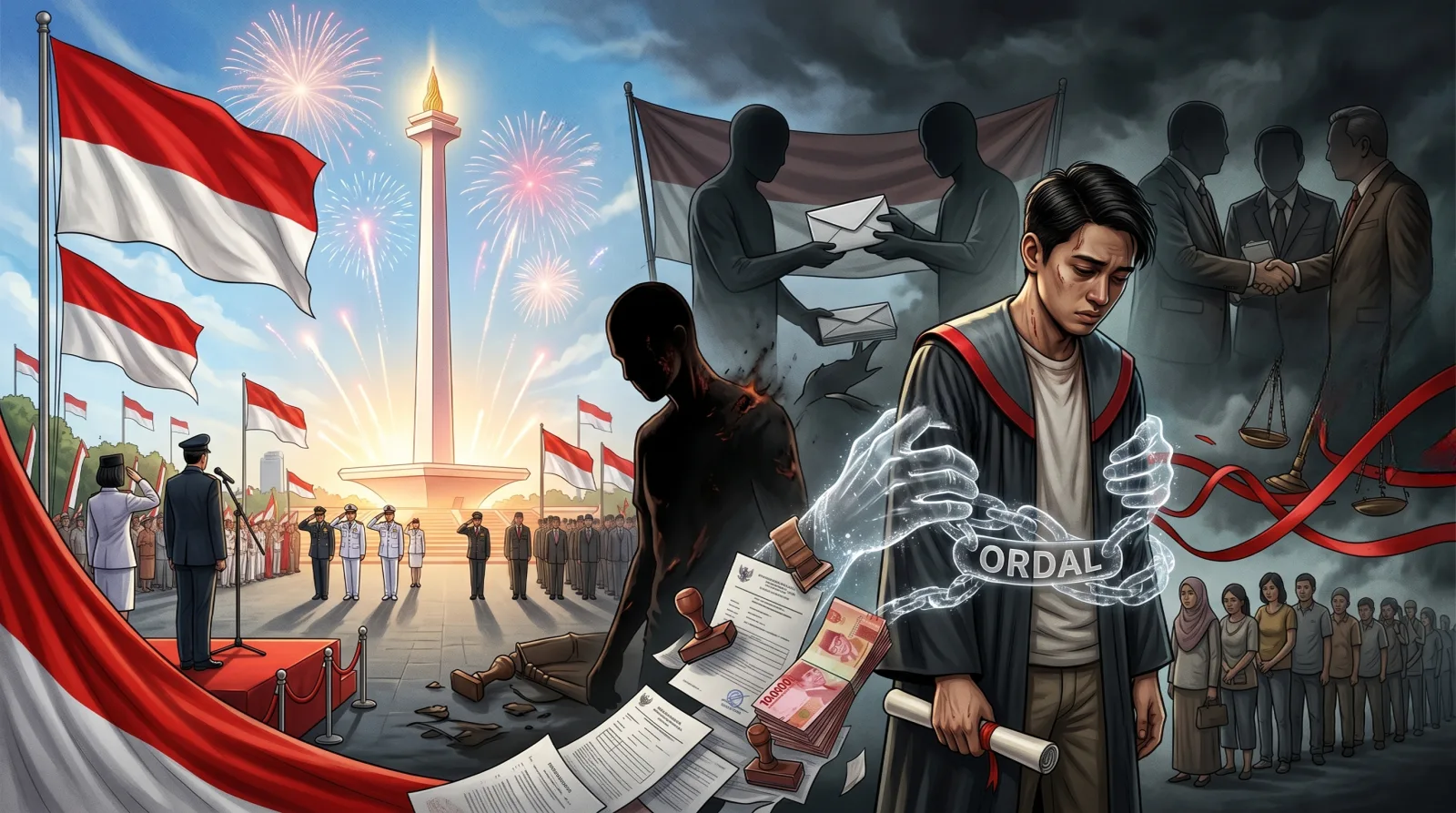
Looking at the current condition of our country, it makes us realize that the flaws of democracy have eroded various sectors from the bottom to the top. Starting from the people who have become permanent voters, many of whom still do not understand politics and its impact, to the politicians who are happy to exploit the ignorance of their people to get votes by justifying all unlawful means.
I think Plato's criticism of the democratic system at that time is still relevant to the conditions that occur in our country, all forms of shortcomings of the democratic system are exploited by politicians to commit fraud in order to gain power. It is important for the government to overcome this by paying attention to the education and economy of the community and making strong legal regulations if the government, which is filled with politicians, is not afraid of losing power in order to save the nation's democracy.






















Comments
0Share your perspective politely, stay relevant, and focus on the article. Comments appear after moderation.
Join the discussion
Write a clear, polite response that stays on topic.
No comments yet. Be the first to discuss.
Comments will appear after moderation.