

Similarly, in Polynesian society with the concept of tapu, or in the practice of Tana’ Ulen in the Kenyah Dayak community in Kalimantan. Certain forest areas are protected through strict customary norms, not because of modern ecological awareness, but because of spiritual beliefs. But that is precisely where the strength of the law lies, that it effectively maintains sustainability without the need for formal codification.
In Mircea Eliade's view, archaic society understands law as part of the creation myth. Violation of the law means disrupting the order of the cosmos. Thus, law at this stage is ecocentric—placing humans as part of nature, not as its ruler.


Ancient Greco-Roman Era
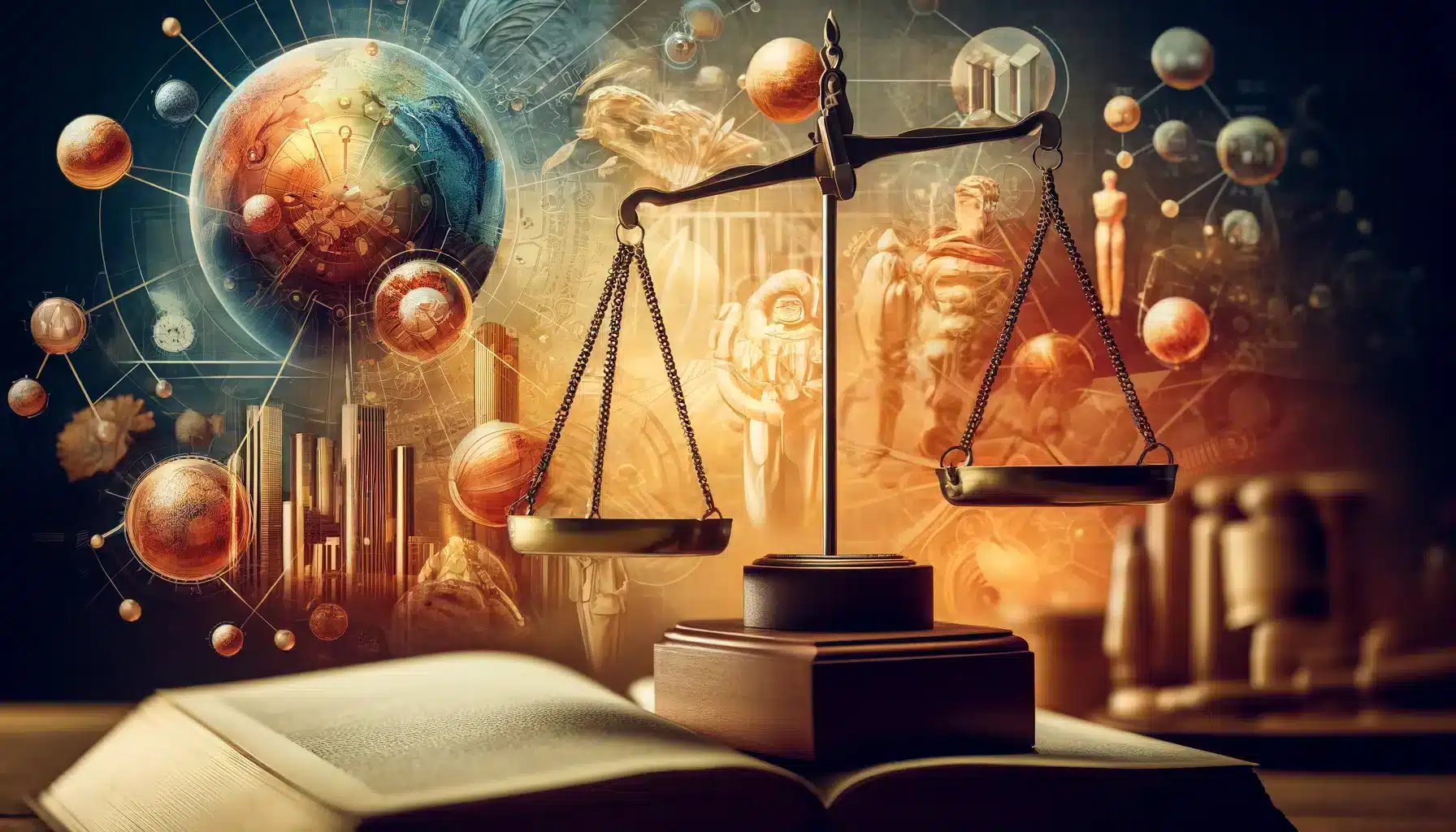
Entering the era of classical civilization, especially in Greece and Rome, there was a fundamental shift in the paradigm of human relations with nature. Rationality began to replace myth as the basis for legal legitimacy. The concept of nomos (rule) and physis (nature) marked the birth of dualism: the separation between humans as rational subjects and nature as an object that can be understood—and then, controlled.
Philosophers such as Aristotle developed the idea of natural law (jus naturale) which are universal and rational. However, even while discussing the harmony of the cosmos, this thinking gradually placed humans as the center of rationality. Nature was no longer seen as a sacred entity as it was at the beginning of civilization, but rather as a system that could be analyzed and utilized.
This development reached its peak in Roman law. Through the concept of dominium, law began to recognize individual ownership of land and resources. Nature was legally positioned as an object that could be owned, traded, and exploited. This was an important turning point: law no longer maintained harmony with nature, but rather regulated human domination over it.
Thinkers like Cicero still emphasized that positive law must be in harmony with natural law and reason. However, in practice, the rationalization of law actually strengthened the structure of human power. Nature became part of the economic and political system, no longer part of an equal cosmic order.






















Comments
0Share your perspective politely, stay relevant, and focus on the article. Comments appear after moderation.
Join the discussion
Write a clear, polite response that stays on topic.
No comments yet. Be the first to discuss.
Comments will appear after moderation.