
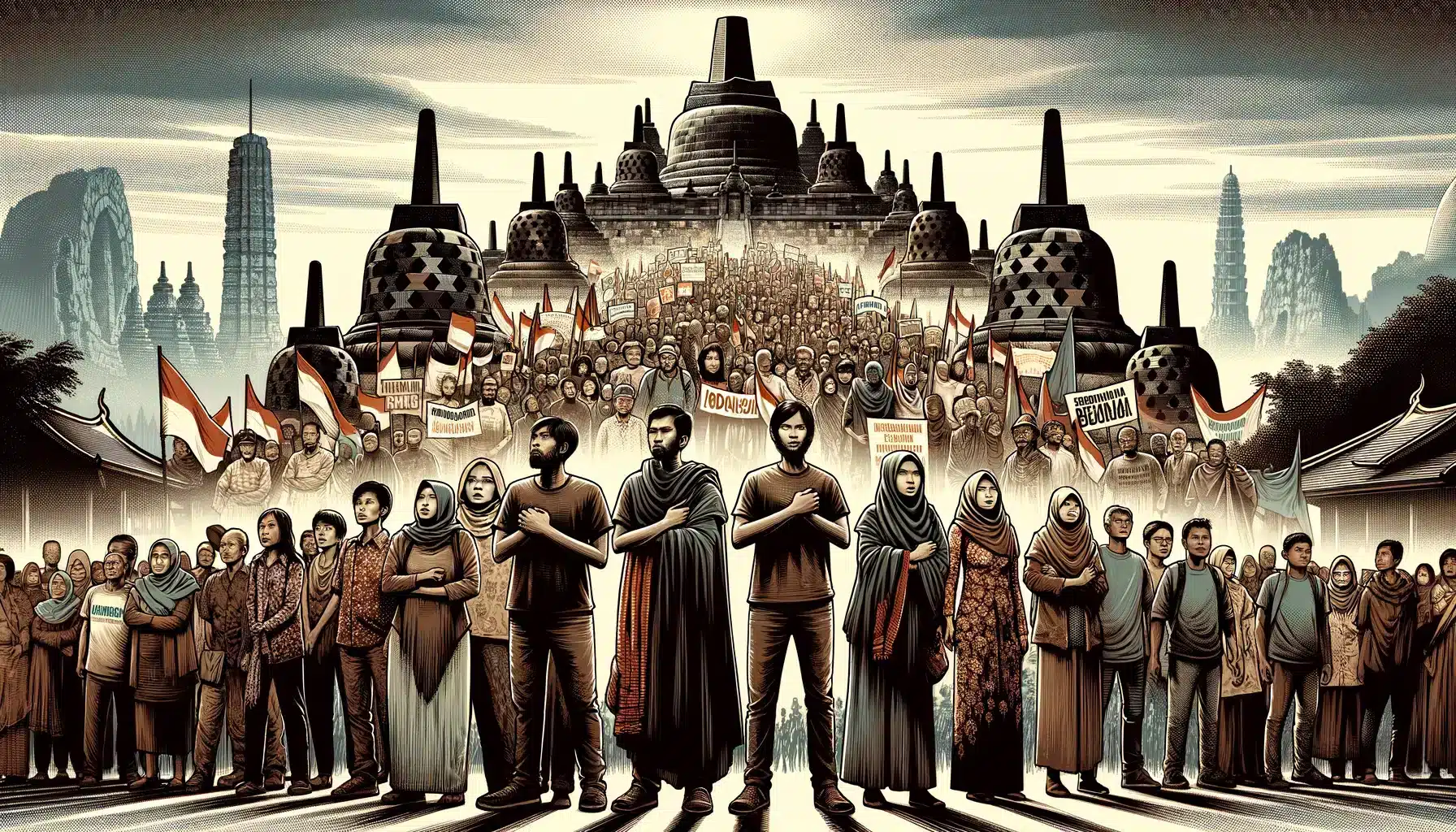
Legal Literacy - This article discusses the development of law and the challenges of enforcing human rights (HAM) in Indonesia, including the history of human rights law, various challenges such as impunity and limited resources, as well as efforts that have been made to improve human rights enforcement in Indonesia. This article also reviews prominent cases of human rights violations and strategies for handling past human rights violations.
Introduction
In Indonesia, human rights (HAM) are often a hot topic of discussion both in the mass media and in academic discussions. Human rights are fundamental rights that must be respected, protected and fulfilled by the state. However, the enforcement of human rights in Indonesia faces various complex and diverse challenges. This article will comprehensively discuss the development of laws related to human rights in Indonesia and the challenges faced in their enforcement.


History and Development of Human Rights Law in Indonesia
Indonesia has a long history in efforts to protect and enforce human rights. Since independence until now, there have been various legal instruments that regulate human rights. Some important laws related to human rights include:
- 1945 Constitution (UUD 1945)
UUD 1945 is the basic constitution which contains the basic rights of citizens, including human rights. The articles in the 1945 Constitution that regulate human rights include:
- Article 28: The right to associate and assemble.
- Articles 28A-28J: The right to life, the right not to be tortured, the right to personal freedom, the right to security, and various other human rights.
The second amendment to the 1945 Constitution in 2000 affirmed more human rights, such as the right to life, the right not to be tortured, the right not to be enslaved, the right to freedom of thought and religion, the right to freedom of assembly and association, and the right to security.
- Law Number 39 of 1999 concerning Human Rights
Law Number 39 of 1999 is one of the main legal instruments that specifically regulates human rights. This law provides a legal basis for the protection and enforcement of human rights in Indonesia. Some important provisions in this law include:
- The right to life, the right not to be tortured, the right to personal freedom, and the right to security.
- The right to freedom of thought and religion, the right to freedom of assembly and association, and the right to freedom of expression.
- The right to legal protection, the right to education, the right to work, and the right to health.
- Law Number 26 of 2000 concerning the Human Rights Court
Law Number 26 of 2000 regulates the establishment of a human rights court which aims to try gross human rights violations, such as genocide and crimes against humanity. The Human Rights Court has the authority to examine and adjudicate cases of gross human rights violations that occur in Indonesia.
- Law Number 21 of 2007 concerning the Eradication of the Crime of Trafficking in Persons
This Law regulates efforts to eradicate the crime of trafficking in persons, which is a serious form of human rights violation. This Law provides protection to victims of trafficking in persons and stipulates sanctions for perpetrators of the crime of trafficking in persons.
Challenges to Human Rights Enforcement in Indonesia
Although there are various legal instruments governing human rights, their enforcement still faces complex and diverse challenges. Some of the main challenges in enforcing human rights in Indonesia include:
- Impunity
One of the biggest challenges in enforcing human rights in Indonesia is impunity, namely legal immunity for perpetrators of human rights violations. Many cases of gross human rights violations have not yet been resolved, such as the 1965 Tragedy, the Trisakti Tragedy, the Semanggi Tragedy, and human rights violations in Papua. The inability or unwillingness of law enforcement officials to thoroughly investigate these cases often means that perpetrators of human rights violations are not touched by the law.
- Limited Resources
Enforcement of human rights requires adequate resources, both in the form of funds, experts, and legal infrastructure. Limited resources often become an obstacle in the process of law enforcement against human rights violations. Lack of facilities and budgets for investigations, witness protection, and transparent and accountable judicial processes can hamper efforts to enforce human rights.
- Culture of Violence
The culture of violence that still exists in some law enforcement and military institutions is also a serious challenge in enforcing human rights in Indonesia. Practices of violence, torture, and inhumane treatment by law enforcement officials against suspects or detainees are forms of human rights violations that still occur frequently. Reforms within law enforcement and military institutions are needed to eliminate violent practices that violate human rights.
- Lack of Awareness and Human Rights Education
Public awareness of the importance of human rights still needs to be improved. Many people do not yet understand the human rights they have and how to demand these rights if they are violated. Human rights education in schools and training for law enforcement officials is very important to build better awareness and understanding of human rights. Lack of human rights education can also lead to public ignorance of their rights, making it difficult to demand justice when those rights are violated.
- Political Obstacles
Enforcement of human rights often faces political obstacles, especially when human rights violations involve actors who have great political or military power. Political pressure can influence the investigation, prosecution, and trial of human rights violation cases, thereby hindering efforts to achieve justice for victims.
- Protection for Human Rights Defenders
Human rights defenders often face threats, intimidation, and violence because of their activities in defending human rights. Protection for human rights defenders is still an important issue that needs serious attention. Lack of protection for human rights defenders can hinder their efforts to fight for justice and human rights.
Efforts to Enforce Human Rights in Indonesia
Various efforts have been made to improve human rights enforcement in Indonesia. Some of the steps taken by the government and various other parties include:
- National Human Rights Commission (Komnas HAM)
Komnas HAM is an independent institution tasked with monitoring, investigating, and reporting human rights violations. Komnas HAM also provides recommendations to the government regarding policies related to human rights. Some of the activities carried out by Komnas HAM include:
- Investigation and monitoring of cases of human rights violations.
- Drafting reports and recommendations regarding human rights enforcement.
- Education and outreach on human rights to the public.
- Legal reform
The government continues to carry out reforms in the legal sector to strengthen human rights enforcement. This includes revising laws related to human rights and strengthening law enforcement institutions. Some of the steps taken in legal reform include:
- Revision and harmonization of laws relating to human rights to ensure compliance with international standards.
- Strengthening the capacity and integrity of law enforcement officials through training and education on human rights.
- Increased transparency and accountability in the judicial process of human rights violation cases.
- International cooperation
Indonesia also cooperates with various international organizations in order to increase the capacity for human rights enforcement. Some forms of international cooperation carried out include:
- Cooperation with the United Nations (UN) in human rights-related programs, such as the Universal Periodic Review (UPR) and reporting on the implementation of international human rights conventions.
- Cooperation with international non-governmental organizations in organizing training and capacity building for law enforcement officials and civil society.
- Participation in international forums on human rights to share experiences and learn from best practices in other countries.
- Increasing Public Awareness
The government and various civil society organizations carry out various activities to increase public awareness of human rights. Some of the activities carried out include:
- Public campaigns on human rights through mass media, social media and socialization activities.
- Education and outreach on human rights in schools and community communities.
- Community empowerment through training on human rights and how to demand these rights.
Cases of Human Rights Violations in Indonesia
Indonesia has a long record of human rights violation cases, both those that occurred in the past and those that are still ongoing today. Some prominent cases of human rights violations include:
- The 1965 Tragedy
The 1965 Tragedy is one of the biggest cases of human rights violations in Indonesian history, in which there was a mass slaughter of members and sympathizers of the Indonesian Communist Party (PKI) and groups allegedly involved with the PKI. The number of victims is estimated to reach hundreds of thousands to millions of people. Until now, the 1965 Tragedy case has not been completely resolved, and the victims and their families are still seeking justice.
- Trisakti and Semanggi Tragedy
The Trisakti Tragedy (1998) and the Semanggi I and II Tragedies (1998 and 1999) were cases of human rights violations that occurred during the reformation era, in which students who were demonstrating demanding reformation were shot. These cases became symbols of the struggle for reformation and have not been fully resolved, with many perpetrators not yet brought to justice.
- Human Rights Violations in Papua
Human rights violations in Papua are a complex and sensitive issue, related to the conflict between the Indonesian government and separatist groups in Papua. Various reports mention cases of human rights violations, such as murder, torture, and arbitrary arrests of activists and Papuan civilians. Handling the conflict in Papua requires a comprehensive approach and constructive dialogue to resolve existing problems.
- Human Rights Violations in Agrarian Conflicts
Agrarian conflicts in Indonesia often involve human rights violations, especially against indigenous peoples and small farmers who are struggling to defend their land from the control of large companies. Cases of forced evictions, intimidation, and violence against people fighting for land rights still occur frequently.
Handling Past Human Rights Violations
Handling past human rights violations is an issue that is still a concern in Indonesia. Some of the efforts that have been made to resolve past human rights violation cases include:
- Ad Hoc Human Rights Court
The Ad Hoc Human Rights Court was formed to try gross human rights violations that occurred in the past. Some of the cases that have been tried through the Ad Hoc Human Rights Court include:
- East Timor Case (1999): The Ad Hoc Human Rights Court tried human rights violations that occurred in East Timor before the country's independence. However, this trial process received much criticism because it did not touch the main actors responsible.
- Tanjung Priok Case (1984): The Ad Hoc Human Rights Court tried human rights violations that occurred in the Tanjung Priok incident, in which there was a mass shooting of demonstration participants.
- Truth and Reconciliation Commission (KKR)
The Truth and Reconciliation Commission (KKR) was formed to reveal the truth about past human rights violations and encourage national reconciliation. However, the formation of the KKR faced various legal and political obstacles, so it has not been able to function effectively.
- Komnas HAM Recommendations
Komnas HAM often provides recommendations to the government regarding the handling of past human rights violation cases. These recommendations include further investigation, prosecution of perpetrators, and restoration of the rights of victims and their families. However, the implementation of Komnas HAM's recommendations is often hampered by various factors, including political and legal constraints.
Conclusion
Human rights are an important foundation for democracy and justice in Indonesia. Although there has been progress in legal arrangements related to human rights, the challenges in enforcing them are still great and complex. Continuous efforts are needed from all parties, including the government, civil society, and the international community, to ensure that human rights are respected, protected, and upheld in Indonesia.
Efforts to enforce human rights require a strong commitment, adequate resources, as well as cooperation and constructive dialogue between various parties. Only in this way can we realize a fair and just Indonesia, where human rights are respected and protected for every citizen.





















Comments
0Share your perspective politely, stay relevant, and focus on the article. Comments appear after moderation.
Join the discussion
Write a clear, polite response that stays on topic.
No comments yet. Be the first to discuss.
Comments will appear after moderation.