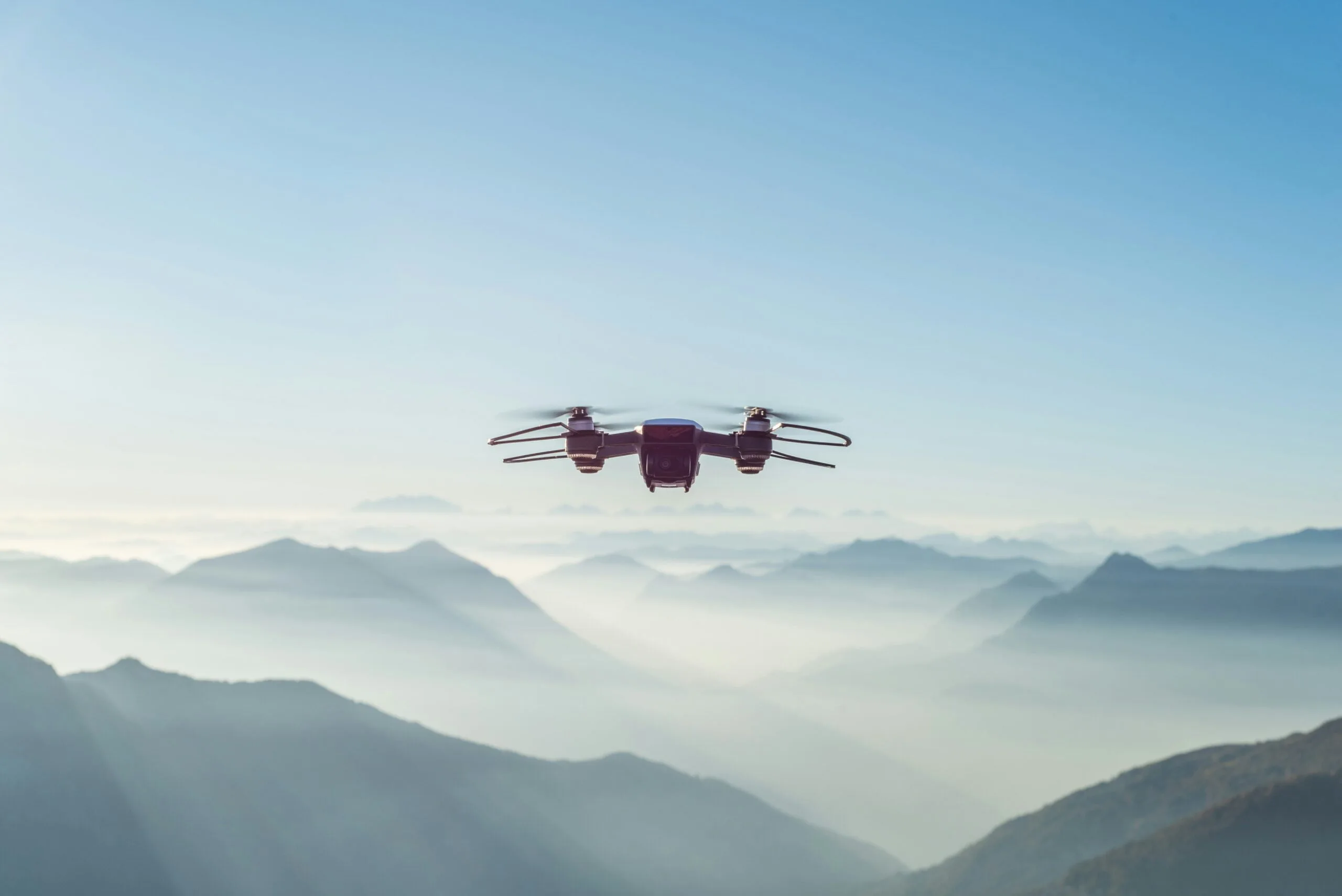
This article discusses international legal regulations regarding the use of unmanned aerial vehicles or drones, especially in relation to international humanitarian law. Several international legal regulations relating to the use of drones are explained in this article, including regulations on international customary law, international agreements, and regulations in Indonesia. This article also explains the difference between the use of non-combat drones and combat drones in international law.
The Existence of Drones
In law Internationally, there are several regulations regarding unmanned aerial vehicles, but these regulations only regulate general matters; specifically or specifically, there are no specific regulations regarding unmanned aerial vehicles. In International humanitarian law, the use of drones is divided into two, namely Non-Combat Drones or UAVs, which are drones that do not carry weapons or bombs, but are only for data collection and research activities, and Combat Drones, which are considered legitimate military targets, carrying weapons and carrying out attacks that cause damage to the enemy's military.


According to Arman Nicolas Marbun, in reality, drones are more often used for military activities than for civilian activities. Thus, there should be regulations regarding foreign drones, and these unmanned aerial vehicles or foreign drones must comply with the category of international humanitarian law in international law. The aim is to guarantee and protect humanitarian values, including freedom from military threats or armed forces for civilians and peaceful military personnel.
Drone Regulations According to Law
Several international legal regulations regarding the existence of drones include:
- Based on international customary law, the use of drones is bound by the draft RAW (Rules of Air Warfare) in the Hague Convention IV, for example, drones must not be dropped on settlements with large populations. The practices in the Hague Convention regarding drones have been widely used so that they can be used as a basis for restricting the use of foreign drones based on sources of international customary law.
- Based on international agreements
- Geneva Convention 1949; Namely Article 36 of Additional Protocol I that unmanned aerial vehicles which are a new means and method of warfare must comply with the provisions contained in the Protocol and Convention and other applicable regulations and the use of unmanned aerial vehicles as a means and method of warfare is not in accordance with Article 57 of Additional Protocol I. If it turns out that an unmanned aerial vehicle attacks civilians, it can be subject to punishment in accordance with the violation International humanitarian law on means and methods of warfare.
- The Chicago Convention of 1944. In the convention on civil aviation, Article 8 states that unmanned aircraft must have permission to enter another territory. The permission granted must be a specific permission to enter another territory, and the unmanned aircraft will be subject to supervision to guarantee/prevent the occurrence of danger. This is because, based on Article 1 of this convention, each state party/participant recognizes that each country has full and exclusive sovereignty over the airspace above its territory. And unmanned aircraft that are practically used for military activities are subject to Article 3 of this Convention.
- Montevideo Convention of 1933 Article 9 concerning the rights and obligations of sovereign states. That it is not permissible to use any weapons or armaments to violate the rights and obligations of the state, to intervene in other countries and cause civil unrest by attacking other countries. This includes the use of foreign unmanned aircraft that may not directly enter the territory of a sovereign state without permission, let alone carry out an attack.
- Paris Convention of 1919 concerning the right of innocent passage. That in peacetime, it is permissible for aircraft from other countries to pass through in accordance with the provisions of "peaceful" established by this convention.
In Indonesia, there are already several regulations governing foreign drones, including:
- Regulation of the Minister of Transportation No. 90 of 2015 concerning Control of the Operation of Unmanned Aircraft in Indonesian Airspace. The Ministerial Regulation already mentions things that are allowed and not allowed to be done related to drone operations, such as drones may not be operated in prohibited areas, restricted areas and flight operation safety areas (KKOP) of an airport (bandara), and there is a time for applying for a drone operation permit, which is 14 days before the drone's working day.
- Regulation of the Minister of Transportation No. 90 of 2015 was then revoked by Regulation of the Minister of Transportation No. 180 of 2015 concerning Control of the Operation of Unmanned Aircraft Systems in Indonesian Airspace, which was then revoked again by Regulation of the Minister of Transportation No. 37 of 2020 concerning the Operation of Unmanned Aircraft in Indonesian Airspace.
- For Unmanned Underwater Vehicles (UUV) Indonesia, the legal basis that can be applied is Law of the Republic of Indonesia Number 6 of 1996 concerning Indonesian Waters which explains the sovereignty of the Republic of Indonesia in Indonesian waters. As well as Law Number 17 of 1985 concerning the ratification of UNCLOS (ratification of international law) regarding all research activities in the sea. So if there are unmanned aircraft in the waters that commit violations, they can be tried under these two laws and regulations.






















Comments (0)
Write a comment