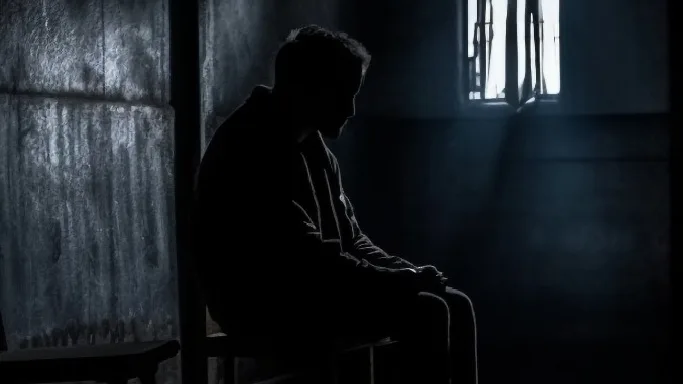
Surviving Victims Still Experience Severe Suffering
The impact of this weakness is not only technical, but also social and moral.
First, victims lose legal protection. Those who survive suicide attempts often face stigma, guilt, and prolonged trauma. When the law does not provide a means to ensnare perpetrators, victims may feel they have not obtained justice.


Second, perpetrators are free from responsibility. People who provide encouragement or means can escape legal sanctions simply because the victim did not die. This has the potential to encourage negligence or even toying with the psychological condition of others.
Third, the legal message becomes weak. The new Criminal Code seems to convey the message that the suffering of victims is not important enough to be protected, unless it results in death. This kind of message clearly contradicts the principle of protecting human rights.
Case Examples Showing Legal Loopholes
This loophole can be illustrated through a simple example. For example, a teenager we'll call A is experiencing depression due to academic pressure. A then tells his friend, whom we'll call B, about his problem.
Instead of providing positive support, B says in a mocking tone, "If you can't handle it, you might as well drink poison so it's over quickly." Such encouragement is clearly wrong, because it is not just incorrect advice, but an explicit invitation to commit suicide.
A, who is in a fragile condition, then follows B's words and tries to drink a dangerous liquid. However, A does not die. Instead, he experiences damage to his digestive tract and has to undergo intensive treatment in the hospital.
From this example, B's encouragement is very clearly wrong and dangerous. However, because A did not lose his life, Article 462 of the new Criminal Code cannot be used to ensnare B.
This example shows that even if the form of encouragement clearly leads to suicide, the law remains silent if the victim survives. In fact, the consequences are still serious, ranging from organ damage, psychological trauma, to social stigma. This situation confirms the need to revise or expand Article 462 so that it does not only wait for death as an absolute condition, but also includes conditions when the victim suffers severe consequences from the encouragement.























Write a comment