
Legal Literacy - The existence of a constitution in the constitutional life of a country is a very fundamental and absolute thing in a country. The idea of constitutionalism in the form of limiting government power regulated in the constitution can guarantee the protection of human rights. Therefore, the dynamics of a country's constitutional system are also very much determined by the dynamics of the history of the country's constitution, because in that constitution one can see the system of government, the form of the state, the system of control between state powers, guarantees of citizens' rights and, most importantly, the division of power between elements of state power holders such as legislative, executive and judicial powers.
To understand the constitutional structure of a country as determined in its constitution, one method that can be used is a comparative approach.
In the concept of Legal Literacy, constitutions and human rights are closely related. Law becomes an important instrument in guaranteeing the protection and enforcement of human rights in a country, especially in the supervision and restriction of public authorities or the state to prevent abuse of power. The existence of a guarantee of protection of human rights is one of the contents contained in almost all constitutions of countries in the world. This can be seen in the content of the constitutions of the State of Indonesia and the State of Russia.
The Indonesian Constitutional System
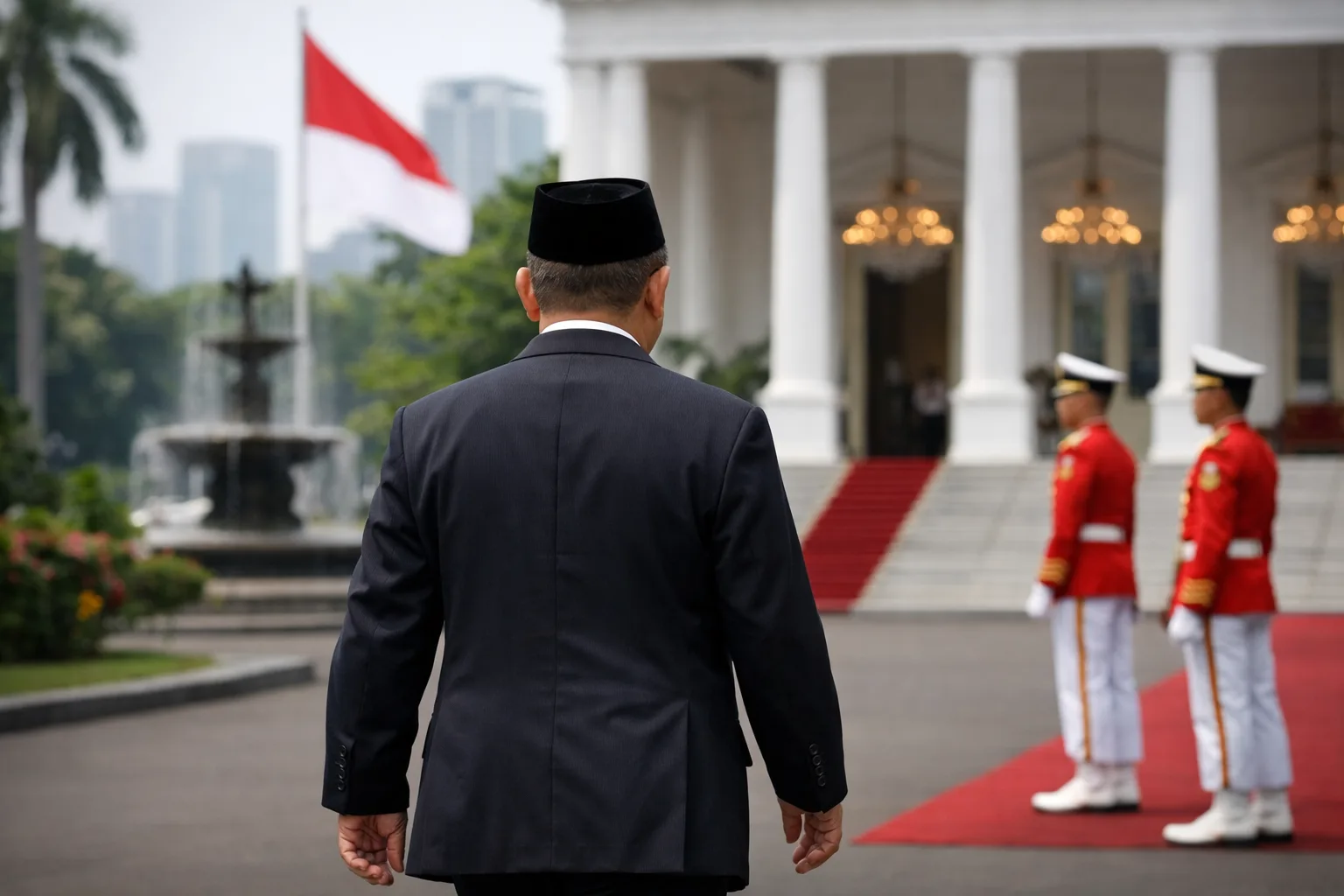
The constitution plays an important role as the written basic law for a country and is the most important reference for the life and mechanism of state administration. maintaining that country. This certainly applies to the Indonesian nation, which has the 1945 Constitution of the Republic of Indonesia (UUD NRI 1945) and is believed to be a normative constitution that inspires and underlies the direction and movement of national development.
Based on Article 1 paragraph (1) of the 1945 Constitution of the Republic of Indonesia, Indonesia is a unitary state in the form of a republic. Quoted from www.dictio.id, a unitary state is a form of state that has independence and sovereignty over its entire territory which is organized as a single unit where the central government as the holder of the highest power and its subnational units as delegates to exercise power are elected by the central government.
Article 4 paragraph (1) of the 1945 Constitution of the Republic of Indonesia states that “The President of the Republic of Indonesia holds governmental power according to the Constitution.” The power of the president is actually limited by constitution, the President of the Republic of Indonesia holds power as both the head of state and the head of government. This affirms that Indonesia adheres to a constitutional republic form of government, which is a form of government led by a president. Thus, the system of government in Indonesia adheres to a presidential system, which is a system of government of a republic in which the executive power with legislative power is elected separately through elections.
The parliamentary system in Indonesia adheres to imperfect bicameralism, namely the existence of the People's Consultative Assembly (MPR) consisting of the House of Representatives (DPR) and the Regional Representative Council (DPD), where the MPR still has a function and stands alone apart from the DPR and DPD institutions, and the DPD only has a function as a complementary institution to the DPR because it does not have full legislative functions. The DPR and DPD must be able to carry out the check and balances function perfectly.
The Russian Constitutional System
The Amendment to the Constitution of the Russian Federation was formed in 1993 as a change in the form of the Russian state into a Federation state, taking effect after publication in the “Russian Newspaper” on December 25, 1993. Precisely on December 12, 1993, the results of the vote on changes in the draft Constitution of the Russian Federation, known as “The popular vote,” were declared unanimous and ratified in the Decision President of Russia dated October 15, 1993 Number 1633.
In 2008, the first substantial amendment to the 1993 Russian Constitution occurred, extending the terms of the President of Russia and the State Duma from four to six and five years, respectively, which was proposed in November 2008 and came into effect on December 31, 2008. This stemmed from slight adjustments regarding the naming or merging of federal powers that required a simpler procedure.
Currently, the Constitution of the Russian Federation consists of a preamble and two parts. The preamble states that the people of Russia adopt a constitution that guarantees democratic and humanitarian values in the modern world. The first part consists of 9 chapters and 137 articles that explain the basis of the political, social, legal, economic and social system, fundamental rights and freedoms, the institutional structure of Russia, the status of public authorities, as well as the procedure for reviewing the constitution and making changes to it. The second part defines the final and transitional provisions that form the basis for the continued stability of constitutional and legal norms.
According to Article 11 of the Constitution, the state power of Russia is exercised by the head of state, namely a president, as well as supervisors coordinating the functions and interactions of state institutions in federal bodies not directly related to the central government. The parliamentary system in the Russian Federation adheres to a bicameral system consisting of two chambers of legislative and representative bodies, namely the Federation Council and the State Duma. The Government of the Russian Federation is the head of the executive authority system of the Russian Federation. Furthermore, the judiciary in Russia is carried out by the Constitutional Court, the Supreme Court, the Supreme Arbitration Court and other federal courts to exercise judicial power. In this case, the organization of the Russian government is based on the separation of powers and the independence of the legislative, executive and judicial branches.
Human Rights System and Mechanisms in Indonesia
The content related to the guarantee of human rights protection in Indonesia is one of the most important focuses in the amendments to the 1945 Constitution of the Republic of Indonesia which were carried out four times, namely the Constitutional Court, the 1949 RIS Constitution, the 1950 Constitution, the Constitutional Court, and the Fourth Amendment to the 1945 Constitution in 2002. During the period of validity of the basic law, the explicit inclusion of human rights experienced political ups and downs. However, in the Second Amendment carried out in 2000, a separate chapter on human rights was established, namely in Chapter XA which consists of 10 articles (Articles 28A-28J). These ten articles and other articles that also regulate basic rights in the 1945 Constitution of the Republic of Indonesia have covered all types of human rights, both classical and social.
The use of the term human rights is also not found explicitly in the preamble, body or explanation of the 1945 Constitution of the Republic of Indonesia, but only the rights and obligations of citizens are listed. As with the formulation contained in Article 28 of the 1945 Constitution of the Republic of Indonesia after the amendment which reads “freedom of association and assembly to express thoughts orally and in writing is stipulated by law” it can be interpreted textually that human rights can be reduced to a right stipulated by law.
Then Law Number 39 of 1999 concerning Human Rights affirms the recognition of the Republic of Indonesia to human rights as a natural right that must be protected, respected and enforced. Based on the Decree of the People's Consultative Assembly Number XVII/MPR/1998 concerning Human Rights and the National Action Plan on Human Rights 1998-2003 as well as the Constitutional Court Number 40 of 2004, Law Number 26 of 2000 concerning the Human Rights Court was formed as an effort to resolve gross human rights violations. The scope of serious human rights violations regulated through this law adopts some of the material in the 1998 Rome Statute concerning with genocide and crimes against humanity. In addition, the government has also ratified various international legal instruments related to human rights, such as two covenants, namely the International Covenant on Civil and Political Rights (ICCPR) and the International Covenant on Economic, Social and Cultural Rights (ICESCR), as well as various other international legal instruments.
Indonesia is one of the countries that has a Human Rights Court in its national legal system and has handled and adjudicated three cases, namely the post-ballot case in East Timor, the Tanjung Priok case handled by the ad hoc Human Rights Court, and the Abepura case handled by the permanent Human Rights Court. In addition, there are several state institutions related to human rights, including the National Human Rights Commission, the National Commission on Violence Against Women, the Child Protection Commission, the Witness and Victim Protection Agency, and other institutions relevant to human rights.
Human Rights System and Mechanism in Russia
The Constitution of the Russian Federation includes provisions on fundamental rights and freedoms in Chapter 2 Articles 17-64 and provides an understanding that human rights and fundamental freedoms exist in every human being from birth, are universally recognized and cannot be revoked. It also affirms that the exercise of the rights and freedoms of citizens must not violate the rights and freedoms of others. The Human Rights Court in Russia is authorized to investigate complaints from the Russian public against decisions and actions of state institutions in taking steps to restore violated rights.
The Russian Federation adopted human rights instruments from the former Soviet Union, namely the International Covenant on Civil and Political Rights and the International Covenant on Economic, Social and Cultural Rights. In late 1990 to 1998, Russia also ratified the European Convention on Human Rights, which affirmed that the European Court of Human Rights in Strasbourg was designated as the court of last resort for the Russian public from its national judicial system. According to Article 15 of the Constitution adopted in Russia in December 1993, the embodiment of international law is implemented in accordance with national federal law.
As an organization with 48 member states, Europe formed the Council of Europe, which plays an important role in overseeing the respect and enforcement of human rights in Europe. The main tasks of the Council of Europe are to enforce and protect human rights, democracy and the rule of law. As a member of the Council of Europe and a signatory to the European Convention on Human Rights, Russia has international obligations related to human rights issues. Since the election of the State Duma in 2011 and the resumption of the presidency in 2012, there have been legislative attacks on several constitutional and international rights. This can be seen in Article 20 of the Universal Declaration of Human Rights on Freedom of Assembly and Association, which is embodied in Articles 30 and 31 of the Constitution of the Russian Federation of 1993.
Conclusion
Indonesia and Russia have rigid constitutions. They are considered rigid because amendments require special mechanisms that differ from changes to laws. The forms of government in Indonesia and Russia share similarities, both adhering to constitutional republics where the government is established under a constitutional system that recognizes the president as the head of state and head of government. The difference lies in the form of the state, where Indonesia is a unitary state, while Russia is a federal state.
Indonesia and Russia use their constitutions as the foundation of the state and include provisions regarding the protection of human rights. The human rights systems and mechanisms established by Indonesia and Russia through the content of their constitutions, the formation of human rights-related institutions, and the ratified human rights instruments are quite diverse. This demonstrates that the national human rights systems and mechanisms of Indonesia and Russia can serve as adequate modalities for the formation of global human rights systems and mechanisms in accordance with every development that occurs.
References
Dahlan Thaib, 1999. “Teori dan Hukum Konstitusi” (Jakarta: PT Raja Grafindo Persada)
K.C.Wheare, 2005. “Konstitusi-Konstitusi Modern” (Surabaya: Pustaka Eureka)
Majda El-Muhtaj, 2017. “Hak Asasi Manusia dalam Konstitusi Indonesia” (Jakarta: Prenada Media)
Russian Federation's Constitution of 1993 with Amendments through 2008
Sri Soemantri, 1987. “Prosedur dan Sistem Perubahan Konstitusi” (Bandung: Alumni)
*This article represents the personal opinion of the author and does not represent the views of the editors of Literasi Hukum Indonesia.






















Write a comment