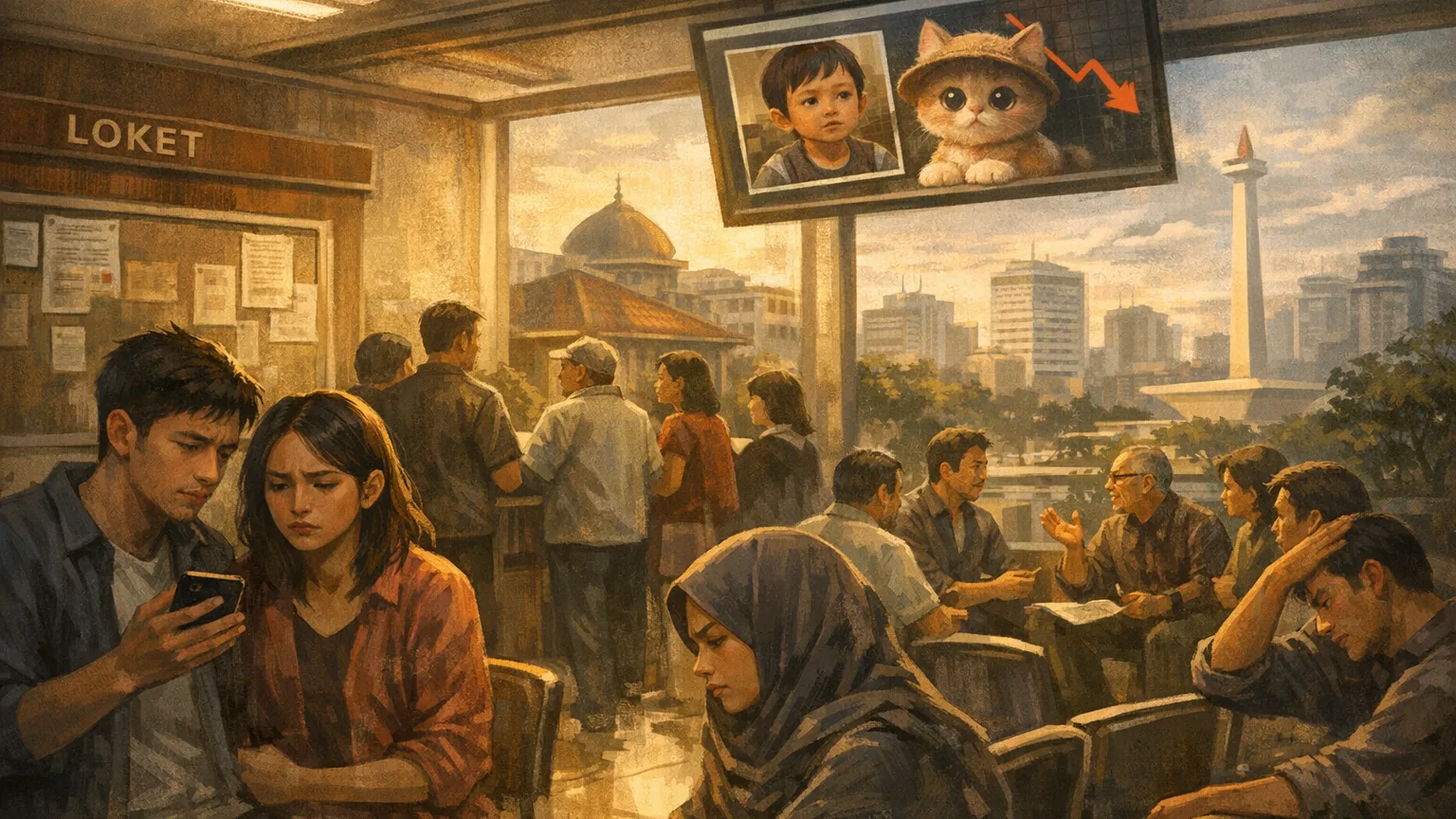
Legal Literacy - There is a small incident that many people have been experiencing lately. While scrolling through social media, suddenly finding a video of a small child speaking with sentences beyond their age. There are also cute animals with adorable expressions that feel so fitting. Reflexively, we laugh. It feels light and entertaining.
Then, as usual, we open the comments section.


And that's where everything changes.
“This is AI, right.”
“Looks like it's generated.”
“Definitely AI.”
The humor is still there, but the feeling immediately changes. There's annoyance, disappointment, and also a sadness that's hard to explain. Many people say, “Why do I get annoyed when I find out it's AI?” In fact, technically, there's nothing wrong.
And it turns out, many people experience that feeling.
Between Laughter and Suspicion: Social Media in the Age of AI
On social media, people are starting to be honest about this. Some say AI “ruins small happiness”. Some admit they are now lazy to watch funny videos because it's AI in the end. Some even say, “why do I now suspect everything adorable I see?”
That feeling then develops into a greater anxiety. Not just about one funny video, but about trust in anything we see on the screen. Some say the internet now feels “dead” because there's too much that's fake until even the real things are doubted.
Some people even admit to unliking content that they initially liked once they found out it was made by AI. Not because the content is bad, but because they already feel disappointed. Slowly, wonder turns into doubt; admiration turns into skepticism.
Meanwhile, others choose to resign themselves: if it looks good, just enjoy it.
At this point, social media is no longer just a place for entertainment, but a space that makes you tired. We are not only required to enjoy content, but also to constantly guess: is this real or not? And when that doubt arises too often, what is lost is not only laughter, but also trust.
This is not about hating technology. This is about emotions that were already sincere.
We laugh because we thought it was real. We are amused because we feel it's spontaneous. Once we know it's all made up, it feels like, “oh… okay.” Not angry, but empty.
AI technology is now increasingly sophisticated. A baby's voice can be made natural. An animal's expression can be arranged to be adorable. Even a “funny coincidence” moment can be neatly designed. The problem is, it all often comes without warning.
In the end, social media becomes an emotionally tiring place. Not because the content is bad, but because we have to keep asking: is this real or AI? Even laughing feels half-hearted.
Ironically, precisely because of that, content that is truly genuine now feels precious. A shaky video. A small child who speaks incoherently. A cute animal whose behavior is not neat. Small things that may not go viral, but feel alive.
Perhaps this disappointment is not a sign that we are anti-technology. Rather, it is a sign that humans still need authenticity, still want to laugh without having to think, “is this the result of a machine or not?”
And perhaps, that's what we're missing on social media right now: a feeling that is simple, honest, and real without having to be proven first in the comments section.















Write a comment