Legal Literacy - In an increasingly advanced era of digitalization, technology has played an important role in various aspects of life, including in the field of of law. Technology not only facilitates access to legal information for the public, but also contributes to the resolution of legal disputes. In Indonesia, the application of technology in the legal system has brought many positive changes, although there are still many challenges to be faced.
Technology and Access to Legal Information
One of the main benefits of technology in the legal field is the ease of access to information. With the internet, people can easily find legal information, such as laws, regulations, and court decisions. The official websites of government and legal institutions now provide databases that can be accessed online, making it easier to search for legal documents.

For example, the Supreme Court of the Republic of Indonesia has a website that provides various legal information, including court decisions that can be accessed by the public. Similarly, the Ministry of Law and Human Rights has a portal that provides access to various legal regulations and policies. This greatly assists the public in understanding and following legal developments in Indonesia.
Technology also enables the dissemination of legal information through various platforms, such as social media, blogs, and online discussion forums. This makes legal information more accessible to various groups, including those who may not have a legal background. With easier access to information, people can be more aware of their legal rights and obligations, and better prepared to face legal problems.

E-Court and E-Litigation
The application of technology in courts is also evident with the existence of e-court and e-litigation systems. E-court is an electronic court system that allows for online case filing, while e-litigation is a trial process conducted online. Both systems are implemented to improve efficiency and transparency in the judicial process.
With e-court, litigants do not need to come directly to court to file a lawsuit. They can submit the necessary documents through the online system. This process not only saves time and costs but also reduces the possibility of corruption by reducing direct interaction with court officials.
Meanwhile, e-litigation allows trials to be conducted virtually, so parties in different locations can attend the trial without having to be physically present in the courtroom. This is especially useful during the COVID-19 pandemic, where social restrictions are imposed to prevent the spread of the virus.
An example of e-court implementation in Indonesia is the Case Tracing Information System (SIPP) application used by district courts in various regions. Through SIPP, the court can manage cases electronically, from registration to decision. This application also allows litigants to monitor the progress of their cases online.
In addition to SIPP, there is also an e-Court application developed by the Supreme Court. This application allows advocates and litigants to register lawsuits, pay case fees, and upload documents electronically. E-Court also supports the implementation of online trials via video conference, so the judicial process can run more efficiently and transparently.
Online Mediation
Online mediation is another innovation in legal dispute resolution. With an online mediation platform, disputing parties can mediate without having to meet in person. This online mediation is often used in business disputes, family disputes, and other civil disputes.
Online mediation offers the advantages of time and place flexibility, as well as reducing the costs usually required for face-to-face meetings. In addition, online mediation also provides more privacy for the disputing parties, as they can discuss through a secure and encrypted platform.
One example of an online mediation platform in Indonesia is the Online Mediation Service (LMO) developed by the Indonesian Mediation Center (BaMI). LMO allows disputing parties to choose a mediator, schedule mediation sessions, and conduct mediation online. This platform is equipped with video conference, chat, and document upload features, so the mediation process can run smoothly and efficiently.
Technology in Arbitration Processes
In addition to mediation, technology is also used in the arbitration process. Arbitration is a method of dispute resolution outside of court, where the disputing parties choose an arbitrator who will decide the dispute. Technology enables the arbitration process to be carried out online, saving time and costs.
An example of the application of technology in arbitration is the use of online platforms to manage the arbitration process. This platform allows disputing parties to submit documents, communicate with arbitrators, and attend arbitration hearings online. With technology, the arbitration process can run faster and more efficiently, as well as provide legal certainty for the disputing parties.
Challenges and Solutions in the Application of Legal Technology
Although technology provides many benefits, its application in the legal system in Indonesia still faces several challenges. One of them is the digital divide, where not everyone has equal access to technology and the internet. This can hinder some people from accessing legal information and online judicial services.
To overcome this challenge, the government needs to continue developing technological infrastructure throughout Indonesia, including in remote areas. In addition, education and training on the use of legal technology also needs to be improved, both for the general public and legal practitioners.
The government also needs to ensure that the legal technology platforms used are secure and their confidentiality is guaranteed. This is important to protect personal data and sensitive legal information. The development of regulations governing the use of technology in the legal system also needs to be carried out, so that its application runs in accordance with applicable legal principles.
Practical Case: Resolution of Election Disputes with Technology
The application of technology in legal dispute resolution can be seen in election dispute cases in Indonesia. In recent years, technology has been used to increase transparency and efficiency in the election dispute resolution process.
An example is the use of information systems to monitor and manage election disputes. This system allows the General Elections Commission (KPU) and the Election Supervisory Body (Bawaslu) to record and track all election disputes filed, as well as monitor case developments in real-time. This helps to increase transparency and accountability in the election dispute resolution process.
In addition, technology is also used to facilitate election dispute resolution through online mediation and arbitration. With an online mediation platform, disputing parties can conduct mediation online, so that the dispute resolution process can run faster and more efficiently.
Case Study: Implementation of E-Court in Religious Courts
Religious courts in Indonesia have also implemented technology in their judicial processes. The implementation of e-court in religious courts helps to speed up the case resolution process, especially in divorce and inheritance disputes.
For example, the South Jakarta Religious Court has used the e-Court application to receive case registrations electronically. With this application, litigants can file lawsuits, pay case fees, and upload documents online. This process not only saves time and costs, but also facilitates access to justice for the community.
In addition, religious courts also use technology to conduct online trials via video conference. This is very helpful in cases where the disputing parties are in different locations or cannot be physically present in court. With online trials, the judicial process can run more efficiently and transparently.
The Future of Technology in the Indonesian Legal System
Looking at the development of technology in the legal system in Indonesia, it can be predicted that technology will continue to play an important role in the future. With increasingly rapid technological developments, the legal system in Indonesia needs to continue to adapt and develop new innovations to improve efficiency and transparency in the judicial process.
One trend that is predicted to develop in the future is the use of artificial intelligence (AI) in the legal system. AI can be used to analyze legal data, provide legal recommendations, and even assist in the decision-making process in court. With AI, the legal process can run faster and more efficiently, as well as provide better legal certainty for the public.
In addition, blockchain technology can also be used in the legal system to increase transparency and security. Blockchain can be used to store and track legal documents, thereby minimizing the risk of data forgery and manipulation. With blockchain, the legal process can run more safely and reliably.
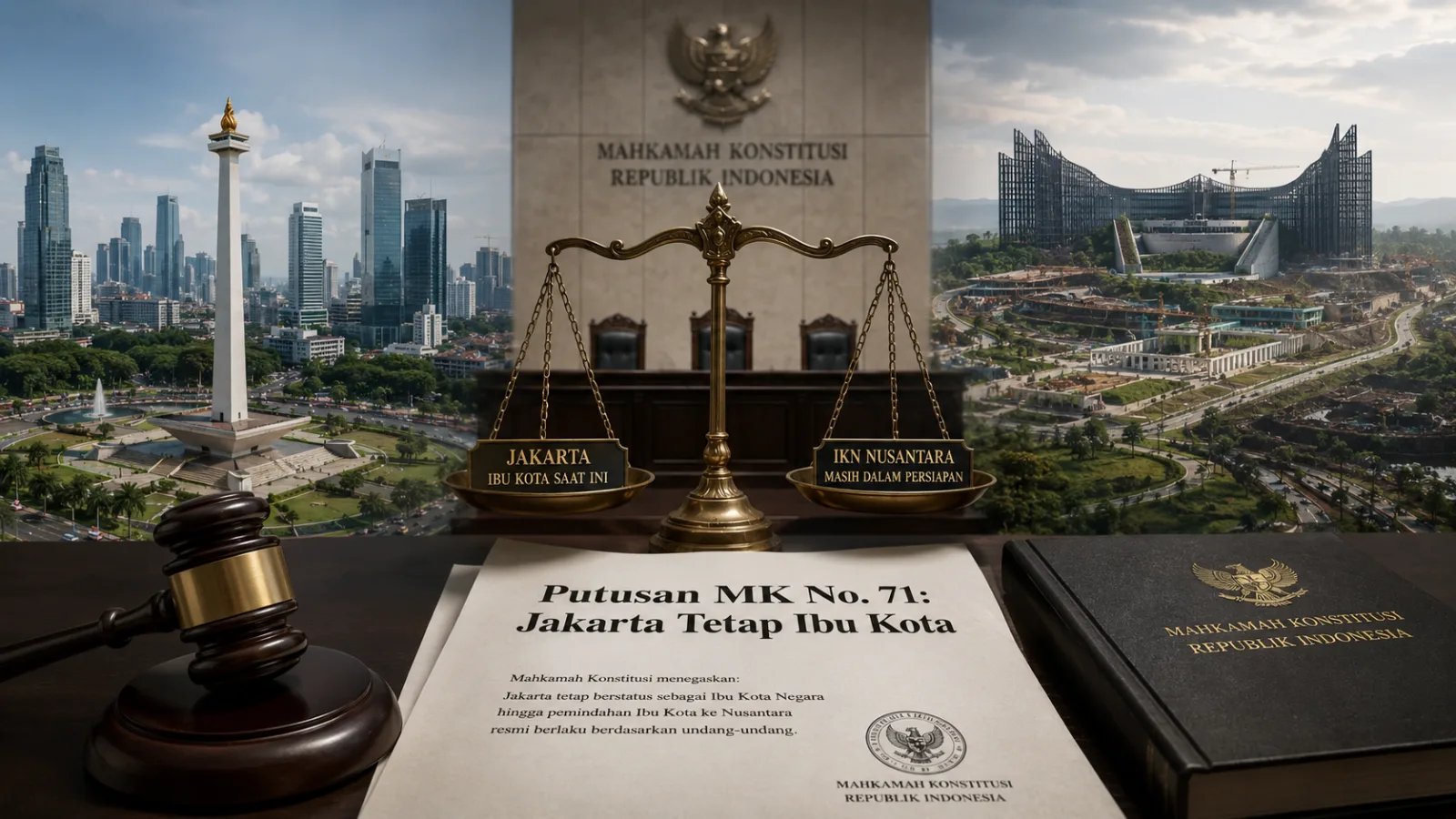
Modernization of the Constitutional Court of the Republic of Indonesia: Steps Towards the Digital Era
The Constitutional Court of the Republic of Indonesia (MKRI) has taken various steps to modernize its operations. Here are some aspects that demonstrate the modernization of the MKRI:
- Process Digitalization: The MKRI has implemented an information system that allows the trial process to be carried out electronically. This includes e-filing for submitting case files online, e-court for trial administration, and e-verdict for publishing decisions digitally.
- Live Streaming: The MKRI provides live streaming services for trials, so the public can access and follow the proceedings in real-time. This increases transparency and accountability.
- Website and Social Media: The MKRI actively uses websites and social media platforms to disseminate information related to their activities and decisions. The official MKRI website provides a variety of information that is easily accessible to the public.
- Integrated Services: The MKRI has developed an integrated service center to make it easier for the public to access services and information related to trials.
- Technology Infrastructure: The MKRI continues to improve its information and communication technology infrastructure to support its operations, including the use of electronic document management systems and improved cyber security.
With these steps, the Constitutional Court of the Republic of Indonesia demonstrates its commitment to facing the challenges of the digital era and providing more efficient and transparent services to the public.
Conclusion
Technology has brought significant changes to the legal system in Indonesia, from access to information to legal dispute resolution. Although there are still challenges to be faced, with continued technological advancements and support from various parties, the legal system in Indonesia can become more efficient, transparent, and inclusive.
The implementation of technology in law not only simplifies legal processes but also strengthens justice and legal certainty for all members of society. By continuously developing innovations and overcoming existing challenges, technology can be an effective tool for improving the legal system in Indonesia, providing broader access to justice, and ensuring that the rights of the community are well protected.
References
To delve deeper into this topic, here are some resources and references that may be helpful:
- Official Website of the Supreme Court of the Republic of Indonesia
- Ministry of Law and Human Rights of the Republic of Indonesia
- Case Tracking Information System (SIPP)
By utilizing these resources, readers can further understand how technology is applied within the legal system in Indonesia, as well as the benefits and challenges faced in the process.
Comments (0)
Write a comment