State Responsibility in the Forestry Law
The State has absolute rights in forestry management as regulated in Article 4 of Law Number 41 of 1999 concerning Forestry which essentially states: “All forests within the territory of the Republic of Indonesia including the natural resources contained therein are controlled by the State for the greatest prosperity of the people, in this case the government is authorized to: regulate and manage everything related to forests, forest areas, and forest products, determine the status of certain areas as forest areas or forest areas as non-forest areas, and regulate legal relations between people and forests, as well as regulate legal actions regarding forestry.” The State that controls forests must still pay attention to the rights of indigenous peoples, as long as they still exist and their existence is recognized, and do not conflict with national interests.
State Responsibility in Efforts to Overcome Forest Deforestation
The state plays an important role in drafting legal deforestation regulations or taking firm action against individuals who endanger the environment and is obliged to provide protection for people's rights to a good and healthy environment.


The existence of Law Number 11 of 2020 concerning Job Creation indicates that the interests of the economic sector give the authorities the direction to damage the environment by freeing those who damage the environment. This is found in Article 88 of the law which eliminates the element of “without the need to prove the element of error” in the PPLH Law. Thus, strict liability changed to strict liability or liability without fault. This means that the perpetrator can be criminally punished if he has committed an act as formulated in the law without looking at his inner attitude.
The state in its power must be based on regulations for the protection and management of the environment that include the interests of the entire community, maintenance of nature and the environment, prevention of pollution, protection against all threats that damage and potentially harm the environment, and be responsible for everything that harms the community from damage to nature and the environment. This can be done with preventive efforts in environmental law enforcement, namely transparency in the licensing process stage. Licensing issues are often the root cause of corruption in the natural resources sector, it is necessary to apply environmental criminal law principles specifically.
In the forestry sector, such as governance, it can be done by increasing the capacity of the Forest Management Unit for forest areas with mapped boundaries and managed as a provision for the objectives of the forest management plan while still paying attention to aspects of forest maintenance and preservation and the environment.
Law Enforcement against Government Actions that Result in Forest Deforestation
Law enforcement against the environment is a regulation that regulates the environment or the environment, covering all aspects to regulate human actions. Communities affected by deforestation will lose their livelihoods, have difficulty accessing food sources, receive unfair compensation, and bear the risk of ecological disasters.
Disputes can be resolved through deliberation between the parties or mediation. If an agreement is still not reached, the community or its representatives can file a lawsuit with the court in the defendant's legal area. Environmental law enforcement can be carried out with various means, namely:
- administrative sanctions that focus on articles of state administrative law regulations that are violated, these activities violate one or several articles of statutory regulations with clear sanctions, and the imposition of sanctions is carried out by the authorized official in accordance with statutory provisions or provisions contained in the permit issued by the Official who imposes the sanctions;
- civil law enforcement, namely through court litigation or through deliberation outside of court, focusing on the actions taken must be unlawful acts that cause clear losses and there is authority for the plaintiff to file a lawsuit;
- criminal law enforcement based on articles of criminalization, the existence of legal reasons and sufficient preliminary evidence of the occurrence of a criminal act, so that a suspect is determined, and the mechanism for criminal law enforcement starting from investigation, coercive measures, transfer of cases to court, to examination of cases in court, is carried out within the limits of authority granted by law and in accordance with the provisions of the criminal procedure law.
Forest Deforestation Law Enforcement in the PPLH Law
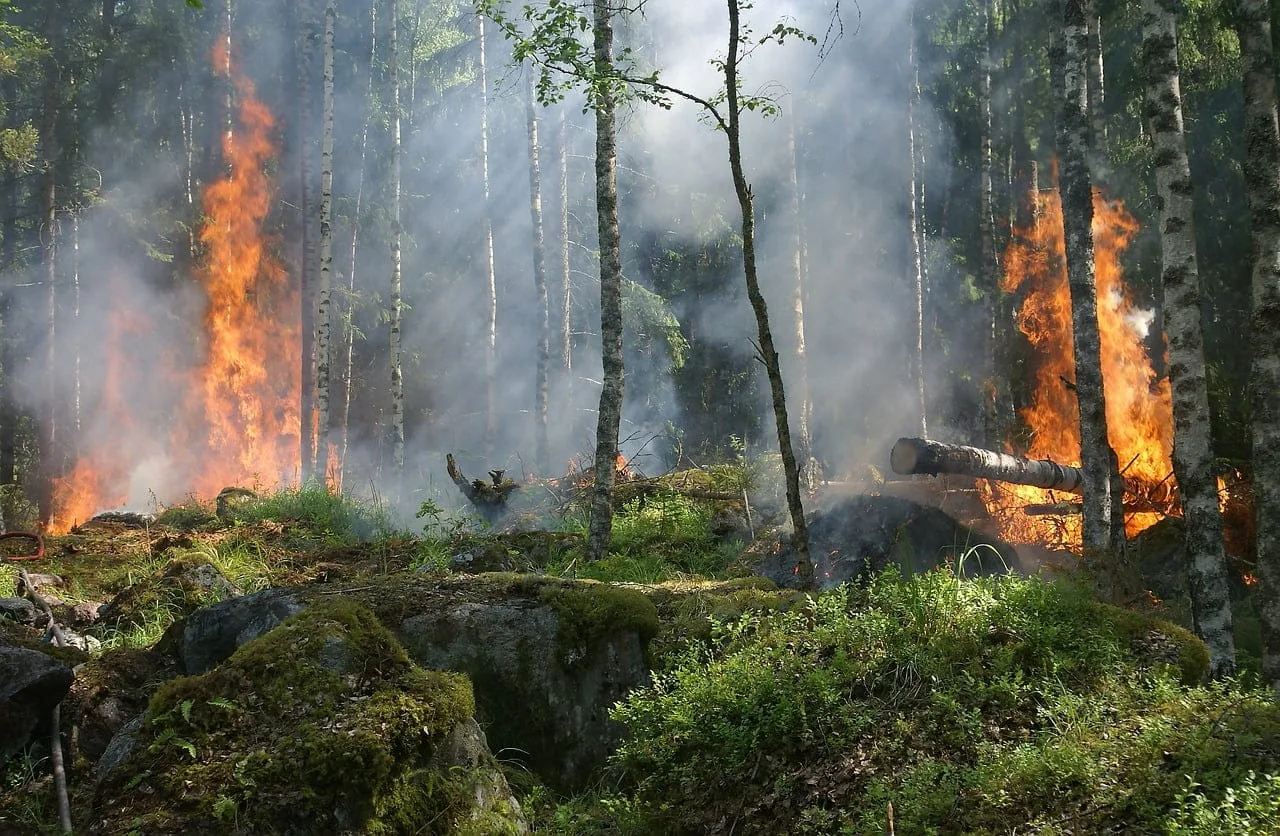
Law enforcement in this action is in the form of repressive law enforcement, that is, if the community feels disturbed by environmental damage to the deforestation problem that harms the community, this is included in the provisions of Article 76 paragraphs (1) and (2) of the PPLH Law. If the authorities violate the provisions in Article 11, Article 14, Article 17, and Article 18 of the PPLH Law which result in damage and forest fires belonging to the people, they can be threatened with criminal penalties in accordance with Article 98 paragraph (1) and/or Article 99 paragraph (1) of the PPLH Law.
Article 98 paragraph (1) states that: “anyone who commits an act that harms others in relation to environmental damage and results in exceeding the ambient air quality standards, water quality standards, marine water quality standards, or environmental damage standard criteria will be subject to criminal penalties according to their fault, either in the form of a fine of at least Rp. 3,000,000,000.00 (three billion rupiah) and a maximum of Rp. 10,000,000,000.00 (ten billion rupiah) as well as imprisonment for a minimum of three years and a maximum of ten years”.
Meanwhile, Article 99 paragraph (1) states that: “as a result of this negligence, many people feel disadvantaged, therefore if the negligence is committed by irresponsible people and results in exceeding the ambient air quality standards, water quality standards, marine water quality standards, or very severe environmental damage standard criteria, then the criminal act that will be imposed is in the form of imprisonment for a minimum of one year and a maximum of three years as well as a fine of at least Rp. 1,000,000,000.00 (one billion rupiah) and a maximum of Rp. 3,000,000,000.00 (three billion rupiah)”.
Legal Standing of Parties Filing Lawsuits
In Article 100 of the UUPPLH, the principle of ultimum remediumis not applied, but the principle of premium remedium is applied, which prioritizes the implementation of criminal law enforcement. Indonesian environmental law adheres to the concept of conventional right of claim related to public interest law. The party holding legal standing acts on the basis of the interests of the wider community even though they do not have a direct legal interest due to violations of public rights.
Those who can become legal standing and can act as plaintiffs are regulated in the Environmental Protection and Management Law as follows: Individual right of claim in Article 84 paragraph (1) with two alternatives, which can be pursued through the courts or outside the courts, Community right of claim in the form of class action in Article 91, Government right of claim in Article 90, Right of claim of environmental organizations or non-governmental organizations in Article 92, and Administrative right of claim in Article 93. The existence of civil lawsuits aims to encourage binding regulations for corporations to comply with global emission reduction targets and globally as a movement for the implementation of corporate responsibility in contributing to climate change.
Forest sustainability has a significant impact on deforestation, so it must be maintained to avoid disasters by taking efforts, namely:
- Improving the forest management system by increasing the involvement of the community directly, increasing supervision and enforcement of environmental law;
- Increasing agreements between central and regional government levels and implementing the division of authority and responsibility for forest management;
- Effectively utilizing available resources in forest management through cooperation between various parties.
Conclusion
The state has absolute rights in the management of forestry as regulated in Law Number 41 of 1999 concerning Forestry, so it is obliged to protect the rights and interests of all people, maintain the environment, prevent pollution, protect against all threats that damage and potentially harm the environment, and is responsible for everything that harms the community from natural and environmental damage. Deforestation law enforcement by the authorities can be carried out through state administrative legal efforts to impose administrative sanctions, civil efforts by filing lawsuits by the community or their representatives who have legal standing in the public interest, and criminal efforts by imposing fines and imprisonment on deforestation perpetrators.
References
- Arbani, Tri Suhendra. “The Principle of Absolute Responsibility (Strict Liability) for Environmental Damage After the Job Creation Law.” Jurnal Al Hadarah Al Islamiyah, no. April (2022): 23–37.
- Asnah, Nur. “Policies and Government Responsibility in Realizing the Protection and Management of Natural Resources for the Future.” Jurnal Senpling Multidisiplin Indonesia 1, no. 1 (2023): 1–7.
- Nakita, Clearestha, and Fatma Ulfatun Najicha. “The Influence of Deforestation and Efforts to Maintain Forest Sustainability in Indonesia.” Jurnal Ius Civile 6, no. 1 (2022): 92–103.
- Nisa, Anika Ni’matun, and Suharno. “Law Enforcement Against Environmental Problems to Realize Sustainable Development (Case Study of Forest Fires in Indonesia).” Jurnal Bina Mulia Hukum 4, no. 2 (2020).
- Sirait, Yohanes Hermanto. “Commitment Regarding Deforestation and Climate Change: A Perspective from the Parens Patriae Doctrine.” Jurnal Hukum Jatiswara 34, no. 1 (2019): 1–10.
- Sudarsono. My Country Reaps Ecological Disasters Ignoring Religious, Customary, and Legal Norms Repositioning and Revitalizing Environmental Law Enforcement, Second Printing. Yogyakarta: Regional Environmental Management Center of Java, 2007.






















Write a comment