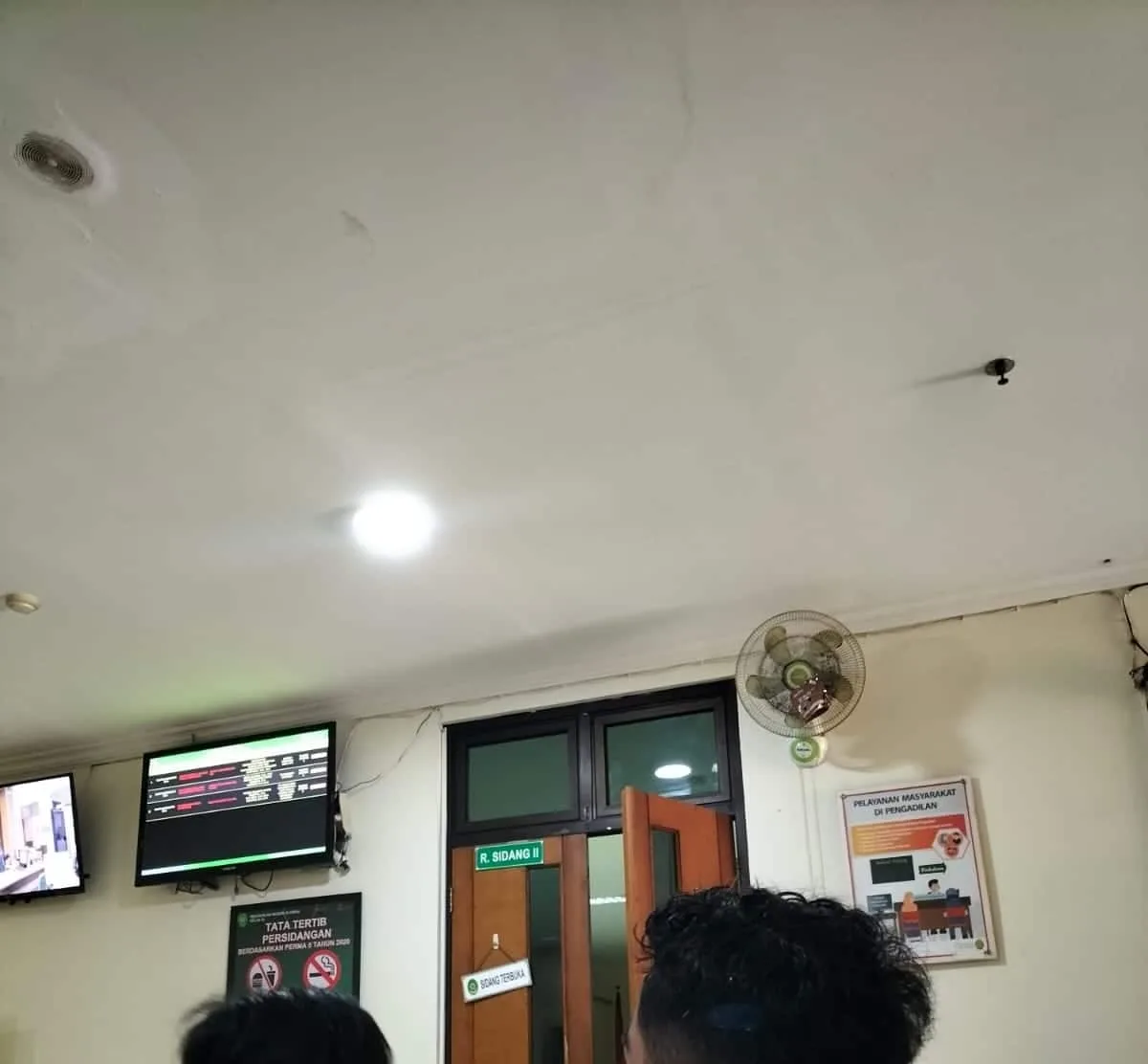
Legal Literacy - Judges have the nickname as God's representatives. This nickname arises from the role of a judge in achieving justice by imposing legal sanctions commensurate with what someone has done. In addition to carrying out his role, a judge has the task of examining, adjudicating and deciding cases. In maintaining the harmony between the role and duties of this judge, strong independence and integrity of the judge are needed so that the resulting decision is not tainted. If the independence or integrity of a judge is tainted by outside parties, it will have a bad impact on the court system.
In this process in court, in reality, there are quite a few negative reactions received by a judge for the decisions he has made. One of the negative reactions resulting from a decision is called PMKH.
Understanding PMKH
Let me explain a little about this PMKH. PMKH (Acts Degrading the Honor and Dignity of Judges) is stated in Article 1 number 2 of the Judicial Commission (KY) Regulation which reads: Acts degrading the honor and dignity of judges are acts of individuals, groups of people or legal entities that interfere with the trial process, or judges in examining, adjudicating, deciding cases, threatening the security of judges inside and outside the courtroom, insulting judges and the court. Based on this Article, we can know that PMKH acts can be categorized into 3 (three) types, namely; first, disrupting the trial process, in the case of judges in examining, adjudicating, and deciding cases, second, threatening the security of judges inside and outside the court, third, insulting judges and the court.
Of the three categories of PMKH acts that have the potential to threaten the life of a judge is the second category, namely: threatening the security of judges inside and outside the court. Why is this PMKH category more likely to threaten the life of a judge? Because PMKH acts outside the court are not directly supervised by internal supervisory institutions or external supervisory institutions. The supervisory institution will only exist if there is a report of alleged PMKH that has occurred.
The Influence of Digitalization Development on Threats Against Judges Outside the Court
In the era of digitalization development in the form of sophisticated technological tools, it has a major impact on the birth of PMKH innovations. One of these PMKH innovations can be in the form of hate speech on social media.
Hate speech on social media cannot be avoided because social media has become a daily consumption of society. This hate speech can be done by insulting judges, accusing or even threatening the safety of a judge. In this case, there is no role for the supervisory institution in supervising judges before the emergence of reports of alleged PMKH that occurred to the judge.
In fact, in reality, supervision and protection of judges are needed before PMKH occurs, this is in line with the term that reads: it is better to prevent than to cure.
If PMKH has occurred to a judge and the act is a PMKH that can threaten the safety of a judge, is protection needed after PMKH occurs?
True, most people think that protection is needed after PMKH occurs so that the PMKH that was done before does not happen again. That thought is true, but we need to know that protection is more important and very much needed before PMKH occurs in order to prevent unwanted acts, one of which is PMKH that threatens the safety of a judge.
Every decision issued by a judge should naturally have parties who do not accept the decision, namely parties who feel aggrieved by the issuance of the decision or parties who feel defeated in the battle in the court, so that the issuance of the decision gives rise to negative reactions that cannot be predicted by anyone.
Hopes for Creating More Guaranteed Security for Judges
So the response as an internal and external supervisory institution should be able to find a middle ground to prevent PMKH from happening to a judge. One way is to supervise and protect judges after a judge decides a court decision, because the potential for PMKH besides in the court can also occur outside the court, namely after the decision is read out by the judge. This preventive action can be evidence to maximize the duties and roles of an internal and external supervisory institution towards a judge.
Therefore, the role of supervisory institutions, both internal and external supervisory institutions, is very necessary in providing protection to a judge or known as judge advocacy, because the main target of PMKH is directed at a judge in carrying out his duties as an enforcer of the court. In carrying out the task of providing protection to judges, it is not only needed when PMKH has occurred and been reported, but it is also much more needed before PMKH occurs so that the worst possible thing that will happen to the judge can be prevented because there is supervision and protection carried out by internal and external supervisory institutions.























Write a comment