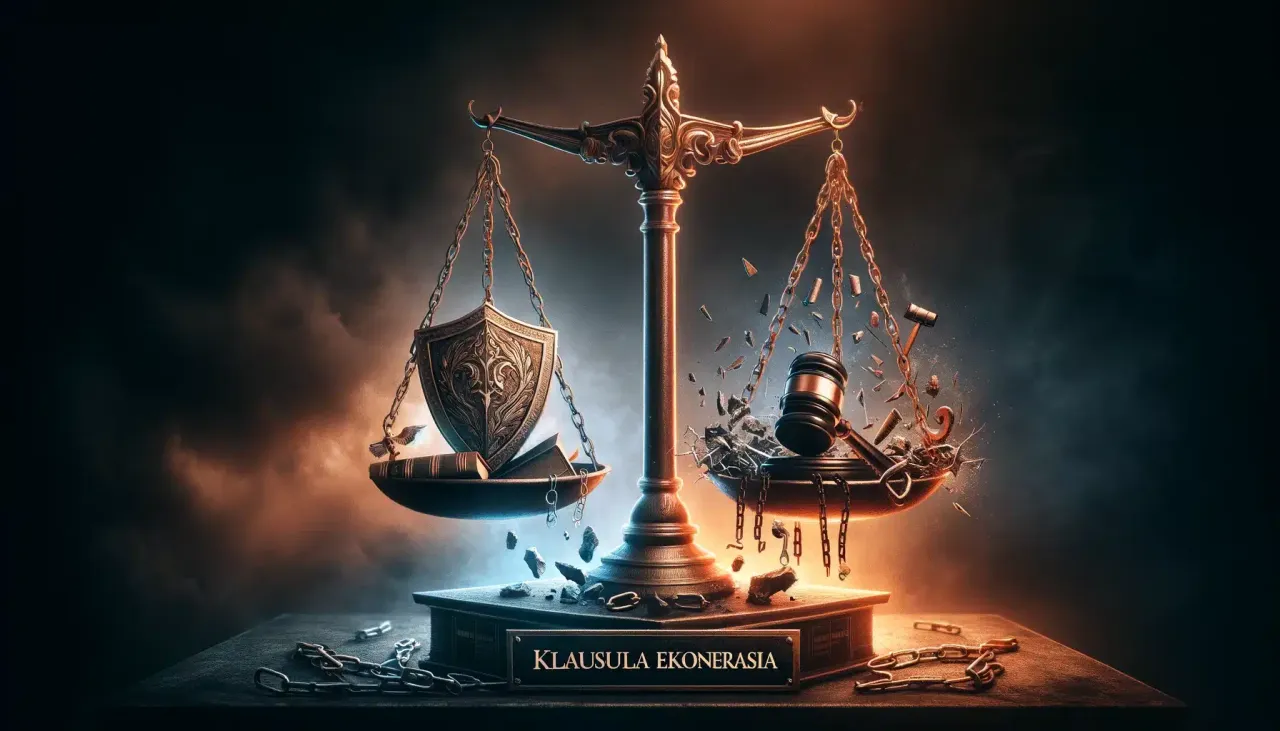
Legal Literacy - In the practice of contract law, exoneration clause is often a controversial topic. This clause provides exemption from or reduction of legal liability for one party for losses that may be experienced by the other party. Exoneration clauses are often found in various types of contracts, such as lease agreements, sale and purchase agreements, and service contracts. Although this clause can provide protection for service providers or sellers, on the other hand, it is often seen as a form of injustice for the weaker party.
Definition of Exoneration Clause
An exoneration clause is a provision in an agreement that releases or reduces the liability of one party for losses that may arise from the execution of the agreement. This clause is usually included in contracts by parties with a stronger bargaining position, such as service providers or sellers, to protect themselves from legal claims or indemnity obligations.
Functions and Objectives of Exoneration Clause
The main function of an exoneration clause is to limit or eliminate the legal liability of one party. Some of the objectives of using this clause include:
- Legal Protection: The exoneration clause provides protection for parties who have a high risk in the implementation of the agreement. For example, in a service contract, the service provider can reduce the risk of legal claims if there is a loss to the service user.
- Reducing Costs: By reducing legal risks, the stronger party can lower operational costs and insurance premiums. This can ultimately result in lower costs for consumers.
- Encouraging Business Activities: With clear legal protection, business actors can focus more on business development without worrying about excessive legal risks.
Examples of Exoneration Clauses in Practice
Here are some examples of exoneration clauses commonly found in various contracts:
- Lease Agreement: “The Lessee is not responsible for damage caused by force majeure events such as natural disasters, war, or fire.”
- Sale and Purchase Agreement: “The Seller is not responsible for product damage caused by use that does not comply with the instructions for use.”
- Service Contract: “The service provider is not responsible for losses caused by errors or omissions of the service user in following the instructions provided.”
Legal Issues in Exoneration Clauses
Although exoneration clauses have an important function, their application often raises various legal issues. Some of the issues that often arise include:
- Imbalance of Bargaining Power: Exoneration clauses are often drafted by parties with a stronger bargaining position, so that the weaker party is forced to accept these provisions without having much choice.
- Injustice: Exoneration clauses can create injustice for the injured party, especially if the loss occurs due to the negligence or fault of the party protected by the clause.
- Conflicting with Public Interest: Some exoneration clauses may conflict with the public interest and laws and regulations, especially if the clause eliminates liability for losses caused by unlawful acts or gross negligence.
Legal Regulations of Exoneration Clauses in Indonesia
In Indonesia, regulations regarding exoneration clauses can be found in various laws and regulations, including:
- Civil Code: The Indonesian Civil Code (KUHPerdata) regulates the freedom of contract, including the freedom to include exoneration clauses in agreements. However, this freedom is not absolute and must consider the principles of good faith and fairness.
- Consumer Protection Act: Law No. 8 of 1999 concerning Consumer Protection stipulates that business actors are prohibited from including exoneration clauses that reduce consumer rights or that conflict with the obligations of business actors.
- Regulations Financial Services Authority (OJK): Several OJK regulations also regulate exoneration clauses in financial service products, such as insurance and banking, to protect consumers from detrimental clauses.
Cases of Exoneration Clauses in Indonesia
Several cases in Indonesia demonstrate how exoneration clauses can become serious legal problems. For example, in a case between a consumer and an insurance company, where the consumer felt aggrieved because the insurance claim was rejected on the grounds of an exoneration clause in the insurance policy.
Juridical Analysis of Exoneration Clauses
To analyze exoneration clauses juridically, several things need to be considered, including:
- Propriety and Justice: Exoneration clauses must meet the principles of propriety and justice. If the clause is considered unfair or too burdensome for one party, then the clause can be canceled by the court.
- Transparency and Information: The party including the exoneration clause must provide clear and transparent information to the other party. Exoneration clauses that are not well explained or hidden in the contract may be considered invalid.
- Consumer Protection: In the context of consumer protection, exoneration clauses must comply with laws and regulations that protect consumer rights. Clauses that reduce consumer rights or conflict with consumer protection laws may be considered invalid.
Conclusion
Exoneration clauses are an important tool in the practice of contract law to protect parties with high risks. However, the use of this clause must be done carefully so as not to cause injustice or harm to other parties, especially consumers. Clear regulation and the application of the principles of propriety, justice, and transparency are key to ensuring that exoneration clauses are used proportionally and fairly.
Recommendation
To avoid legal problems arising from exoneration clauses, several recommendations can be given, including:
- Fair Contract Drafting: The stronger party in the agreement must draft the contract in good faith and not take advantage of its bargaining power to include clauses that are detrimental to the other party.
- Increased Legal Awareness: The weaker party in an agreement should improve their legal awareness in order to understand and assess the exoneration clauses contained in the contract.
- Supervision and Law Enforcement: The government and related institutions must conduct strict supervision of the implementation of exoneration clauses in various contracts, as well as firmly enforce the law against business actors who violate the provisions of legislation.
Thus, it is hoped that exoneration clauses can be used wisely and fairly, so as to provide adequate legal protection for all parties involved in the agreement.
Comments (0)
Write a comment