When the State is Allowed to Be Wrong Without Feeling Guilty
The state is allowed to be wrong without feeling guilty? This article reviews normative impunity, the legal accountability crisis, and state responsibility...
Legal perspectives & analysis.
The state is allowed to be wrong without feeling guilty? This article reviews normative impunity, the legal accountability crisis, and state responsibility...
Examining direct and DPRD-mediated regional elections from the perspective of popular sovereignty, the state's fiscal burden, and the quality of local democracy.
Village autonomy is suppressed by excessive regulations, bureaucratic intervention, and strict supervision that triggers administrative criminalization.
Sharp analysis of anomalies in corruption law enforcement in Indonesia. Why do structural actors often escape criminal charges while...
The filling of civil positions by the Indonesian National Armed Forces (TNI) and the Indonesian National Police (Polri) raises public concerns...
The discourse on reviving the Broad Guidelines of State Policy (GBHN) arises from the need for stability and continuity of national development amidst leadership transitions...
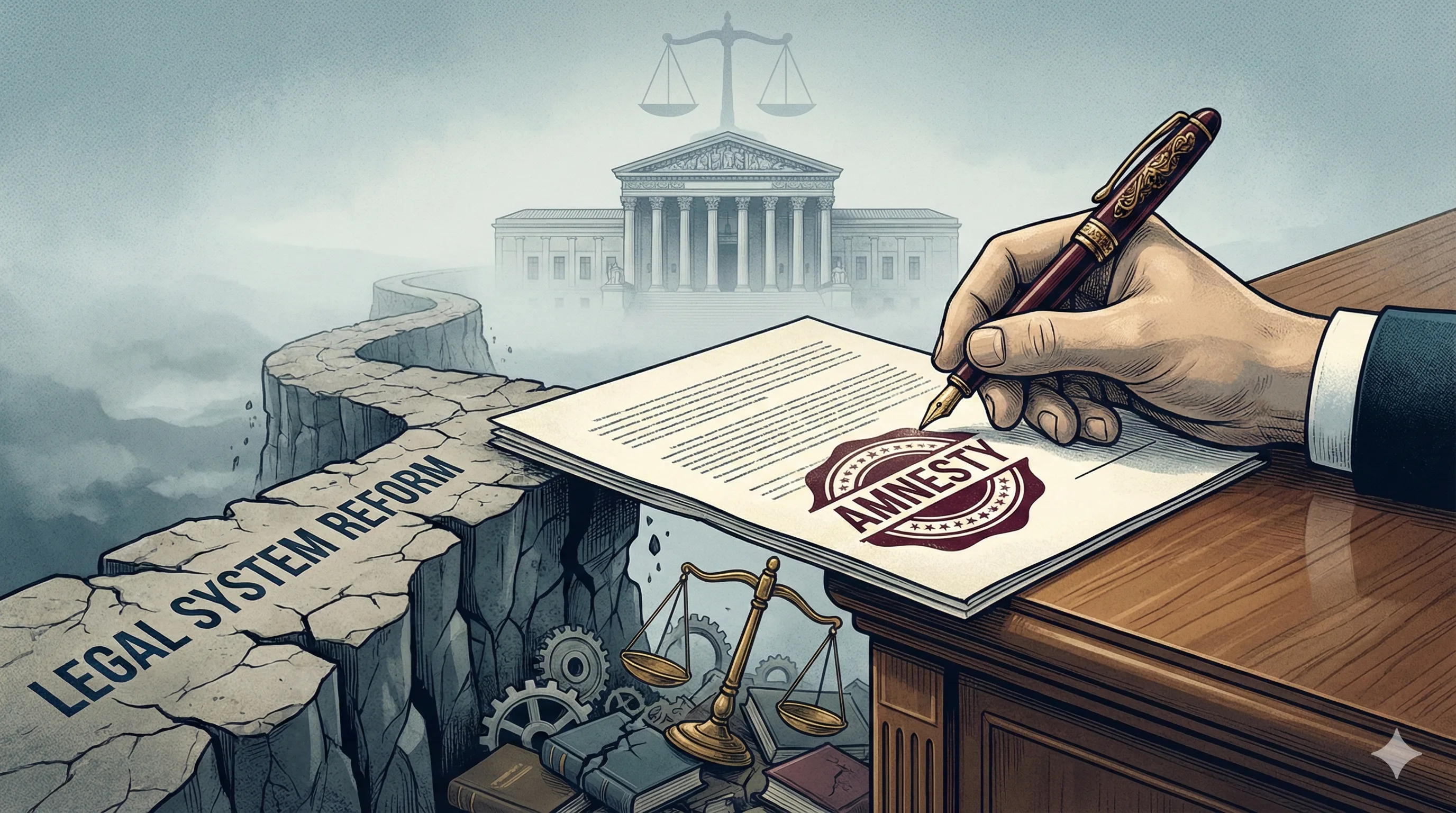
The President's habit of handing out amnesties in corruption cases is merely a "shortcut" that does not address the root of the problem. Find out why we need r...
One year has passed since the inauguration of President Prabowo Subianto and Vice President Gibran Rakabuming Raka.
This legal opinion examines the discourse on Indonesia's recognition of Israel following President Prabowo Subianto's statement at the 2025 UN General Assembly.
Public Private Partnership
Share your legal analysis. Selected writings will be read by thousands of practitioners & academics.
Start Writing