Reverse Criminalization, A Threat to Crime Reporters in Indonesia
Reverse criminalization threatens crime reporters in Indonesia due to loopholes in criminal procedure law and weak whistleblower protection.
Legal perspectives & analysis.
Reverse criminalization threatens crime reporters in Indonesia due to loopholes in criminal procedure law and weak whistleblower protection.
Village autonomy is suppressed by excessive regulations, bureaucratic intervention, and strict supervision that triggers administrative criminalization.
Sharp analysis of anomalies in corruption law enforcement in Indonesia. Why do structural actors often escape criminal charges while...
Divorce cannot be by agreement; according to applicable regulations, divorce must be in court according to Government Regulation Nomo...
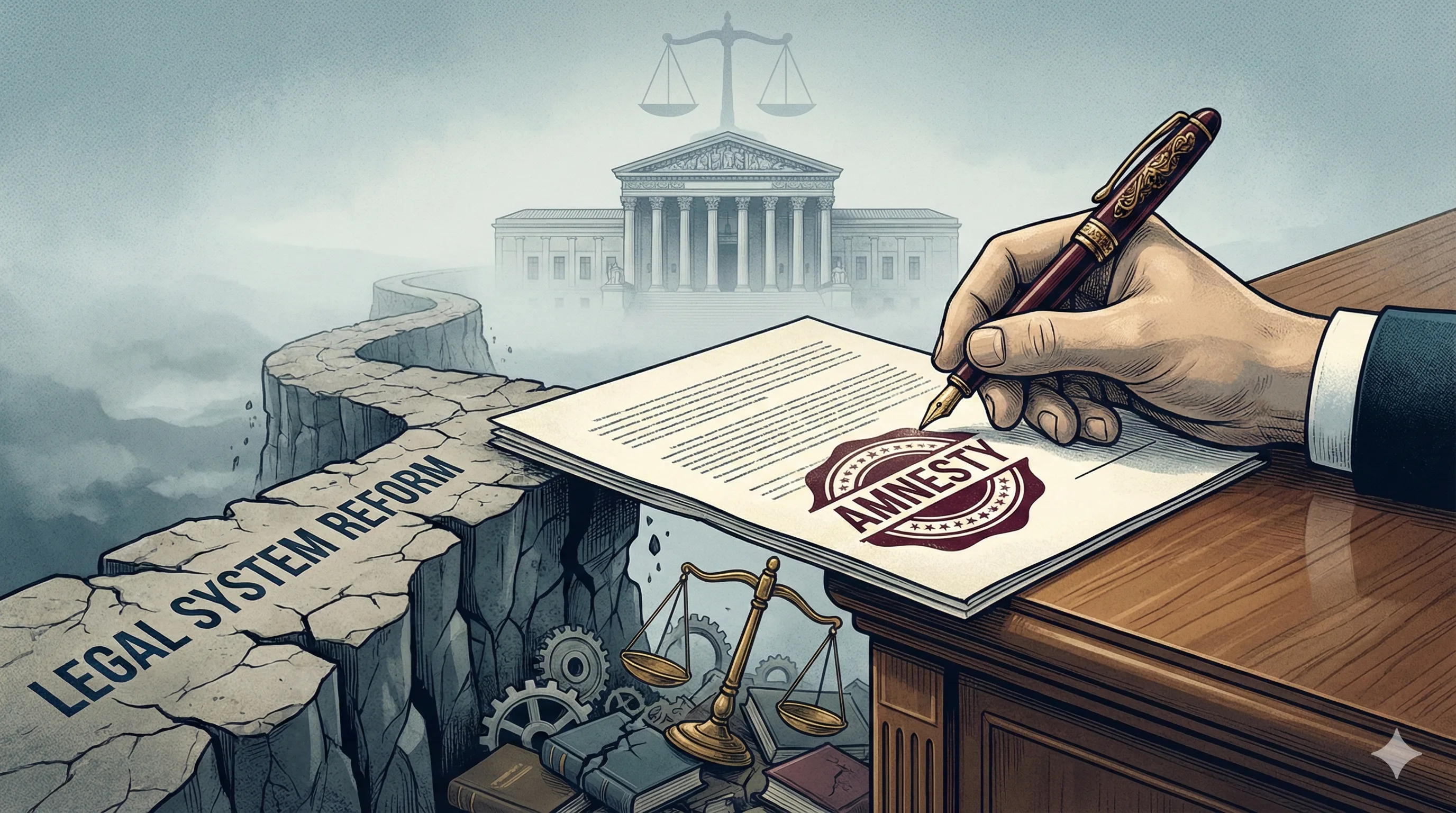
The President's habit of handing out amnesties in corruption cases is merely a "shortcut" that does not address the root of the problem. Find out why we need r...
Police Regulation 10 of 2025 is formally valid, but potentially unconstitutional if it conflicts with the Constitutional Court's decisions and the principle of constitutional supremacy...
November 18, 2025, should be a monumental day for the history of Indonesian law
A critical analysis of the Luther Wrait case highlights the tension between freedom of expression and the application of treason articles in the context of Papua.
The case of the Baduy tribe teaches us that electoral democracy is not always black and white.
This article discusses the Citraland case in North Sumatra involving alleged abuse of state assets belonging to PTPN I.
Share your legal analysis. Selected writings will be read by thousands of practitioners & academics.
Start Writing